Kiteboarding in Marsa Alam: Lagoons, Wind and Choosing a Kite Centre
Marsa Alam sits 274 km south of Hurghada, and you kite here in lagoons behind the coral reef with a northerly wind. The lagoons are 15 to over 100 km apart, so pick the lagoon first and the hotel second.
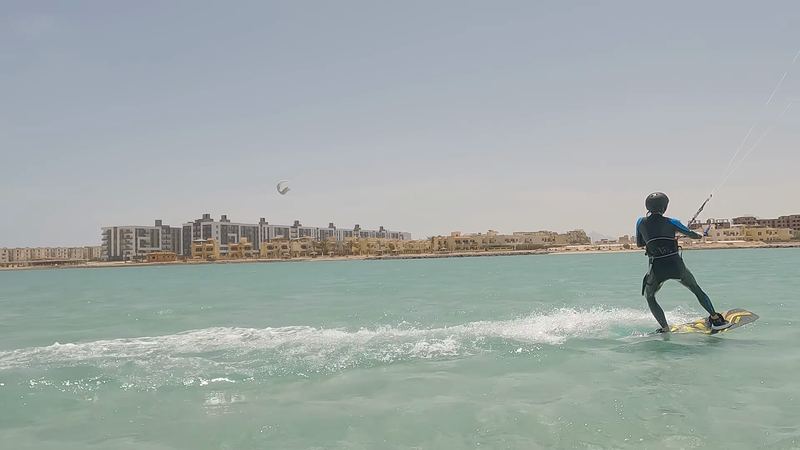
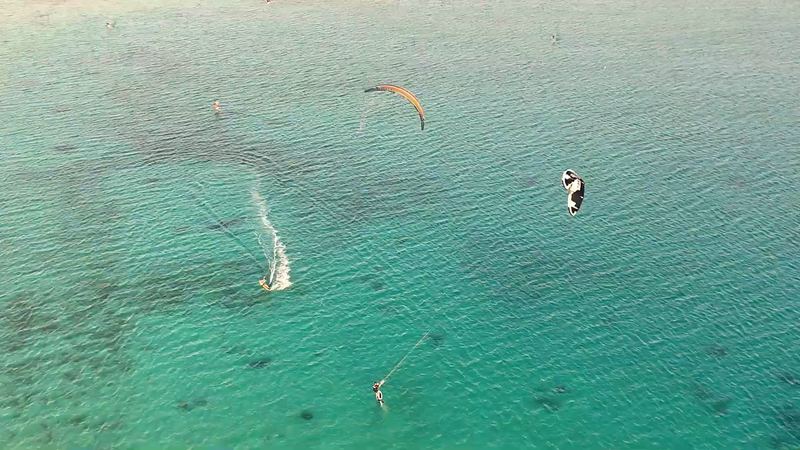
Kitesurfing in Marsa Alam means riding in lagoons that a coral reef separates from the open sea, and each kiteboarding centre sits on one of them. The wind blows mostly from the north. Inside the lagoons the water is usually flat; outside the reef you get waves.
The lagoons are far apart: the one at Casa Mare is 46 km north of the town, while Hamata and Wadi Lahami are 2 to 2.5 hours' drive south of the airport. You get between the lagoons by car, so I'd plan this trip the other way round from most: choose the lagoon that matches your riding, then book a hotel next to it.
If you're still comparing regions, the overview of all of them is in Kite spots in Egypt.
Where to kitesurf in Marsa Alam
| Lagoon | Location | Water and bottom | Hotel by the lagoon | Best for |
|---|---|---|---|---|
| Casa Mare (formerly Royal Tulip) | 17 km south of the airport | lagoon about 1 km along the beach and 700 m out | Casa Mare | first rides up to advanced |
| El Naaba | 30 km south of the airport | standing only for about 20 m from shore, reef about 200 m out | Three Corners Equinox, about 1 km | Giant Bay for experienced riders, Baby Bay for beginners |
| Blue Lagoon | about 20 km south of town | sandy bottom, reef about 800 m from shore | Dream Lagoon Beach | from an introductory lesson to independent riders |
| Hamata and Wadi Lahami | about 180 km from the airport, 2-2.5 h by car | huge waist-deep shallows, mangroves | Kite Village by the centre, hotels further away with transfers | beginners and trick practice |
The lagoon at Casa Mare (formerly Royal Tulip)
The closest lagoon to the airport. The hotel was known as Royal Tulip Beach Resort until it was renamed, and you'll still see that name in older reviews and video titles. The lagoon runs about 1 km along the beach and 700 m out to sea, so there's room for plenty of kites at once.
You can see a jetty running out over the shallows in the video. That's the kind of detail I sort out before I pump up: where exactly the kite zone ends, what's downwind of me, and how I get back if I go down far from the launch.
El Naaba
Here it matters where you get in. There's sand and standing depth for roughly the first 20 metres, then the lagoon gets deeper, and about 200 m out a reef shuts it off from the sea. If your waterstart (getting up from the water onto the board) isn't reliable yet, you'll spend every crash in the main bay body-dragging back to your board in deep water, letting the kite pull you through the water. Baby Bay, a little further south, has flat water and is the better place to start. Locals rate Giant Bay for experienced riders.
Blue Lagoon
About 20 km south of town, by the Dream Lagoon Beach hotel. The bottom is sandy and the water is usually flat, choppy when the wind picks up. The reef sits about 800 m from shore and takes a little of the space. Complete newcomers learn here too: the local centre runs an introductory lesson with theory and your first go at flying a kite.
Hamata and Wadi Lahami
The waist-deep shallows here are huge, the water is flat to slightly choppy and gets flatter at low tide. For beginners it's the safest bet in the area, and advanced riders have plenty of room to practise tricks. There are mangroves upwind of the spot and islands with reefs a little further out. At Lahami Bay the water level drops in July and August, and the kiting area shrinks to a narrower channel.
It's a long way, though: about 180 km from the airport, 2 to 2.5 hours by car. Kite Village has bungalows right behind the kite centre at Hamata, while the Wadi Lahmy Azur and Lahami Bay Beach Resort hotels are further away and run transfers to the spot. You'll find it on the kite spot map under Hamata.
Wind direction and the best months
At Marsa Alam airport the wind averages 13 knots, mostly from the north (Windfinder statistics for 2003 to 2026). A knot is the nautical unit of speed; 15 knots is about 28 km/h or 17 mph. The windiest months are June and September at around 15 knots on average, the lightest are December and January at around 11 knots. That's why I'd pack a bigger kite as well for a winter trip. The NASA POWER model also peaks in June and September, with the wind coming from north-northwest (339-350°).
At El Naaba and at Hamata the wind is usually strongest in the morning, so I wouldn't linger over breakfast. At Hamata it typically drops a few knots in the afternoon.
At Hamata the most common sizes are 9 and 12 m², with 7 m² for lighter riders, and a big kite comes in handy on light days. You can work out your own size from your weight and the wind in the kite size calculator. If you're choosing by month, there's a comparison of destinations in Where to kitesurf in June and Where to kitesurf in September.
Reef, shoes and what's downwind
The coast here is lined with coral reef, so you only kite in the lagoons and only where there's sand down to the water. Even the shallows have coral heads, so pack reef shoes.
Kiters refer to wind blowing along the beach as sideshore. That's what you get at El Naaba, coming from the left. At Hamata it also comes from the left, but at an angle towards the beach (side-on). In both places you and your kite drift to the right when you crash, and at Hamata towards the beach as well. Standing there facing the sea, everything that matters is on your right: the jetty, the reef, swimmers or the edge of the kite zone. Have a look before you head out.
Beyond the reef there's deep water and waves. Besides getting you up and riding, a good course teaches self-rescue: getting yourself and your kite back to shore. Without it you're a danger to yourself and everyone else on a new spot. Once you're there, ask whether the centre has a rescue boat on the water.
How to choose a kite centre in Marsa Alam
The centres here sit at hotels, so choosing a centre also means choosing a lagoon. These are the questions I'd ask:
- Is the centre right on the lagoon? If they drive you somewhere else every day, you lose time, and the strongest wind tends to be in the morning.
- Is there a rescue boat on the water while you ride? On a spot with open sea beyond the reef, that's a must for me.
- Where is the standing area for lessons, and how big is it? For a beginner, 20 metres by the beach and waist-deep shallows make for a completely different week.
- Are the instructors IKO certified, and do they speak a language you'll understand over the wind?
- What kite and board sizes do they rent? Especially if you're lighter or heavier than average.
- Where does the kite zone end, and what's downwind? They should show you that on the beach.
When to go and what to wear
According to the NASA model, air temperature is around 19 °C in January and around 32 °C in August. The water is around 23 °C in winter and around 29 °C in summer. A wetsuit makes sense from October to March, a shorty in April, May and September, and a lycra is enough in summer. For Hamata I'd go between October and June and skip the summer heat.
Getting there, airport and visa
Marsa Alam airport is about 60 km north of the town and 210 km south of Hurghada. The town itself is 274 km south of Hurghada. From the airport it's about 30 minutes to El Naaba and 2 to 2.5 hours to Hamata and Wadi Lahami. You can buy a tourist visa on arrival at Marsa Alam airport for 30 USD (the price since 1 March 2026), or get one in advance through the e-Visa portal.
If the north appeals more, with spots closer together, have a look at kitesurfing in Hurghada and El Gouna. Money, SIM cards and getting to the spot are covered in Egypt for kiters.
Marsa Alam or a week on a boat
Marsa Alam suits you if you want one lagoon by your hotel that you ride all week and get to know better every day. If what you want is a week that clearly moves your riding forward, I'd go for a kite safari from Hurghada. The boat heads out to the islands every day depending on the wind, you kite in the morning and in the afternoon, and in the evening your sessions get reviewed on video. The crew helps with launching and landing, and there's a rescue boat on the water.
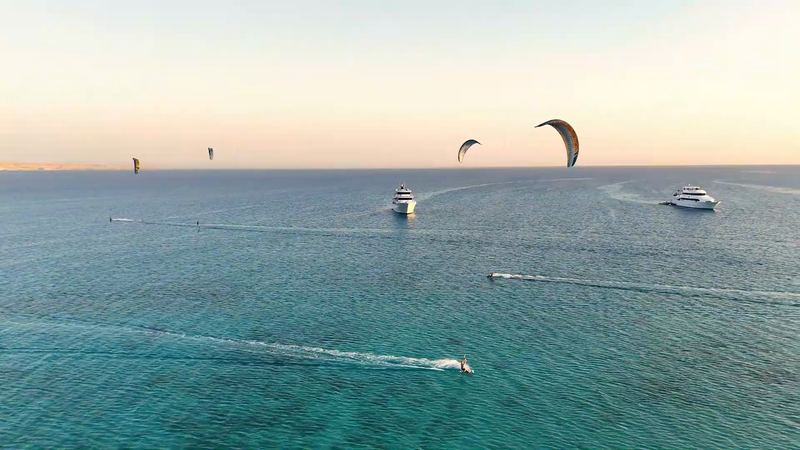
The safari I go on sets off from Hurghada, so if you want to add a few days in Marsa Alam, plan for the transfer north along the coast.
Questions
Is Marsa Alam good for beginner kitesurfers?
Yes, as long as you pick a lagoon where you can stand. The closest to the airport is the lagoon at Casa Mare, which has room for all levels and lessons for beginners; the biggest waist-deep area is at Hamata, about 2 to 2.5 hours south of the airport. At El Naaba you can only stand close to the beach, and the calmer Baby Bay is the better choice for beginners.
When is the wind best in Marsa Alam?
Measurements at Marsa Alam airport (Windfinder, 2003-2026) show the highest monthly averages in June and September, around 15 knots, and the lowest in December and January, around 11 knots. The wind blows mostly from the north.
Where do you kitesurf in Marsa Alam?
The main spots are the lagoon at Casa Mare (formerly Royal Tulip) about 17 km from the airport, El Naaba 30 km south of the airport, Blue Lagoon about 20 km south of town and, further south, Hamata and Wadi Lahami.
Do I need a wetsuit in Marsa Alam?
A wetsuit makes sense from October to March, a shorty in April, May and September, and a lycra is enough in summer. The water is around 23 °C in winter and around 29 °C in summer.
How far is Marsa Alam from Hurghada?
Marsa Alam town is 274 km south of Hurghada. Marsa Alam airport is 210 km south of Hurghada and about 60 km north of the town.
Sources
- Marsa Alam airport, observations 1 May 2003 - 30 Sep 2026: annual average wind 13 knots, dominant direction north; highest monthly averages in June (15.1 kn) and September (14.5 kn), lowest in January (10.8 kn) and December (11.1 kn) www.windfinder.com (checked 17 October 2026)
- NASA POWER for Marsa Alam (25.07 N, 34.89 E): average 10 m wind 9-11 knots, highest in June (10.9) and September (11.1), dominant direction 339-350°; air temperature January 19.1 °C, August 32.0 °C power.larc.nasa.gov (checked 17 October 2026)
- Lagoon at Royal Tulip (now Casa Mare) about 1 km along the coast and 700 m out, room for all levels, lessons for beginners too, 46 km north of town and 17 km south of the airport; El Naaba 30 km north of town and 30 km south of the airport, 1 km south of Three Corners Equinox, a deep-water lagoon separated from the sea by a coral reef, Giant Bay for experienced riders and Baby Bay with flat water for beginners; Blue Lagoon near the Dream Lagoon Beach hotel about 20 km south of town, reef about 800 m from shore slightly restricting the area, sandy bottom, introductory lesson (theory and first fly); Lahami Bay mostly of wadable depth, in July and August the water level drops and the kiting area shrinks to a narrower channel; wind usually from the north; water 29 °C in summer, 23 °C in winter marsaalam.com (checked 17 October 2026)
- El Naaba: 30 km south of Marsa Alam airport, first 20 m sandy standing area, reef about 200 m offshore protecting the bay from waves, jetty www.surf-magazin.de (checked 17 October 2026)
- From Marsa Alam airport to Lahami Bay about 2 hours, to El Naaba about 30 minutes www.surf-magazin.de (checked 17 October 2026)
- Centre at the Equinox resort (El Naaba): cross shore wind from the left, thermal, strongest early in the day; sandy beach with a shallow training area and some coral heads, shoes recommended www.sportif.travel (checked 17 October 2026)
- Hamata: huge waist-deep area, space for advanced riders to practise tricks, flat to slightly choppy water, flatter at low tide, mangroves upwind, islands with reefs further out; wind cross-on from the left, a bit stronger in the morning and a few knots less in the afternoon; 9 and 12 m most used, 7 m for lighter riders, big kites for light wind days; wetsuit January-March and October-December, shorty otherwise, lycra in summer; Kite Village bungalows right behind the kite centre, Wadi Lahmy Azur and Lahami Bay Beach Resort hotels with transfers to the spot; about 2.5 hours from the airport iksurfmag.com (checked 17 October 2026)
- Wadi Lahami is 180 km from Marsa Alam airport, kite centre, mangroves divingaway.com (checked 17 October 2026)
- Marsa Alam is 274 km south of Hurghada; the airport is 34 nautical miles northwest of the town and 210 km south of Hurghada en.wikipedia.org (checked 17 October 2026)
- Tourist visa on arrival at Cairo, Hurghada and Marsa Alam airports costs 30 USD from 1 March 2026; it can also be bought in advance through the e-Visa portal mzv.gov.cz (checked 17 October 2026)
- The Let's Play Outside video from April 2022 was filmed at Royal Tulip Beach Resort in Marsa Alam www.youtube.com (checked 17 October 2026)
- Kite safari: 8 days / 7 nights from Hurghada, morning and afternoon sessions, video analysis of your riding, beach crew helps with launching and landing, rescue boat, islands Tawila, Geisum, Abu Mungar, Ashrafi, Gubal paradisekitesurf.cz (checked 17 October 2026)