Kite spots in Egypt: where they are and who each one suits
North of Hurghada you get a short airport transfer and shallow lagoons, while Dahab, Marsa Alam and Ras Sudr take longer to reach and offer different water. The islands off Hurghada can only be reached by boat.
Level: Beginner - advanced
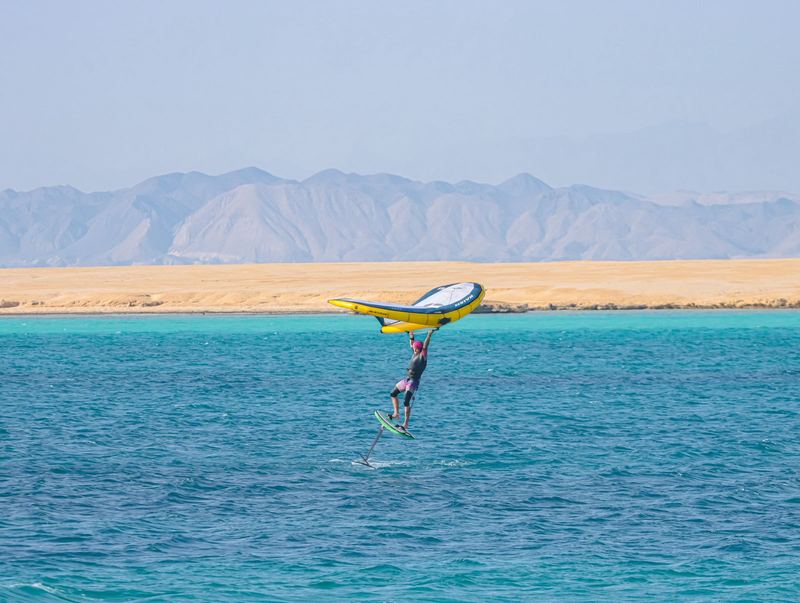
Which of the kite spots in Egypt to pick depends mainly on your level and on the airport you fly into. For a first trip or a week of practice, the shallow lagoons (shallow water sheltered from the open sea) around El Gouna and El Khayam north of Hurghada are the easiest choice: about 30 minutes from Hurghada airport and water where you can stand. For freestyle on flat water look at Soma Bay or Dahab, for a remote bay combined with diving at Hamata south of Marsa Alam, and at Ras Sudr if you fly into Cairo.
The spots are on the mainland Red Sea coast, from El Gouna past Hurghada and Soma Bay down to Marsa Alam, and on the Sinai Peninsula, with Dahab on the Gulf of Aqaba and Ras Sudr on the Gulf of Suez. Kitesurfing in Egypt mostly means warm water, a lot of shallow flat areas and wind from the north.
In Egypt I know the Hurghada side: I kited there in April 2023. On a first kiteboarding trip to Egypt, that side also makes it easy to add a few days on the islands by boat.
All of these spots are also on the kite spot map.
How to read the wind numbers
The seasonal notes come from NASA POWER, based on a NASA reanalysis model (MERRA-2) that averages wind at 10 m above ground over 2001-2025 on a grid of roughly 55 × 60 km. I show it as relative strength: 100 is the windiest month at that point, the other months are a share of it.
The model shows how wind is spread through the year. It doesn't measure the wind on the beach, and local thermal wind on the coast is often stronger than the model value. Use it to compare months and spots, not as a forecast. For month-by-month planning, read when to go kitesurfing in Egypt.
Hurghada, El Gouna and El Khayam
Where: El Gouna is a lagoon resort 20 km north of Hurghada. El Khayam is a residential complex between Hurghada and El Gouna.
Nearest airport: Hurghada International (HRG). El Gouna is about 25 km from the airport, El Khayam about 30 minutes by car.
Water: At most El Gouna kite centres you ride on flat, shallow water, at one of them there is about 1.5 km of shallow water with no reef, and the wind blows cross-onshore from the north (at an angle towards the beach, so it pushes you back to shore rather than out to sea). In El Khayam there is a wide, shallow, warm lagoon with a sandy bottom, wind blowing onshore at a slight angle and deeper water at the edge of the lagoon for hydrofoil (a board with a wing on a mast under it that lifts it above the water). Mohamed, whom I've known for years, runs his station, Paradise Kitesurf, there.
Who it suits: beginners (if you haven't had a course yet, start with how to learn kitesurfing) and anyone working on transitions (turning around without stopping) or first jumps. Foilers use the deeper edge.
Season in the model: the Hurghada point is windiest from June to September (August and September are 100, June 94, July 92) and calmest from November to February (72-76). Wind comes mostly from the northwest.
More in the guide to kitesurfing in Hurghada and El Gouna.
Safaga and Soma Bay
Where: Soma Bay is a resort area 45 km south of Hurghada airport and about 28 km north of Safaga port. Safaga is a port town 53 km south of Hurghada.
Nearest airport: Hurghada (HRG).
Water: flat, turquoise water off 2 beaches that meet at a right angle. Soma Bay is mostly deeper water with shallow areas at high tide. On the main beach the wind blows offshore to cross-shore, and it turns cross-shore where the beach bends. Offshore means from the land out to sea: if something goes wrong, the wind carries you away from the beach, which is why the kite station there works with boat rescue.
Who it suits: intermediate and advanced riders, especially freestyle (tricks and jumps) on flat water. Beginners only with a school and a rescue boat.
Season in the model: the Safaga point peaks in June, August and September (99-100) and is lowest in November (74). Wind from the northwest to north-northwest.
Marsa Alam
Where: Marsa Alam is a town 274 km south of Hurghada. Kitesurfing in the area centres on Hamata and Wadi Lahami further south, a stretch of coast with mangroves and without a big resort town.
Nearest airport: Marsa Alam International (RMF), about 60 km north of the town. From there it's about 2.5 hours by car to Hamata.
Water: a huge waist-deep bay, flat to slightly choppy (short, low wind waves, known as chop), with the wind cross-onshore. Riding upwind (against the wind) takes you towards the mangroves, and further out there are small islands.
Who it suits: beginners who want space, kiters who also dive, and anyone after a remote place without nightlife.
Season in the model: Marsa Alam has one of the flattest curves here, together with Ras Sudr: 80-100 through the year, with peaks in September and June and the lowest value in November. Wind from the north-northwest. The model point is at Marsa Alam town, not at Hamata.
Dahab
Where: Dahab is a small town on the southeast coast of the Sinai Peninsula, on the Gulf of Aqaba, about 80 km northeast of Sharm el-Sheikh.
Nearest airport: Sharm el-Sheikh (SSH), about 1 hour 10 minutes by car. If you fly into Sharm el-Sheikh and stay less than 15 days only in Sinai resorts such as Dahab, UK travel advice says you don't need a visa.
Water: Dahab kitesurf spots are a mix. The kite lagoon is shallow, you can stand in most places and there are no waves, with the wind cross-offshore (at an angle from the land out to sea). From the public beach, downwind of the windsurf area, there is open flat water that advanced riders use for tricks. At Assalah beach the wind is onshore, so it's only for advanced riders who can get off the beach, and there are stones and coral, so wear booties.
Who it suits: beginners in the lagoon with a school watching the offshore component, and freestyle riders on the open flat water.
Season in the model: the Dahab point is windiest in June (100) and September (98), with May at 91, and calmest in January (74). Wind from the north to north-northwest.
Sinai has its own regional travel advice. Before you book Dahab or Ras Sudr, check your government's current advice for the specific area.
Ras Sudr
Where: Ras Sudr (also spelled Ras Sedr) is on the west coast of the Sinai, on the Gulf of Suez, about 200 km from Cairo and about 60 km from the Ahmed Hamdi Tunnel near Suez.
Nearest airport: Cairo International (CAI), about 2.5 hours by car.
Water: shallow and tidal. At low tide you get waist-deep flat water and small lagoons; at high tide it gets choppier, which is better for jumping. Some spots have waves out on the reef. The wind blows side-onshore, at an angle towards the beach.
Who it suits: all levels. Beginners at low tide, more experienced riders for the chop and the reef. From November to March most kite centres there close, so check before you book.
Season in the model: the curve is fairly even (81-100). September is the windiest, followed by June (96) and October (93); February is the calmest.
Red Sea islands you can only reach by boat
Off Hurghada there are several kite islands:
- Tawila: a huge turquoise lagoon, shallow water and a sandy bottom. On the safari, Tawila is visited only by prior arrangement because entry is paid.
- Geisum: one of the least crowded spots, long beaches, downwinds (longer runs with the wind from island to island) to the neighbouring islands, shallow and deeper water.
- Abu Minqar (also Abu Mungar): a small island with a lagoon, shallow calm water on sand, also used for practising tricks.
- Ashrafi: the most remote, shallow water and waves, downwinds, for advanced riders.
- Gubal: deeper water and coral reefs, only when guests want to dive.
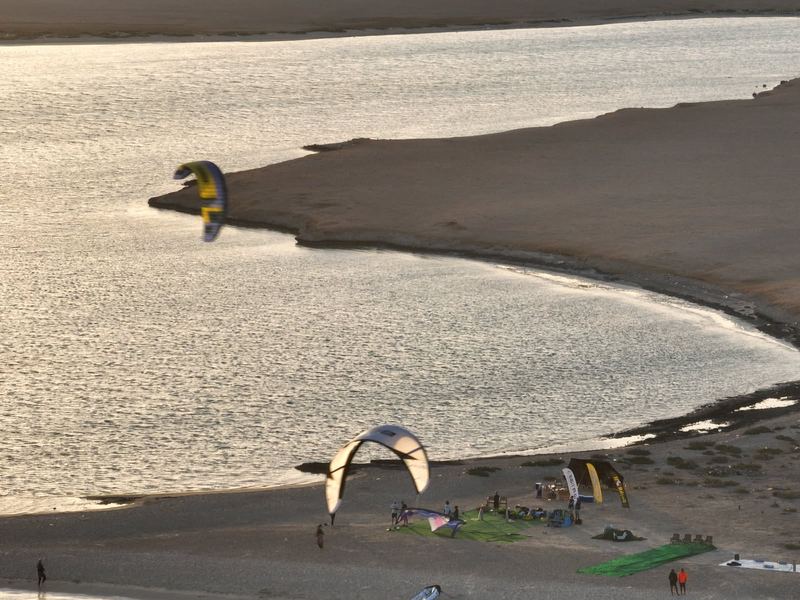
According to guests, the safari spots mostly have offshore wind, blowing from the land out to sea. That gives flat water, and it's why a rescue boat stays on the water to pick up anyone who can't get back.
The kite safari in Egypt with Mohamed's crew is a week on a yacht from Hurghada. The crew picks the spot by the wind, usually Geisum, Abu Minqar or Ashrafi; Tawila only by prior arrangement and Gubal when guests want to dive. It's built as a week of progress, with a morning and an afternoon session and video coaching with ride analysis in the evenings. If you can't ride on your own yet, start with a course on the coast. The safari gives the most to riders who already ride on their own after a course. There is also a 6-day beginner course on board (€600 with gear); Mohamed confirms how many instructors come along with your dates. Each island is described in more detail in the guide to the Red Sea kite safari islands.
Comparison of kite spots in Egypt
| Spot | Nearest airport | Getting there | Water | Best for | Windier months in the model |
|---|---|---|---|---|---|
| El Gouna, El Khayam (Hurghada) | Hurghada (HRG) | about 25 km / 30 min | shallow lagoons, flat | beginners, improvers, foil at the lagoon edge | June-September |
| Soma Bay (near Safaga) | Hurghada (HRG) | about 45 km | flat bay, mostly deeper, offshore on the main beach | intermediate and advanced, freestyle | June, August, September |
| Hamata, Wadi Lahami (Marsa Alam) | Marsa Alam (RMF) | about 2.5 h by car | waist-deep bay, flat to light chop | beginners, kiting plus diving | windy all year (model point at Marsa Alam town) |
| Dahab | Sharm el-Sheikh (SSH) | about 1 h 10 min | shallow lagoon, open flat water, onshore beach with coral | beginners in the lagoon, freestyle | June, September |
| Ras Sudr | Cairo (CAI) | about 2.5 h | tidal flats, chop at high tide, reef waves | all levels | fairly even, peak September |
| Islands (Tawila, Geisum, Abu Minqar, Ashrafi, Gubal) | Hurghada (HRG) | boat only | lagoons, shallow and deep, waves at Ashrafi | depends on the island | as Hurghada |
Questions
Which kite spot in Egypt is best for beginners?
The shallow lagoons around El Gouna and El Khayam north of Hurghada, the waist-deep bay at Hamata south of Marsa Alam, the kite lagoon in Dahab and Ras Sudr at low tide all let you stand in the water while you learn. El Gouna and El Khayam have the shortest transfer, about 30 minutes from Hurghada airport.
Which airport do I fly into for kitesurfing in Egypt?
Hurghada (HRG) for El Gouna, El Khayam, Soma Bay near Safaga and the islands; Marsa Alam (RMF) for Hamata and Wadi Lahami; Sharm el-Sheikh (SSH) for Dahab; Cairo (CAI) for Ras Sudr.
When is it windiest in Egypt for kitesurfing?
In the NASA POWER climate model the windiest months around Hurghada and Safaga are June to September and the calmest are November to February. Marsa Alam and Ras Sudr have a flatter curve through the year, though most Ras Sudr kite centres close from November to March. The model shows the yearly pattern, not the wind on a particular beach.
Can you kite on the Red Sea islands near Hurghada without a boat?
No. They are reached by boat from Hurghada or El Gouna. Kite schools in El Gouna run boat trips to Tawila; on a kite safari the crew picks the spot by the wind, usually Geisum, Abu Minqar or Ashrafi. On the safari Tawila is visited only by prior arrangement because entry is paid.
Sources
- El Gouna is 20 km north of Hurghada and 25 km from Hurghada International Airport; the resort is built around lagoons en.wikipedia.org (checked 16 October 2026)
- El Gouna kite spots: mostly flat shallow water, 1.5 km of shallow water with no reef at one centre, wind cross-shore/onshore from the north, HRG about 30 minutes by car; kite schools organise boat trips to Tawila www.iksurfmag.com (checked 16 October 2026)
- Paradise Kitesurf station in the El Khayam residential complex between Hurghada and El Gouna, about 30 minutes from Hurghada airport; wide shallow warm lagoon with sandy bottom, wind onshore at a slight angle, deep water at the lagoon edge for hydrofoil www.paradisekitesurf.cz (checked 16 October 2026)
- Soma Bay is 45 km south of Hurghada International Airport and about 28 km north of Safaga port; prevailing winds make it popular for kitesurfing en.wikipedia.org (checked 16 October 2026)
- Soma Bay: flat turquoise water, deep water with shallow areas at high tide, offshore to cross-shore wind on the main beach, cross-shore where the beach bends, boat rescue used; flown into via HRG www.iksurfmag.com (checked 16 October 2026)
- Safaga is 53 km south of Hurghada en.wikipedia.org (checked 16 October 2026)
- Marsa Alam is 274 km south of Hurghada and is known as a kitesurfing destination en.wikipedia.org (checked 16 October 2026)
- Marsa Alam International Airport (RMF) is about 60 km north of Marsa Alam en.wikipedia.org (checked 16 October 2026)
- Hamata/Wadi Lahami: about 2.5 hours by car from RMF, huge waist-deep area, flat to slightly choppy water, wind cross-on from the left, mangroves and islands within reach, no nightlife www.iksurfmag.com (checked 16 October 2026)
- Wadi Lahami combines diving and kitesurfing: flat water, a large bay and sandy lagoons scubaverse.com (checked 16 October 2026)
- Dahab is on the southeast coast of the Sinai, about 80 km northeast of Sharm el-Sheikh en.wikipedia.org (checked 16 October 2026)
- Dahab: shallow kite lagoon where you can stand in most places, no waves, cross-offshore wind; Assalah onshore with stones and coral, advanced kiters only; open flat water from the public beach downwind of the windsurf area for advanced riders; Sharm el-Sheikh (SSH) about 1 hour 10 minutes by car www.iksurfmag.com (checked 16 October 2026)
- Ras Sedr is on the western side of the Sinai on the Gulf of Suez, 200 km from Cairo and about 60 km from the Ahmed Hamdi Tunnel; shallow water beaches and steady wind, several kite centres en.wikipedia.org (checked 16 October 2026)
- Ras Sudr: Cairo (CAI) about 2.5 hours by car, waist-deep flat water at low tide, choppier at high tide, waves on the reef at several spots, side/onshore wind, suits beginners and advanced riders; most centres close from November to March www.iksurfmag.com (checked 16 October 2026)
- Arriving by air at Sharm El-Sheikh and staying less than 15 days in resorts in Sharm El Sheikh, Dahab, Nuweiba or Taba, you do not need a visa www.gov.uk (checked 16 October 2026)
- UK travel advice treats parts of South Sinai separately and makes an exception for the coastal areas on the west and east of the peninsula www.gov.uk (checked 16 October 2026)
- Red Sea islands Tawila, Geisum, Abu Mungar, Ashrafi and Gubal: water, levels, Tawila on the safari only by prior arrangement because entry is paid, Gubal only when guests want to dive; yacht leaves Hurghada and the crew picks the spot by the wind; guest review (Jan Procházka): spots mostly with offshore wind; programme with morning and afternoon sessions and evening video coaching; 6-day beginner course on board €600 including equipment www.paradisekitesurf.cz (checked 16 October 2026)
- MERRA-2 values are on a 1/2 x 5/8 degree grid (about 55 x 60 km at this latitude) power.larc.nasa.gov (checked 16 October 2026)
- Monthly wind climatology at 10 m, Hurghada point (27.25 N, 33.81 E), MERRA-2, 2001-2025: windiest August-September, weakest November-February, direction 316-323 degrees power.larc.nasa.gov (checked 16 October 2026)
- Monthly wind climatology, Safaga point (26.75 N, 33.94 E) power.larc.nasa.gov (checked 16 October 2026)
- Monthly wind climatology, Marsa Alam point (25.07 N, 34.89 E) power.larc.nasa.gov (checked 16 October 2026)
- Monthly wind climatology, Dahab point (28.49 N, 34.51 E) power.larc.nasa.gov (checked 16 October 2026)
- Monthly wind climatology, Ras Sudr point (29.59 N, 32.70 E) power.larc.nasa.gov (checked 16 October 2026)