Red Sea kite safari islands: Tawila, Geisum, Abu Minqar, Ashrafi and Gubal
5 islands, each with its own conditions: shallow sandy lagoons at Tawila and Abu Minqar, downwinds and waves at Geisum and Ashrafi, reef and diving at Gubal.
Level: Improver - advanced
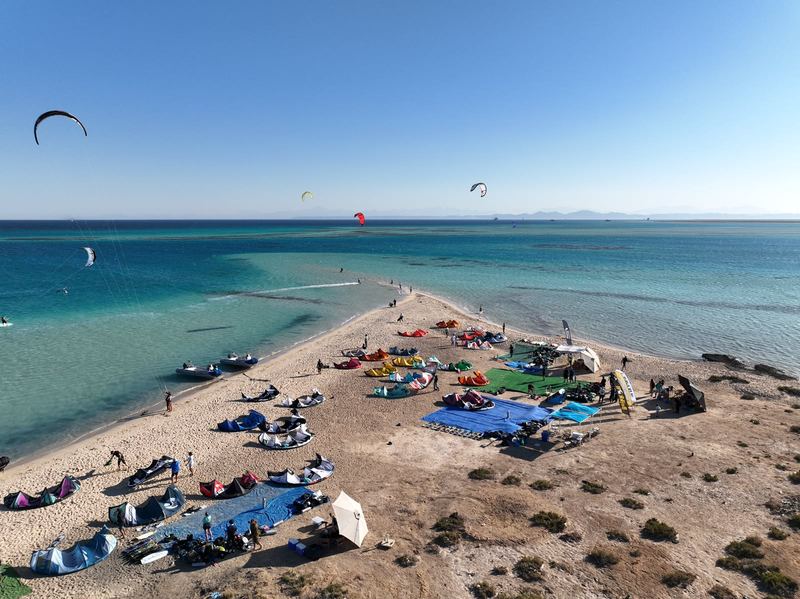
Of the 5 Red Sea kite safari islands, Tawila and Abu Minqar give you shallow lagoons over sand, Geisum and Ashrafi are the islands for downwinds and waves, and Gubal is the deeper reef spot the boat visits only when guests want to dive. On Mohamed's Paradise Kitesurf safari from Hurghada, the crew picks the spot by the wind, usually Geisum, Abu Minqar or Ashrafi. Tawila is only by prior arrangement because entry is paid, and Gubal is for days when guests want to dive.
I have been on this safari several times, and I have a video from the safari at Geisum and Ashrafi. Which island you get on a given day depends on the wind, so it helps to know what each one offers before you pack your kites.
If you want to see the islands on a map next to other spots, open the kite spots map.
Where the kite safari islands are
4 of the 5 islands lie north of Hurghada, in the area where the Gulf of Suez opens into the Red Sea at the Strait of Gubal. In a straight line from Hurghada, Tawila is 37 km away, Gubal 43 km, Geisum 48 km and Ashrafi 60 km. Abu Minqar is the exception: it is 8 km from Hurghada.
Egypt protects parts of the northern Red Sea: in 2006 it designated the Red Sea Northern Islands and their barrier reefs a protected area. According to an FAO report on Egyptian mangroves, Ashrafi, North Geisum and Tawila are among the most important seabird breeding sites on Egypt's Red Sea coast. On a safari, the marine national park fee is one of the costs paid on top of the price.
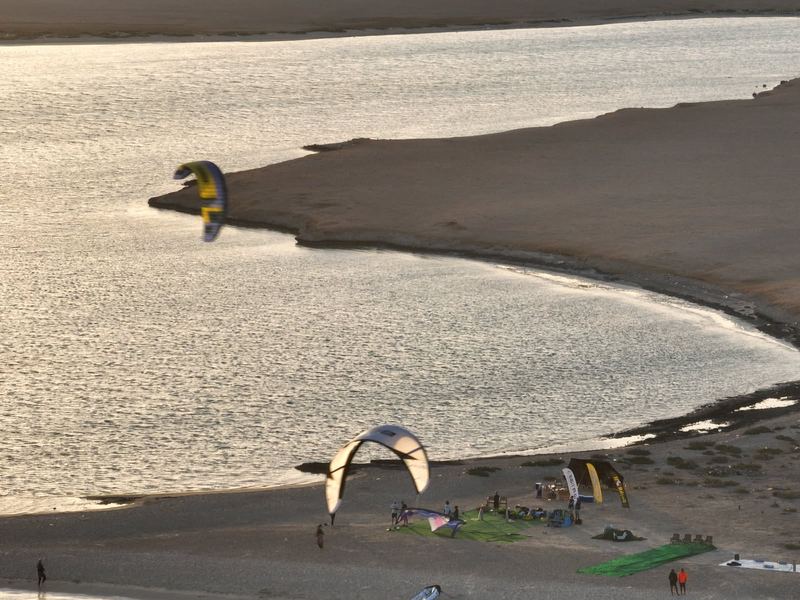
Red Sea kite safari islands at a glance
| Island | Where | Water | Bottom | Level | Note |
|---|---|---|---|---|---|
| Tawila | 37 km north of Hurghada | huge shallow turquoise lagoon | sand | freeride and freestyle | only by prior arrangement, entrance fee |
| Geisum | 48 km north of Hurghada | shallow and deeper water | not specified, long sandy beach | freeride, waves | one of the least crowded, downwind to the next islands |
| Abu Minqar | 8 km from Hurghada | shallow and calm | sand | freestyle and trick training | small island with a lagoon and bays |
| Ashrafi | 60 km north of Hurghada | flat water and waves | not specified | advanced riders | most remote, good for downwinds |
| Gubal | 43 km north of Hurghada | deeper water, stronger wind | reef in places | advanced riders | only when guests want to dive |
Paradise Kitesurf describes the conditions on its safari page. Distances are straight lines from Hurghada, so the boat route is longer.
If you can't ride on your own yet, start with a course on the coast. The safari gives the most to riders who already ride on their own after a course. There is also a 6-day beginner course on board (€600 with gear); Mohamed confirms how many instructors come along with your dates.
Tawila island kitesurfing
Tawila is the most popular spot of the safari. It has a huge turquoise lagoon with shallow water and a sandy bottom, and Paradise lists steady winds of 15-25 knots there. Shallow water over sand means long freeride runs and freestyle sessions where a crash costs you a few steps back to the board.
The boat goes to Tawila only by prior arrangement, because entry to the island is paid. Whether Tawila is on your week and what the entry costs, Mohamed confirms with your dates.
Who it suits: freeriders and freestylers.
Without wind: the island has sandy beaches for a lazy day. The beach camp with a tent, carpet, water, cold drinks and fruit goes up on the beach, and snorkelling gear is on board.
To check which kites from your quiver fit 15-25 knots for your weight, use the kite size calculator.
Geisum island
Geisum is one of the least crowded spots on the safari. On the map it is actually 2 islands, North and South Geisum. There is a long sandy beach, the wind is constant and there is both shallow and deeper water.
Geisum works well as a starting point for a downwind to the next islands. Paradise recommends it for freeriders and riders who like waves. While the boat cruises between spots, you can see dolphins.
Who it suits: freeriders, wave riders and anyone who wants a downwind.
Without wind: walk the long beach, snorkel, or watch the mangroves, which grow on Geisum according to the FAO report.
Abu Minqar island
Abu Minqar is spelled Abu Mungar on the Paradise website, and some reports use Abu Monkar. It is a smaller island with a lagoon and the closest of the 5 islands to Hurghada.
The water is shallow and calm with a sandy bottom. Paradise recommends it for trick training. For drilling a new trick, shallow calm water over sand is what you want: after a crash you stand up and go again.
Who it suits: freestyle riders working on new tricks.
Without wind: the island has small bays where you can relax, and mangroves grow there too.
Ashrafi island
Ashrafi is the most remote spot of the safari, 60 km north of Hurghada. Paradise describes the conditions as steady wind with a mix of calm water and waves, and recommends it for advanced kiters who want to freeride. It is also a good island for a downwind.
Who it suits: advanced riders who want freeride, waves and downwinds.
Without wind: Paradise describes it as pristine nature and a great place to camp. Ashrafi is also an important seabird breeding site, so give nesting birds space when you walk around.
Gubal island
Gubal is the island for snorkelling and diving, and the boat goes there only if guests are interested in diving. You can kite there too: Paradise lists stronger winds, deeper water and some reef, so it suits advanced riders who want to combine kiting with diving.
Gubal is near the wreck of the SS Thistlegorm, a British cargo ship that sank on 6 October 1941 in the Strait of Gubal. The wreck sits upright at about 30 m, roughly 20 km north-east of Gubal island, and is now a well-known dive site.
Who it suits: advanced kiters who also want to dive or snorkel.
Without wind: snorkelling on the reef and diving, which is paid extra on the safari.
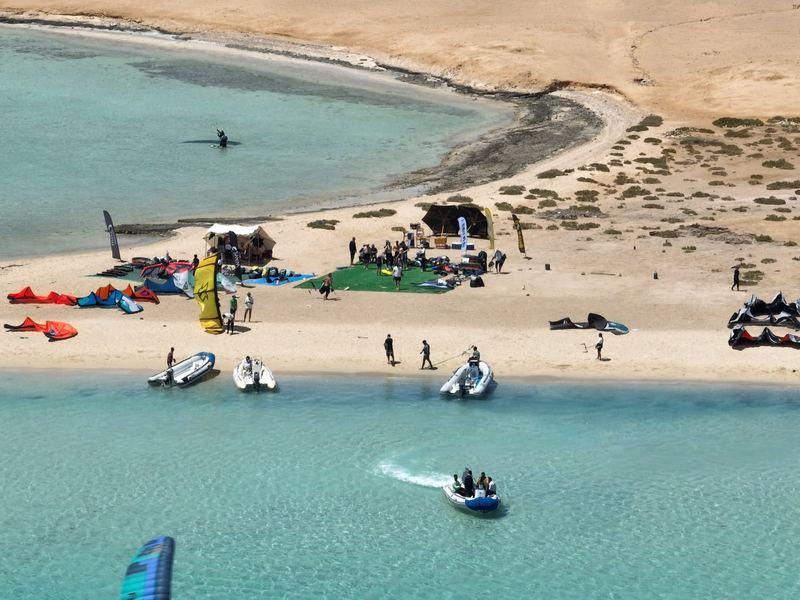
How the boat chooses the island
You do not get a fixed island plan in advance. On days 3-6 of the programme, the crew moves the boat to an island according to the conditions, for example Ashrafi or Geisum. On days 2-6 there are 2 sessions, morning and afternoon, with lunch on the boat in between, and day 7 has a last one. Depending on the conditions, there is a downwind, snorkelling or diving, and wakeboarding behind the boat.
For planning downwinds, the bigger picture helps. In NASA POWER model data for Hurghada (2001-2025), the wind blows mostly from the north-west in every month, and August and September are the windiest months. The model works on a grid of about 50 km and shows the pattern over the year, not the wind on a given island.
A guest review on Paradise's site describes the safari spots as mostly offshore, with the wind blowing from the beach out to sea, which gives flat water with no waves and few gusts. If you drift off, there is no shore downwind of you, which is why the rescue boat stays on the water.
When you send the enquiry form, add a line about what you want from the week. For shallow lagoons and trick sessions that means Tawila and Abu Minqar, for downwinds and waves Geisum and Ashrafi. The final choice each day follows the forecast. On the Red Sea kite safari, the crew organises the downwinds between the islands, picks the spots by the wind and takes care of rescue on the water, and the page has the full price list and the enquiry form.
What you pay extra matters too. Marine park and marina fees and crew tips are paid on site; I confirm the current amount with your dates. For the daily rhythm on board, read what to expect on a kite safari, and for the island days pack according to the kite safari packing list.
What to do on the islands when the wind drops
Calm spells can happen on any safari. These are included in the price:
- snorkelling gear on board
- fishing gear
- wakeboarding behind the boat
- the beach camp with a tent, carpet, water, cold drinks and fruit
- BBQ on the boat or on the beach in the evening (part of the programme)
Diving and massage are available at an extra cost. If you want to dive, Gubal is the island to ask for.
Questions
Which islands does a Red Sea kite safari from Hurghada visit?
Mohamed's Paradise Kitesurf safari works with 5 islands: Tawila, Geisum, Abu Minqar (Abu Mungar), Ashrafi and Gubal. The crew picks the spot by the wind, usually Geisum, Abu Minqar or Ashrafi; Tawila only by prior arrangement (paid entry), Gubal when guests want to dive.
Is Tawila island good for freestyle?
Yes. Paradise describes Tawila as a huge turquoise lagoon with shallow water, a sandy bottom and steady 15-25 knot winds, perfect for freeride and freestyle. The boat goes there only by prior arrangement because entry is paid.
Where are the kite safari islands located?
Tawila, Gubal, Geisum and Ashrafi lie north of Hurghada, 37-60 km in a straight line, in the area where the Gulf of Suez opens into the Red Sea. Abu Minqar is 8 km from Hurghada.
What can you do on the islands when there is no wind?
Snorkelling and fishing gear are on board, wakeboarding behind the boat is included, and diving can be added for a fee. Gubal is the island for snorkelling and diving, and the boat goes there only if guests want to dive.
Can I ask for downwinds or a specific island?
The crew picks the spot each day from the wind forecast and organises the downwinds, which Paradise lists at Geisum and Ashrafi. The boat goes to Tawila only by prior arrangement because entry is paid; whether Tawila is on your week and what the entry costs, Mohamed confirms with your dates.
Sources
- Island descriptions (Tawila: most popular, huge turquoise lagoon, steady 15-25 knots, shallow water, sandy bottom, by appointment because of the entrance fee; Geisum: least crowded, long sandy beach, downwind to the next islands, constant wind, shallow and deeper water, freeride and waves, dolphins; Abu Mungar: smaller island with a lagoon, shallow calm water, sandy bottom, trick training and freestyle, bays; Ashrafi: most remote, shallow water and waves, downwind, advanced, pristine nature; Gubal: snorkelling and diving, only if interested in diving, stronger winds, deeper water, reef, near SS Thistlegorm) paradisekitesurf.cz (checked 16 October 2026)
- Safari facts: 8 days / 7 nights from Hurghada, boat chooses islands by wind, beach camp, snorkelling and fishing gear, wakeboarding, diving as an extra; marine park and marina fees and crew tips paid on site, not included in the price paradisekitesurf.cz (checked 16 October 2026)
- Guest review (Jan Prochazka): the spots are mostly with offshore winds, absolutely flat water with no waves and strong winds with minimal gusts paradisekitesurf.cz (checked 16 October 2026)
- Kiteboarding course for beginners, €600 / 6-day intensive course including kite equipment paradisekitesurf.cz (checked 16 October 2026)
- The crew organises downwind adventures, selects the best spots according to the wind conditions and ensures safety and rescue on the water paradisekitesurf.cz (checked 16 October 2026)
- NASA POWER climatology for Hurghada (27.25 N, 33.81 E), 2001-2025, MERRA-2 grid: prevailing wind direction 316-323 degrees (north-west) in every month; highest monthly mean wind speed in August and September power.larc.nasa.gov (checked 16 October 2026)
- Tawila island position 27.585 N, 33.769 E (37 km north of Hurghada in a straight line from the reference point 27.258 N, 33.812 E used on this site) www.openstreetmap.org (checked 16 October 2026)
- Gubal island position 27.642 N, 33.803 E (43 km north of Hurghada in a straight line) www.openstreetmap.org (checked 16 October 2026)
- North Geisum island position 27.702 N, 33.682 E www.openstreetmap.org (checked 16 October 2026)
- South Geisum island position 27.679 N, 33.724 E (48 km north of Hurghada in a straight line) www.openstreetmap.org (checked 16 October 2026)
- Abu Minqar islands position 27.214 N, 33.875 E (8 km from Hurghada in a straight line) www.openstreetmap.org (checked 16 October 2026)
- Ashrafi Juzur Lighthouse position 27.79 N, 33.707 E (60 km north of Hurghada in a straight line) www.wikidata.org (checked 16 October 2026)
- The Gulf of Suez has its mouth at the Strait of Gubal en.wikipedia.org (checked 16 October 2026)
- Egypt designated the Red Sea Northern Islands and barrier reefs a protected area (Resolution No. 1618 of 2006) www.informea.org (checked 16 October 2026)
- Ashrafi, North Quisum (Geisum) and Tawila are among the most important breeding habitats for sea birds (chapter on Egypt's Red Sea coast); mangroves grow on Abu Monkar and Geisum www.fao.org (checked 16 October 2026)
- SS Thistlegorm anchored at Sha'ab Ali in the Straits of Gubal, sank on 6 October 1941 and sits upright at 30 m divemagazine.com (checked 16 October 2026)
- SS Thistlegorm wreck position 27°48′51″N 33°55′12″E (about 20 km north-east of Gubal island), recreational dive site en.wikipedia.org (checked 16 October 2026)