Kiteboarding drysuit or wetsuit: what to choose for your conditions
For a first season, I would choose a wetsuit for the water temperature, wind and session length. I would consider a kiteboarding drysuit for winter riding in very cold water.
For a first season, I would choose a wetsuit over a kiteboarding drysuit. I would consider a drysuit for winter riding in very cold water, when you are ready to plan the layers underneath and look after its zip and seals.
Choose wetsuit thickness for the water you will ride most often. For 15-18°C (59-65°F) water the starting point is a 3/2 full suit, for 11-14°C (52-58°F) a 4/3, and for 7-10°C (45-51°F) a 5/4 with boots and gloves. With warm air and water from 19°C (66°F), a shorty may be enough; choose a warmer suit for cold wind or longer spells in the water.
Most wetsuit charts are written with surfers in mind, though. On a kite you spend most of the session above the water, wet and in the wind, so air temperature and wind chill hit you harder. If you are torn between 2 thicknesses, take the warmer option, especially while you are still learning.
What 3/2, 4/3 and 5/4 mean
Wetsuit thickness is given in millimeters, usually as 2 numbers. The first is the torso, the second the arms and legs. A 4/3 is 4 mm on the torso and 3 mm on the limbs. Thicker neoprene around the torso holds warmth, while thinner sleeves and legs restrict movement less. A shorty, with short arms and legs, usually has 1 thickness.
A thin layer of water gets in under the neoprene, your body warms it, and the material, full of tiny air cells, holds that heat. The better the suit fits, the less that warm layer gets swapped for cold water.
Wetsuit thickness by water temperature
Vissla's chart makes a good starting point:
| Water temperature | Wetsuit | Extras |
|---|---|---|
| 19°C+ (66°F+) | 2 mm shorty or neoprene top | - |
| 15-18°C (59-65°F) | 3/2 full suit | - |
| 11-14°C (52-58°F) | 4/3 full suit, additionally sealed or taped seams | consider boots or gloves |
| 7-10°C (45-51°F) | 5/4 full suit, additionally sealed or taped seams | boots and gloves |
| below 7°C (45°F) | 5/4/3 or 6/5 with hood | boots, gloves, hood |
Treat these boundaries as a guide. Choose a warmer suit than the chart suggests when:
- the water is pleasant but the wind is cold or the air is cool,
- you are learning and spend more time in the water than on the board,
- you ride long sessions or 2 sessions a day,
- you get cold easily.
Why beginners get cold first
While you are practising waterstarts and falling often, allow for more time in the water. After a fall you body drag back to retrieve your board, letting the kite pull you through the water without it, then try another waterstart. During lessons you also wait while your instructor explains something. While waiting, you move little and stay wet.
That is why I would not save on thickness or seams with a first wetsuit. Cold hands grip the bar worse, and it gets harder to keep your attention on the wind and on where you are.
Wetsuit for a kite safari and Egypt
The Red Sea is warm, but not equally warm all year. The Open-Meteo model shows the water temperature off Hurghada in 2024 and 2025 during the calendar weeks corresponding to the scheduled 2026 safari dates:
| Safari dates 2026 | Water off Hurghada (2024 and 2025) | Air, monthly mean | What I would pack |
|---|---|---|---|
| 11-18 Apr | 22-24°C (72-75°F) | 24°C (75°F) | 3/2 full suit |
| 22-29 May | 24-26°C (75-79°F) | 27°C (81°F) | shorty, or a thin full suit if you get cold easily |
| 10-17 Oct | 26-28°C (79-82°F) | 27°C (81°F) | rash guard or shorty |
| 7-14 Nov | 25-27°C (77-81°F) | 24°C (75°F) | 3/2 full suit |
The air temperature comes from NASA's climate model and averages day and night, so it is warmer on the beach during the day. Going by a surf chart, a thin shorty would do in April. Yet the Paradise kite school in Hurghada recommends a 3-5 mm full wetsuit for courses from November to April, and suggests bringing your own, although you can rent one. The difference is the air and the wind: the water in November is almost the same as in October, but the air is cooler, you are out for hours and the wind on the islands keeps blowing.
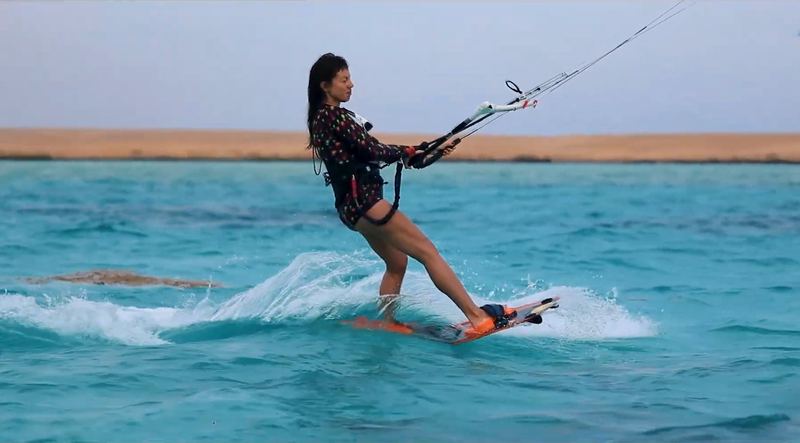
On the kite safari you ride shallow lagoons in the morning and again in the afternoon, and in the evening there is video coaching where you watch your own riding. How much you take home from a week like that also depends on whether you go into the afternoon session already chilled from the morning. The rest of what to bring is in my kite safari packing list.
Kiteboarding drysuit: when it makes sense
A drysuit keeps you dry. It has seals at the wrists, ankles and neck, often latex. The layers underneath are essential for warmth: a thermal base layer and extra insulation to suit the water temperature. There are neoprene drysuits too, such as the ION Fuse 4/3 with latex cuffs, taped seams and a waterproof back zip.
What a drysuit gives you:
- you change the layers underneath to match the water temperature and conditions,
- you stay dry even after a long wait in the water,
- you move freely in it.
What it costs you:
- budget more for a good drysuit than for a typical wetsuit,
- clean and maintain the zip according to the instructions for that suit and zipper type; before every session check the seals and make sure the zip is fully closed,
- a latex seal tears easily,
- a back zip is hard to close on your own.
I would not buy a drysuit for a first season. It starts to make sense once you know you will keep riding through winter in very cold water. For spring and autumn on Czech lakes or the Baltic, I would start with a wetsuit and accessories from the chart above, allowing extra warmth for cold air, wind and longer spells in the water. Which wetsuit to take to Rügen and when is in my guide to kitesurfing on Rügen.
Seams, zips and fit
For warm water, flatlock, a flat stitched seam that lets some water through, may be enough. For colder water, look for GBS, glued and blind-stitched seams where the needle does not pass all the way through the material. On a 4/3 or thicker suit, I would also check for additional seam sealing or internal tape to further reduce water entry.
With zips it comes down to how easy the suit is to put on and how warm it stays. A back zip is the easiest to put on, but the long opening lets more heat escape. A chest zip keeps water out better and takes a bit more effort to get into. A zipless suit lets in the least water, and until you get used to it, putting one on feels like pulling on a sweater 1 size too small.
A wetsuit should fit snugly, with no loose spots at the lower back, chest or crotch, without restricting you. When you try one on, squat and stretch your arms out in front of you as if you were holding the bar. If you already have a harness, try the wetsuit with it, because a harness sits differently over thick neoprene than over a rash guard. How to choose a harness and its size is in my kite harness guide.
On a full wetsuit for kiting, also look for drainage ports at the ankles. Some models have them to stop water pooling in the legs after a fall. I would check this detail along with the fit.
Boots, gloves and hood
As a starting point, add boots below 11°C (52°F), gloves below 10°C (50°F) and a hood below 9°C (48°F); below 7°C (45°F), the chart includes all of them. Consider them sooner if you get cold easily. Accessories cannot make up for neoprene that is too thin around your torso.
Boots are useful in warm water too, when the way into the sea has rocks or coral. Rash guards, ponchos and sun protection are covered in what to wear for kitesurfing.
Where to try and buy a wetsuit
A wetsuit belongs with the harness among the first things you buy, because it fits your body and you can use it with a rented kite. The order to buy things in is in my complete kitesurfing equipment guide.
If you are in Czechia, Big Day, run by Honza Procházka, whom I work with, is the official Czech dealer of C-Skins wetsuits (the Element, ReWired and NuWave lines). They run Try & Buy, so you can test a wetsuit on the water before you buy it.
How to look after your wetsuit
- Rinse it in fresh water after every session.
- Dry it out of direct sunlight.
- Store it on a wide hanger.
An indicative lifespan estimate is 2-4 years of regular use. Treat that as a guide, not a guarantee that these care steps will make your suit last that long.
Questions
What wetsuit should a beginner kitesurfer buy?
Choose for the water you will ride most often, with extra warmth for cold air, wind and longer sessions. A starting point for 15-18°C (59-65°F) is a 3/2 full suit, and for 11-14°C (52-58°F) a 4/3 with additionally sealed or taped seams. While you are practising waterstarts and falling often, allow for more time in the water.
Do I need a wetsuit for kitesurfing in Egypt?
From November to April, the Paradise kite school in Hurghada recommends a 3-5 mm full wetsuit for lessons. In late May I would pack a shorty, or a thin full suit if you get cold easily. In mid October, a rash guard or shorty may be enough with warm air and water from 26°C (79°F), but for both trips factor in the wind, session length and your cold tolerance.
When is a kiteboarding drysuit better than a wetsuit?
When you ride through winter in very cold water. A drysuit keeps you dry and the warmth comes from the layers underneath. It costs more and the zip and seals need regular care, so for a first season I would buy a wetsuit.
What does 4/3 mean on a wetsuit?
The suit is 4 mm thick on the torso and 3 mm on the arms and legs. Thicker neoprene around the torso holds warmth, while thinner sleeves and legs restrict movement less.
At what water temperature do I need boots and gloves?
As a starting point, add boots below 11°C (52°F), gloves below 10°C (50°F) and a hood below 9°C (48°F); consider them sooner if you get cold easily. Boots also help in warm water when the entry has rocks or coral.
Sources
- Starting points by water temperature: 19°C+ (66°F+) 2 mm spring suit or top; 15-18°C (59-65°F) 3/2 full suit; 11-14°C (52-58°F) 4/3, start thinking boots or gloves; 7-10°C (45-51°F) 5/4 with additionally sealed or taped seams, boots and gloves; below 7°C (45°F) 5/4/3 or 6/5 hooded; air, wind, session length and cold tolerance affect the choice www.vissla.com (checked 18 October 2026)
- Seams: flatlock for warm water (2 mm and under), GBS means glued and blind-stitched, additional liquid sealant or internal tape further reduces water entry and is standard from 4/3 up; boots below 52°F, gloves below 50°F, hood below 48°F; accessories cannot fully compensate for insufficient core thickness; snug fit with no gaps at the lower back, chest or crotch; care: rinse with fresh water after every session, dry out of direct sunlight, store on a wide hanger; manufacturer's indicative lifespan estimate with care is 2-4 years of regular surfing www.vissla.com (checked 18 October 2026)
- 3/2 means 3 mm core and 2 mm arms and legs; a shorty usually has 1 thickness; a wetsuit traps a thin layer of water warmed by the body; O'Neill suggests 3/2 or 4/3 for 12-17°C and a rash guard from 26°C, always accounting for activity and conditions; in kitesurfing the body is mostly out of the water, so air temperature and wind matter more eu.oneill.com (checked 18 October 2026)
- Back zip: easy to get in and out, long opening reduces insulation; chest zip: minimal flushing, slightly harder to put on; zipless: least flushing, harder to get into until you are used to it au.vissla.com (checked 18 October 2026)
- Paradise Kitesurf (Hurghada) course kit list: in the colder months (November to April) a 3-5 mm full wetsuit, your own is better, rental available paradisekitesurf.cz (checked 18 October 2026)
- Sea surface temperature off Hurghada (27.25 N, 33.85 E), Open-Meteo Marine daily means: 11-18 Apr 2024 22.9-23.7°C and 2025 22.3-22.6°C; 22-29 May 2024 25.3-25.9°C and 2025 24.5-25.2°C; 10-17 Oct 2024 27.0-27.7°C and 2025 26.0-26.5°C; 7-14 Nov 2024 25.0-25.8°C and 2025 26.4-27.1°C marine-api.open-meteo.com (checked 18 October 2026)
- NASA POWER climatology for Hurghada (27.25 N, 33.81 E), mean air temperature at 2 m: April 23.9°C, May 27.2°C, October 27.0°C, November 23.6°C power.larc.nasa.gov (checked 18 October 2026)
- Safari dates 2026 (11-18 Apr, 22-29 May, 10-17 Oct, 7-14 Nov); program: morning and afternoon sessions, video coaching in the evening paradisekitesurf.cz (checked 16 October 2026)
- Drysuit for kiting: layer synthetic base and insulation layers underneath, unrestricted range of motion; good drysuits are not cheap, check the seals before each session, latex seals can rip easily, back zip is hard to close on your own www.mackiteboarding.com (checked 18 October 2026)
- ION Fuse Drysuit 4/3 Back Zip: neoprene drysuit, latex cuffs, waterproof back zip and taped seams www.ion-products.com (checked 18 October 2026)
- Price example from US retailer MACkite: ION Fuse Drysuit 4/3 BZ USD 1,129.99; shipping calculated at checkout, not a final landed price for a European customer www.mackiteboarding.com (checked 18 October 2026)
- Price examples from O'Neill's European shop: Epic 4/3 Back Zip €239.95, Hyperfreak Plus 4/3 Chest Zip €369.95; these are not the limits of the full range eu.oneill.com (checked 18 October 2026)
- Big Day: official Czech dealer of Harlem, Kitech and C-Skins; C-Skins Element, ReWired and NuWave wetsuits; Try & Buy lets you test a wetsuit on the water before buying www.big-day.cz (checked 18 October 2026)
- DUI prescribes wax for metal YKK zips but forbids waxing or lubricating the plastic YKK zipper closure on its standard drysuits; care must follow the specific suit and zip instructions www.divedui.com (checked 18 October 2026)
- TIZIP requires a clean zip and a sealing check before use; maintenance varies by model, with MasterSeal lubrication applied to the docking end, not the zipper chain tizip.com (checked 18 October 2026)
- Drysuit thermal protection during immersion depends on the layers underneath and the water temperature www.coldwatersafety.org (checked 18 October 2026)
- IKO: some kite wetsuits have ankle drainage ports to prevent water pooling in the legs after a fall; try a suit on before buying www.ikointl.com (checked 18 October 2026)
- IKO: lessons include body dragging and board recovery, and beginners spend a lot of time in the water www.ikointl.com (checked 18 October 2026)