Ski kitesurfing: how to get started on snow
You can start snowkiting with no kite experience: lessons begin with flying the kite while standing still. Before your first rides, you need confidence on skis or a snowboard and suitable snow and wind.
Snowkiting, which you may know as ski kitesurfing or kite skiing, means a kite pulling you on skis or a snowboard across open snow. In the Czech Republic we ride mostly in the Ore Mountains (Krušné hory), at Moldava, Nakléřov and on the plateau above Fojtovice, and in February 2025 I also rode at Lipno, in properly stormy weather.
You can start with no kite experience at all. Plan for 3 things: lessons with an instructor, confidence on skis or a snowboard before riding, and patience with the weather. Check the snow on a webcam and the wind forecast, including gusts, before travelling; check conditions again when you arrive.
What snowkiting is and how it differs from water
A kite is a large steerable wing that pulls you along. You hold the control bar in your hands to steer it. The pull passes through a connection with a safety release to the harness worn around your body. Instead of a kiteboard, you stand on the skis or snowboard you already know from the slopes.
Compared with water, snow has some big advantages:
- No waterstart to learn. On water you have to get pulled up out of the water onto the board. On snow you are already standing.
- On a snowy field, a fall does not leave you swimming. First get the kite under control. Only approach a fallen kite after safely landing and securing it against an accidental relaunch, following the procedure practised in your lessons.
- You can walk back upwind. On water you need to be able to ride upwind, at an angle against the wind, or you drift downwind. On a plateau you can pack the kite and walk back.
Falls on an icy surface are hard, so wear a helmet from the start.
Where to snowkite in the Czech Republic
The Ore Mountains have wide open plateaus on top, and the wind comes over the ridge. That is why most Czech snowkiting happens there.
- Moldava: open meadows on the ridge by the village. Here is Moldava on the map, and the Moldava spot page. Close by is Český Jiřetín above the ski slope.
- Nakléřov and around: the map also lists the separate nearby spots Petrovice 1 and Adolfov.
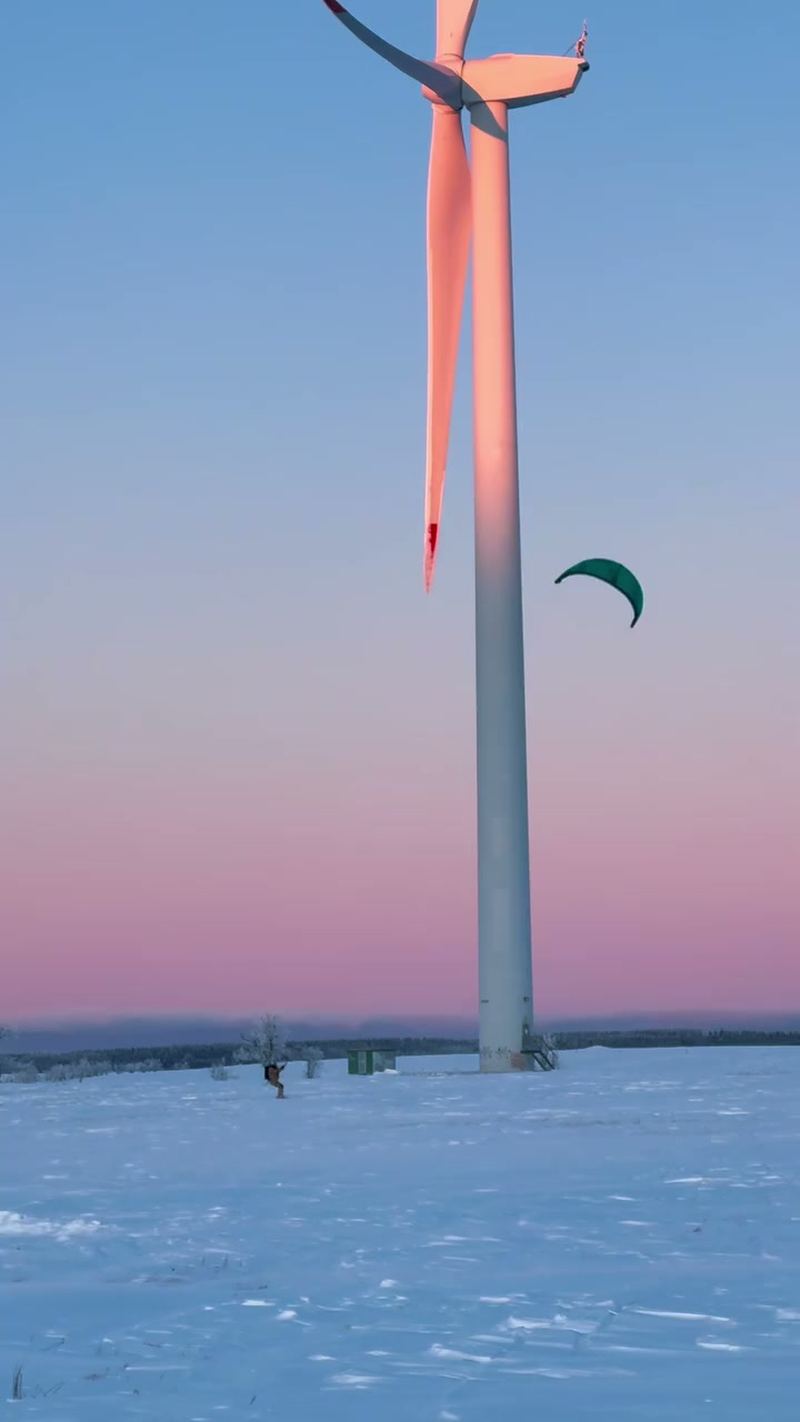
- Fojtovice: the plateau with wind turbines above Krupka, on the map as Fojtovice - Adolfov. This is my home spot, I ride here on land and on snow.
- Lipno: in the Šumava region in South Bohemia, people ride there too and I was there in February 2025.
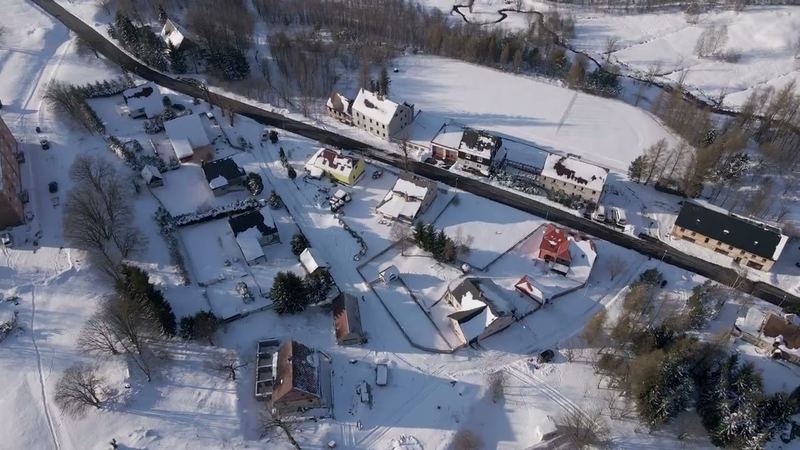
At every spot, the small things decide the session. Up at Moldava, when the wind blows off the forest and you are close to the trees, the turbulent wind makes the kite unstable, and you need to ride further away. It also matters where you park, where you launch from and where the fences, poles and wind turbines are. I go through the individual places in detail in Snowkite spots in the Czech Republic.
It is worth checking whether there is snow at Moldava before you drive up:
And the same above Fojtovice:
All the spots, for water and land too, are on the kite spot map.
How windy it gets in the Ore Mountains in winter
According to the NASA POWER model, the area around Moldava is windiest in winter. January averages around 9.0 knots (4.7 m/s), August around 6.1 knots (3.1 m/s). A knot is a nautical unit of speed: 1 knot is about 0.51 m/s. The model uses a coarse grid and wind at 10 m, not measurements on the plateau, so it shows how the wind is spread over the year, not what you will get on Saturday.
A monthly average cannot tell you whether you can ride that day. The actual wind, including gusts, your weight, the kite's type and size, and the surface all matter. Hard snow usually needs less wind than water, while powder creates more resistance. The same model puts the January average at -2.6 °C.
For the first days, I would pick lighter, steady wind. Let an instructor choose the conditions and equipment; a forecast wind speed alone does not guarantee safety. Do not fly a kite in a thunderstorm.
Skis or snowboard
For your first season, take whatever you ride with more confidence. You fly the kite the same way, but skis let you move your feet independently, while a snowboard keeps them strapped to the board and needs a different weight distribution when edging. When you don't have to think about your feet, your head is free for the kite, and that matters most at the start.
If you can only just about ski or ride, you will be fighting 2 things at once. You can start practising kite control while standing still in a lesson, but I would spend time on the slopes before your first rides with a kite.
What works with skis and what with a snowboard, which bindings and what to wear, is covered in Snowkite gear: skis or snowboard, and which kite.
Which kite: foil or inflatable
People snowkite on both.
A foil kite has no inflatable tubes. Wind flowing into its cells fills it, so there is no pumping: you lay it out, attach the lines and launch. It packs into a small backpack, which you will appreciate when you are hiking from the car to the plateau. Most better foils can also be relaunched with a reverse launch after a crash. On snow I fly a Kitech FreeRS 12 m² foil kite.
An inflatable kite (tube kite) has tubes you pump up. Ease of relaunch and depower range depend on the model. Depower means how much pull you can reduce by pushing the bar away. If you already own an inflatable from the water, you can take it onto snow as well.
The differences in detail are in Inflatable vs foil kites.
Kite size depends on your weight, the wind and the snow. The kite size calculator has its own snowkiting mode: choose skis or snowboard and hard snow or powder. With the other inputs unchanged, it reduces the water-based size by about 15% for hard snow and leaves it unchanged for powder. This is the calculator's approximate coefficient before rounding to a manufactured size; choose your actual kite with an instructor, taking its wind range and the conditions into account.
How to start, step by step
1. Learn to fly the kite first
Before you start riding on skis, you need to be able to steer the kite. You can begin with a small 2-line trainer kite on a meadow to learn where it pulls hard and where it sits quietly. More in Trainer kites: learning on land before the water.
2. Lessons that teach you safety too
A good course teaches you more than how to get going. It teaches you to read the wind, to know where you can stand on the plateau, and what to do when something goes wrong, so that you are not a danger to yourself or anyone else. Quick courses where you get a kite in your hands, do a few launches and off you go don't give you that.
In the Czech Republic I work with Honza Procházka and Big Day, who teach landkiting, snowkiting and kitesurfing. A snowkite lesson costs 2,500 CZK for 2 hours of practical tuition, the kite and the rest of the gear are included, and you bring your own skis or snowboard. There are at most 2 people per instructor, and the location depends on the weather.
3. Know your quick release
The quick release is a safety release in the connection between the kite and your harness. Learn how yours works from its instructions: with a push-away system, you push the release handle away from your body. A correctly connected, functioning safety system should greatly reduce the pull, but cannot guarantee removing it completely. In your lessons, practise activating it and the next emergency steps if the kite keeps pulling. Before each session, check and test the releases according to the manufacturer's instructions.
4. Your first rides on your own
After the course, pick a big open plateau and lighter, steady wind, and don't ride alone. Nobody is waiting with a boat on snow, and if something happens, it is good to have someone nearby. Start by riding back and forth across the wind. You will get upwind once you learn to edge, digging the edge of your skis or board into the snow and holding against the pull of the kite.
Safety: helmet, trees, slopes and ice
- Helmet and protection. Falls on icy snow are hard. A helmet is essential, and a back protector is worth having.
- Trees and obstacles. Wind off a forest is gusty and unpredictable, and you never want the forest downwind of you with a kite up. Keep a big distance from trees, fences, poles and wind turbines.
- Slopes. The kite can pull you up a hill you don't know. On steep snowy slopes there is also avalanche risk.
- Frozen lakes. Ice thickness varies across a lake and it is often weaker near inlets and outlets. Skating guidance does not establish that a lake is suitable for snowkiting. I would choose snow-covered land for first rides and only go onto a lake after a local expert has assessed the current ice and conditions for snowkiting.
More on terrain, trees and slopes in Snowkite safety: terrain, trees and slopes.
When there is no snow
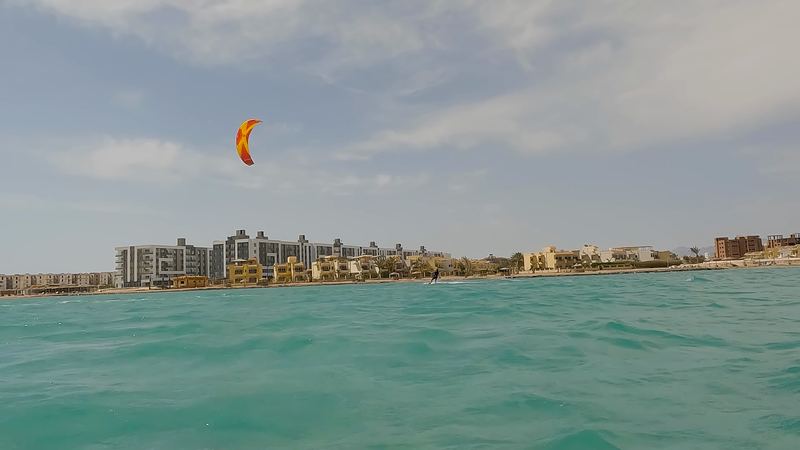
When there is no snow in the Ore Mountains, you can take the kite onto a meadow with a buggy or a mountainboard, see Landkiting: buggies, mountainboards and where to start. And if snow gets you hooked and you want to try water, you can find shallow lagoons on a kite safari in Egypt, which I have been on several times: a week on a boat between the islands of the Red Sea.
Questions
Do I need to know how to ski or snowboard to start snowkiting?
Not for your first kite-handling practice while standing still, but you need to be able to control your skis or snowboard safely before riding with a kite. Choose whichever you ride with more confidence: skis let you move your feet independently, while a snowboard keeps them strapped to the board.
How much wind do you need for snowkiting?
Hard snow usually needs less wind than water, while powder creates more resistance. Gusts, your weight and the kite's type and size also matter, so there is no universal wind limit for beginners. Let an instructor choose the conditions and equipment for your first rides.
Is a foil kite or an inflatable kite better for snowkiting?
Both work: a foil kite needs no pump and packs down small. With an inflatable, ease of relaunch and how much pull you can reduce by pushing the bar away depend on the model. On snow I fly a Kitech FreeRS 12 m² foil kite.
Is ski kitesurfing the same as snowkiting?
Yes. Ski kitesurfing, kite skiing and snow kiting all mean being pulled by a kite across snow, on skis or on a snowboard.
Where can you snowkite in the Czech Republic?
Mostly on the open plateaus of the Ore Mountains (Krušné hory): Moldava, Nakléřov and the plateau above Fojtovice. People also ride at Lipno. What matters is whether there is snow and where the wind comes from, because wind blowing off a forest is gusty.
Sources
- NASA POWER, wind climatology at 10 m for 50.72 N, 13.66 E (Moldava), rounded: January 9.0 knots (4.7 m/s), February 8.8 knots (4.5 m/s), December 8.5 knots (4.4 m/s), August 6.1 knots (3.1 m/s); temperature January -2.6 °C, February -1.4 °C power.larc.nasa.gov (checked 18 October 2026)
- Big Day snowkite lessons: 2,500 CZK per lesson (2 hours of practical tuition, gear included), students bring their own skis or snowboard, at most 1-2 people per instructor, place and date chosen by the weather www.big-day.cz (checked 18 October 2026)
- Kitech FRS V2 is a ram-air foil kite for kitesurfing, snowkite, landboard and buggy, needs no pumping, sizes 7, 9, 12, 15 and 18 m² www.big-day.cz (checked 18 October 2026)
- Hard snow creates little resistance, cold air is denser and powder needs more pull; kite size depends on wind, weight, skill and surface; start with familiar skis or a snowboard, skis allow independent foot movement and a snowboard needs different weight distribution; a helmet is essential; foils pack small, need no pump and many models reverse launch; bow/SLE inflatables offer easy relaunch and a large depower range www.mackiteboarding.com (checked 18 October 2026)
- Czech Fire Rescue Service: natural ice is never entirely safe, thickness varies across a lake and ice is weaker near inlets and outlets; the guidance concerns skating, not assessing a lake for snowkiting hzscr.gov.cz (checked 18 October 2026)
- Ozone Explore V3: a push-away release is activated by pushing its handle away from the body; releases should be tested before riding; initial learning requires an instructor and must not take place in strong wind ozonekites.com (checked 18 October 2026)
- IKO: a functioning safety system greatly reduces pull, but none guarantees complete depowering in every condition; the control bar and the chicken-loop connection to the harness are different parts www.ikointl.com (checked 18 October 2026)
- FLYSURFER PEAK4, sections 4, 6 and 7: check weather and the safety system before launching, follow the relevant landing and securing procedure before approaching the kite; the chicken loop connects to the harness and loose lines can entangle the rider flysurfer.com (checked 18 October 2026)
- Ozone manual: begin with an instructor and a small 2-line trainer; do not kite in thunderstorms or wind beyond your ability ozonekites.com (checked 18 October 2026)
- Big Day separates stationary kite practice from subsequently adding skis or a snowboard; lessons cover quick release and emergency procedures www.big-day.cz (checked 18 October 2026)
- The map lists Petrovice 1 and Adolfov as separate spots near Nakléřov kitewithjaja.pages.dev (checked 18 October 2026)
- The calculator has a snowkiting mode for skis or snowboard and hard snow or powder; with other inputs unchanged, it reduces the water-based size by about 15% for hard snow and leaves it unchanged for powder; this is the tool's approximate coefficient before rounding to a manufactured size kitewithjaja.pages.dev (checked 18 October 2026)