Kitesurfing foil kites vs inflatables: which should you choose?
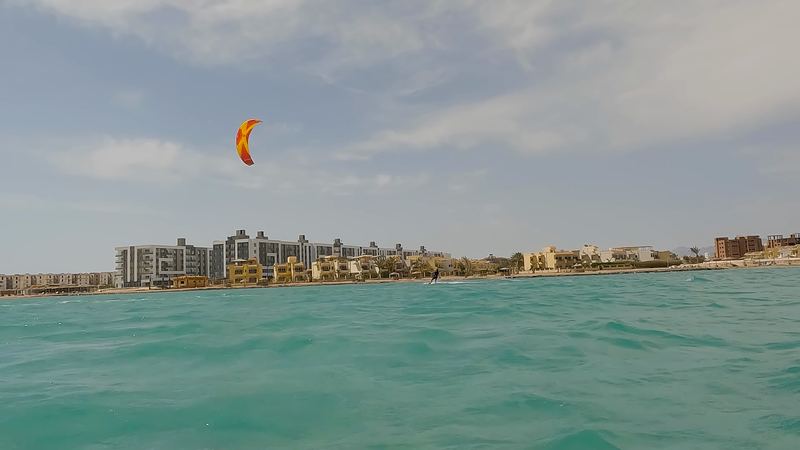
I fly both: inflatable Harlems on the water and Kitech foils on snow and in light wind. I would start by deciding whether you want lighter-wind sessions, better jumps or a kite you can also take onto snow.
Choosing between kitesurfing foil kites and inflatables starts with what you want from your sessions. If you spend too much time waiting for wind, compare a foil and a lightweight inflatable with the board you plan to ride. For jump practice, I would keep the familiar kite for now and work on timing. If you want to use the same kite on water and snow, an all-round closed-cell foil is worth trying.
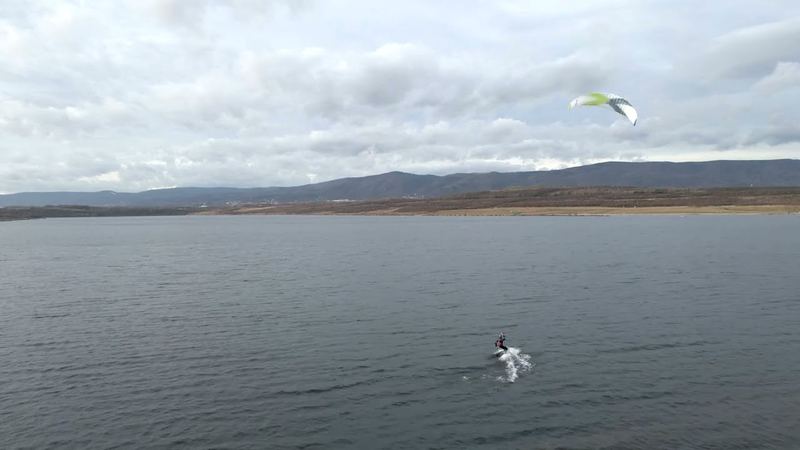
On the water I fly inflatable Harlems, on snow a Kitech FreeRS foil and on land a Flysurfer Peak. I take the FreeRS on the water too when the wind is light: on New Year's Eve 2022 I rode the 15 m² FRS on Lake Milada in the Czech Republic in light wind. Which design to buy depends mostly on where you ride and what wind you usually get there.
How inflatable and foil kites are built
An inflatable (tube or LEI) kite is supported by an inflated leading edge. The Harlem Thrive also has 3 inflatable struts; the Big Air Harlem Peak has 5. Strutless inflatables include the Slingshot UFO. The leading edge keeps the kite afloat, but relaunch also depends on wind, water conditions and technique.
A foil kite (ram-air) usually has 2 layers of fabric divided into cells. Air flows through the intakes, and internal pressure helps the wing hold its shape. Pre-inflate it before launching, following the instructions for that model. Under the canopy sits the bridle, a web of thin lines that spreads the load across the whole wing. For riding on water, the type of cells is what matters:
- Open-cell: air flows freely in and out, so they take on water if they land in it. They belong on land, snow and in the trainer kite world. The Flysurfer Fox, a trainer for tarmac or ice, is a typical example.
- Closed-cell: the cells retain air, allowing the kite to float and relaunch from water. The Kitech FreeRS and Flysurfer Soul are built this way. The kite's condition after the crash matters too.
- Single-skin: a canopy without the lower layer, making a light, compact package. The Flysurfer Peak is designed for mountains and ski touring, with limited water relaunch.
These Flysurfer weights give you an idea of what you will carry. The models have different purposes, and the Peak is a different size, so treat them as examples for packing your gear:
| Flysurfer model | Construction and purpose | Size | Weight (manufacturer) |
|---|---|---|---|
| Era² | inflatable, 5 struts, Big Air | 12 m² | 3.76 kg |
| Soul⁴ | closed-cell foil, all-round | 12 m² | 2.30 kg incl. bridle and mixer |
| Peak⁶ | single-skin, mountain touring | size 11, flat area 11.5 m² | 1.36 kg |
The Soul's figure explicitly includes the bridle and mixer; the Era and Peak tables do not provide that breakdown. Compare models suited to the same use and check what each weight figure includes. These examples do not establish a universal weight ratio between inflatables and foils.
Foil kite vs inflatable kite on the beach and on the water
| Inflatable (tube) kite | Closed-cell foil kite | |
|---|---|---|
| Setup | pump, then attach the lines | lay it out, check the bridle, pre-inflate as instructed |
| Water relaunch | a practised relaunch on a familiar model helps | learn the model's procedure; its condition after a crash matters |
| Light wind | depends on the board; lightweight tubes exist for hydrofoiling | a suitable model can help; compare using the same board |
| Packing and travel | allow for a pump; packed size varies by model | no pump, often a compact backpack; check the model's packed size |
| Waves | wave models such as the Stoke | match the model to the use, e.g. Hybrid for hydrofoiling in small waves |
| Big Air kiteloops | dedicated models such as the Era | check suitability for the model; a wave label is not enough |
| Snow and land | works, but a crash on hard ground can cost you a bladder | right at home |
| What to watch | valves, bladders, holes in the canopy | sand and tangles in the bridle, water in the cells |
Relaunch in either column depends on wind, water conditions and technique. The loop row concerns Big Air loops during jumps, rather than loops while hydrofoiling.
When a foil kite makes sense: light wind, snow and land
If you often wait for wind at your lake, I would look at the whole setup first. Are you riding a twintip or a hydrofoil? Choose a size with your weight, skills and board in mind, using the manufacturer's wind chart as a starting point. For light-wind hydrofoiling, you could compare the Hybrid foil kite with the lightweight inflatable UFO. A large foil kite need not be your next purchase. I cover the options in light wind kitesurfing.
You can also ride in light wind with a large inflatable. This session from Wiek is on my channel, with a 16 m² kite over shallow water:
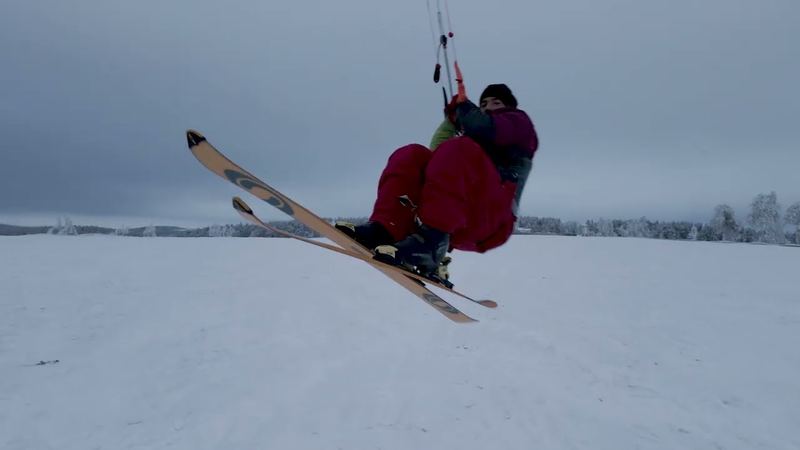
On snow you have nothing to pump, the kite packs into a backpack and you don't risk popping a bladder when it hits frozen ground. At Nakléřov in the Czech Ore Mountains I ride a Kitech FreeRS 12 m². Watch the wind direction in the mountains: at Moldava, when the wind blows from the forest and you are close to it, the turbulent airflow makes the kite unsettled and harder to control. Move further away from the trees. There is more on boards, skis and kites for snow in snowkite gear.
On land I fly a Flysurfer Peak in 4-8 m² and 11 m². It is light and compact, but its limited water relaunch would put me off using it as my main water kite.
Where an inflatable kite is the better choice
If you have practised relaunching your tube, I would allow time to learn the procedure for your first foil. A closed-cell foil does not necessarily lose its air in a normal crash. A kite left on the surface for a long time, water inside or a tangled bridle is a different situation; you may need to drain the water first, following the manual.
With either design, practise relaunch and self-rescue with your specific equipment. Ride with help available and stay within a distance you can swim back if the kite fails. An inflated leading edge alone cannot guarantee your return.
For waves, I would choose a model by how it steers and how comfortable you feel with its response to the bar. When testing it, notice how much attention it needs in chop, the short, messy wind waves. Try the foil you are considering in the conditions where you intend to use it too.
With a tube, allow for pumping and space for your packed gear. On a kite safari in the Red Sea, the beach boys help inflate the kites, and there are a compressor and pumps on board. The crew also helps with launching and landing.
Jumping: does the kite design matter?
For the jumps I do, mostly 2-3 m according to my Woo sensor, I would work on pop and timing first. Pop is the push off your edge as you send the kite up. When trying another model, pay attention to whether you can time the take-off and control the landing. A change of construction alone cannot promise a higher jump.
What the specific model is built for matters more than the construction: the 5-strut Harlem Peak is a Big Air kite, the 3-strut Thrive an all-rounder. If you are still learning to jump, learn on the kite you ride most often. Every switch costs you a few sessions of getting used to it again.
Which one I would pick, depending on where you ride
- You ride mostly by the sea, on trips and in waves: I would start with an inflatable suited to your riding that you know how to relaunch. Try any new model before buying.
- You ride mostly on lakes where the wind is often light: compare a foil with your current setup; for hydrofoiling, include a lightweight tube in the comparison. Rider weight and board matter too.
- You ride in the mountains in winter or on land: a foil. For shared use on water and snow, I would choose closed-cell; for land and snow alone, open-cell or single-skin models are options too.
- You want 1 kite for water, snow and land: an all-round closed-cell foil such as the Kitech FreeRS or Flysurfer Soul is worth trying.
The same size label does not guarantee the same usable wind range. Flysurfer lists both flat area and projected area, the projection of the curved wing: the Peak in size 11 has a flat area of 11.5 m² and a projected area of 9.2 m². Check the wind chart for the specific model, taking your board, weight and skills into account.
Before you buy a foil, rent or borrow one for at least 1 session in the wind you want to use it in. Setup on the beach and the way it flies are both different from what you know on a tube. My kitesurfing equipment guide covers what to buy and in what order.
Questions
What is the difference between a foil kite and an inflatable kite?
An inflatable kite is supported by an inflated leading edge; models come with or without struts. A foil kite usually has 2 layers of fabric divided into cells that fill through air intakes; prepare and pre-inflate it according to the model's manual. Weight and ease of relaunch depend on the model, with relaunch also affected by wind, water conditions and technique.
Can you kitesurf with a foil kite?
Yes, with a closed-cell foil such as the Kitech FreeRS or Flysurfer Soul, which keep the air inside and can be relaunched from the water. Open-cell and single-skin kites are mainly for land and snow; Flysurfer itself says the single-skin Peak has limited water relaunch.
Are foil kites better in light wind?
A foil can be a good option, but your board, weight and skills matter too. For light-wind hydrofoiling, there are foil kites such as the Flysurfer Hybrid and lightweight inflatables such as the Slingshot UFO. Choose with your whole setup and the specific model's wind chart in mind.
How do foil and inflatable kite weights compare?
Flysurfer lists the Big Air Era 12 m² at 3.76 kg, the all-round Soul 12 m² at 2.30 kg and the single-skin Peak in size 11, intended for mountain touring, at 1.36 kg. These models have different purposes and sizes: the Peak 11 has a flat area of 11.5 m². The Soul figure explicitly includes the bridle and mixer, while the other tables do not give that breakdown, so these figures cannot establish a universal weight ratio between designs.
Sources
- Slingshot UFO V3 is a strutless inflatable for hydrofoiling and light wind; relaunch depends on wind, technique and water state; sizing depends on rider, board and conditions slingshotsports.com (checked 18 October 2026)
- SOUL3 manual: have help available, never ride alone or beyond swimming distance; pre-inflation, bridle checks, relaunch and separate water-drainage procedure flysurfer.com (checked 18 October 2026)
- CrazyFly inflatable kite manual: never kite alone and learn safety procedures before use www.crazyflykites.com (checked 18 October 2026)
- Harlem Thrive is a 3-strut all-round kite, sizes 5-17 m² harlemkitesurfing.com (checked 18 October 2026)
- Harlem Peak is a 5-strut Big Air freeride kite with a ProWeld leading edge harlemkitesurfing.com (checked 18 October 2026)
- Kitech FRS V2: the Czech representative describes easy relaunch and production in Hungary at Lake Balaton kitechkites-cz6.webnode.cz (checked 18 October 2026)
- Kitech FRS v2 is built for kitesurf, kitefoil, snowkite, landboard and buggy; drainage valves at the wingtip release water; light backpack for air travel wp.kitechkites.com (checked 18 October 2026)
- Flysurfer Peak6 is a single-skin kite for mountain touring and freeride; size 11 weighs 1.36 kg, flat area 11.5 m², projected area 9.2 m²; water relaunch is limited flysurfer.com (checked 18 October 2026)
- Flysurfer Soul4 is a closed-cell foil kite for freeride, hydrofoil and freestyle on water, snow and land; Soul 12 m² weighs 2.30 kg including bridle and mixer; wind range depends on weight, skills, board and conditions flysurfer.com (checked 18 October 2026)
- Flysurfer Hybrid2 is a foil kite for hydrofoiling in light wind and small waves, tested with front wings of 600-2000 cm² flysurfer.com (checked 18 October 2026)
- Flysurfer Fox is an open-cell foil trainer kite used on tarmac or ice flysurfer.com (checked 18 October 2026)
- Flysurfer Era2 is a 5-strut LEI kite for big air and kiteloops; Era 12 m² weighs 3.76 kg flysurfer.com (checked 18 October 2026)
- Flysurfer Stoke4 is a 3-strut LEI kite for freeride and wave flysurfer.com (checked 18 October 2026)
- Video from Jája's channel: Lake Milada, 31 Dec 2022, Kitech FRS 15 m² in light wind www.youtube.com (checked 18 October 2026)
- Video from Jája's channel: Nakléřov, 29 Jan 2023, snowkiting with a Kitech Free RS 12 m² www.youtube.com (checked 18 October 2026)
- Kite safari: compressor and pumps on board, beach boys help carry, inflate, launch and land kites paradisekitesurf.cz (checked 18 October 2026)