Kiteboard bag: choosing, packing and flying with your gear
Your board bag should be a few centimetres longer than your board and protect it on every side. Before packing, check that your airline accepts your kite gear and confirm its category and weight allowance for your booking.
A kiteboard bag carries everything you need on the water: kites, bar, board, harness and usually your wetsuit. Arrange carriage with your airline in advance, based on its contents, dimensions and weight. The bag itself counts toward the limit, and wheels and padding add weight.
If you are still putting your kit together, start with the kite equipment buying guide.
Choosing a board bag
Start with what you ride. For a twin tip, the symmetrical board most kiters learn on, a standard square board bag works. The board lies flat and the kites go around and on top of it. A surfboard or a foil board needs a bag made for its shape. I explain the differences between them in Twin tip vs surfboard vs foil board.
What to look for:
- Length. The bag must be at least a few centimetres longer than the board. A 138 cm twin tip goes in a 140 cm bag.
- Room to grow. Most kiters end up with around 3 kites. If you travel with 2 now, buy a bag with room for another kite, so you are not replacing it next year.
- Wheels. Carrying a full bag on your shoulder through an airport and a car park is miserable. I wouldn't buy a travel bag without wheels.
- Padding. A thin sleeve for 1 board is fine for driving to the lake. For a flight, choose a padded bag that protects the board on every side.
- A lock. The bag should lock, so nobody adds or takes anything on the way.
How many kites and which sizes depends on your weight and the wind where you are going. Work out your range in the kite size calculator.
Getting your gear ready
Before you start packing, let your kites and wetsuit dry thoroughly and shake the sand out of the kites, the board and the bindings. Sand adds weight and rubs the canopy. If you have to pack anything damp for the journey, unpack it as soon as you arrive and let it dry according to the manufacturer's instructions.
- Deflate the kites completely and roll them as tight as you can. Smaller rolls leave more room.
- Take the fins, grab handle and bindings off the board. Put the screws and fins in a zip bag and that into a pocket of the board bag, because a lost fin screw is hard to replace on a beach.
- Wind the lines onto the bar and secure them so they don't unravel. What to check on the lines and bar before getting back on the water after the trip is in Kite control bar and lines explained.
How to pack a kite board bag, step by step
The order for a twin tip, 3 kites, 2 bars, a harness, a pump and a wetsuit:
- Wetsuit at the bottom. It is soft and works as a mat under the board.
- Board on the wetsuit. Without fins and bindings it lies flat.
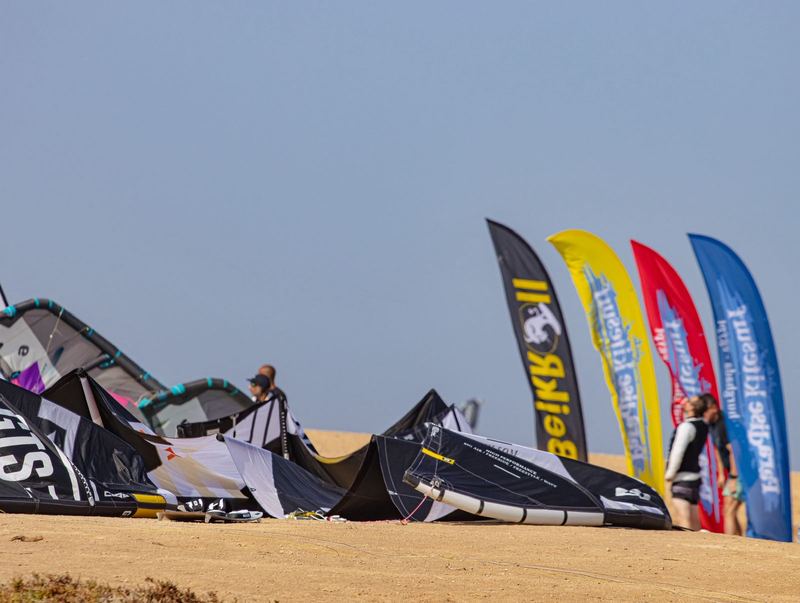
- Kites on the board, one by one. Tuck their edges under the sides of the bag so they fill the space around the board.
- Bars between the kites. Make sure nothing sticks out.
- Harness at the front of the bag. The harness is the belt around your waist or hips that hooks you into the bar. In the bag it protects the board, especially if it has a hard shell.
- Pump on the side. Turn the foot plate towards the inside of the bag.
- Bindings wherever there is space. They are flexible and fit into gaps.
- Towel or poncho on top. That way the zip doesn't rub on the canopy.
You only need 1 kite bag. It is handy at the spot, but a separate bag for every kite is dead weight. Choosing a harness and its size is covered in the kite harness guide.
Lock the bag and put your name and phone number on the tag. A tracking device such as an AirTag tells you where the bag is if it gets left behind on a connection. Before you leave, take a photo of the gear in the open bag. If something gets damaged, you can show what you packed and in what condition.
What doesn't belong in the board bag
Spare batteries and power banks, for an action camera or a phone. According to EASA they always go in carry-on baggage, never in checked baggage, each protected against short circuits, and no more than 2 per person. Electronics with a built-in battery may go in checked baggage only when completely switched off and protected from switching on by accident, and some airlines don't allow them there at all. I would carry the camera, a jump sensor and similar gadgets in hand luggage.
A tracker in the bag is the exception that makes sense. The US FAA allows one in checked baggage if its battery has no more than 0.3 g of lithium or 2.7 Wh, and advises checking with your airline first.
How heavy can a kiteboard bag be
The airline, fare and approved equipment category set the limit. These are upper ceilings, not an automatic entitlement to carry any bag for the same price. Examples from the airlines' websites:
| Airline | Sports baggage | Watch out for |
|---|---|---|
| Lufthansa | up to 32 kg | register at least 72 hours before departure and await booking confirmation; charges above the fare's free allowance, no free sports baggage in Economy Light |
| Eurowings | up to 32 kg, surcharge from €50 | book online until web check-in closes, space is limited |
| easyJet | large sports equipment up to 32 kg | weight can't be pooled with your suitcase; kites are not named on the list, so check with the airline |
Weigh the bag at home. A bathroom scale is enough: weigh yourself, then step on again holding the bag. The difference is the weight of your packed bag. If it still comes out overweight at the airport, you can move the wetsuit into your hand luggage, provided it still meets the size and weight limits. Check that you have this spare capacity while packing at home, including the number of cabin bags you are allowed.
If you move your harness into hand luggage, take the safety hook knife out and leave it in the board bag. At UK airports, knives with a sharp or pointed blade or a blade longer than 6 cm are not allowed in hand luggage.
I cover individual airline fees separately in Flying with kite gear: airline fees and packing.
When the bag arrives damaged
Report the damage at the airport before you leave the baggage hall. Send the airline a written damage complaint within 7 days of receiving the bag, even if it arrived late. Submit a claim for the baggage delay itself in writing within 21 days of delivery.
The airline doesn't pay without limit. Under the Montreal Convention, its liability for lost or damaged baggage has been capped at 1,519 SDR since 28 December 2024, about US$2,000 according to ICAO. Add up what your gear is worth. If it is more, you have 2 options: pay the airline for a higher limit, at the latest at check-in, or have travel insurance that covers sports equipment.
Your board bag on a kite safari
For the Red Sea safari you fly to Hurghada, and the transfer from the airport to the yacht is included. On the boat there is storage for kite gear, a compressor and pumps for the kites, and beach boys, the beach crew who carry and pump up your gear. I would leave the pump at home and use the space for an extra kite.
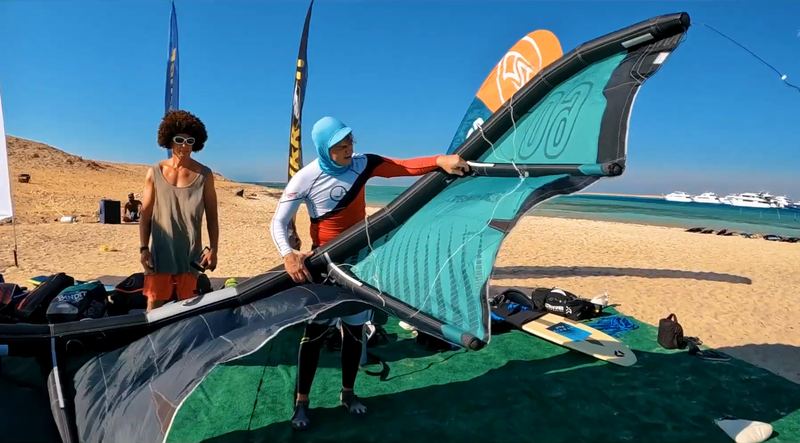
You don't have to bring a board either. A twin tip rents for €60 for 6 days on the boat, a full kite set for €300 for 6 days (2026 prices). Fly with just kites and a bar and you get away with a smaller bag and less weight.
You ride in the morning and in the afternoon, and the programme includes evening video coaching. You can see what that week looks like on the kite safari in Egypt page. Everything else for the boat, from clothes to a first aid kit, is in the kite safari packing list.
Questions
What size board bag do I need for a twin tip?
At least a few centimetres longer than the board. A 138 cm twin tip needs a 140 cm bag. If you plan to add kites later, get a bag with some room to spare.
How heavy can a kiteboard bag be on a plane?
It depends on the airline, fare and approved equipment category. Lufthansa sets a 32 kg ceiling but charges above your fare's free allowance; Eurowings lists 32 kg for sports baggage. With easyJet, 32 kg applies to large sports equipment, but kites are not listed, so confirm acceptance and classification with customer services.
Do I need to register my kite bag with the airline in advance?
It depends on the airline. With Lufthansa, register at least 72 hours before departure and wait for transport to be confirmed in your booking. Eurowings also allows booking at the airport, but I would arrange it early because space is limited.
What should I do if the airline damages my board bag?
Report it at the airport before you leave the baggage hall, then send the airline a written complaint within 7 days of receiving the bag, even if it arrived late. Under the Montreal Convention, airline liability has been capped at 1,519 SDR since 28 December 2024, about US$2,000 according to ICAO.
Do I need to bring a pump and a board on a kite safari?
No pump: a compressor and pumps are on the boat and included. You can rent a twin tip for €60 for 6 days or a full kite set for €300 for 6 days (2026 prices).
Sources
- Report damage immediately and within 7 days of receiving the bag, including a bag delivered late www.lufthansa.com (checked 18 October 2026)
- Eurowings allows sports baggage bookings at the airport ticket counter; early booking is recommended because capacity is limited www.eurowings.com (checked 18 October 2026)
- Dry kites thoroughly before packing; packing a wet kite risks mould and material degradation www.duotonesports.com (checked 18 October 2026)
- Dry a wetsuit on both sides in the shade and make sure it is completely dry before storage www.mysticboarding.com (checked 18 October 2026)
- Carry-on baggage has limits on number, dimensions and weight according to fare and travel class www.lufthansa.com (checked 18 October 2026)
- A board bag should be at least a few centimetres longer than the board (138 cm board, at least 140 cm bag); most riders end up with around 3 kites; remove fins, grab handle and bindings; wetsuit at the bottom, board on top, kites layered one by one; bars between the kites; harness at the front; pump on the side; towel or poncho on top so the zip does not cut the canopy; lock, name and phone number, tracking device; weigh on a bathroom scale; if overweight, move the wetsuit to hand luggage www.youtube.com (checked 18 October 2026)
- Lufthansa: register at least 72 hours before departure and await booking confirmation; free allowance depends on fare (excluding Economy Light), excess costs extra, maximum 32 kg www.lufthansa.com (checked 18 October 2026)
- Eurowings: sports equipment (e.g. surfboards) from €50; book online until web check-in closes, space is limited, book as early as possible; surfboards need a protective bag; above 32 kg an extra bag is charged www.eurowings.com (checked 18 October 2026)
- easyJet: large sports equipment up to 32 kg; sports equipment and hold luggage weight cannot be pooled; windsurfers and surfboards are listed, items not on the list must be checked with customer services www.easyjet.com (checked 18 October 2026)
- From 28 December 2024 the limit for destruction, loss, damage or delay of baggage rose from 1,288 SDR to 1,519 SDR (about US$2,000) www.icao.int (checked 18 October 2026)
- Written damage claims within 7 days of receipt, delay claims within 21 days of delivery; a higher compensation limit can be arranged for a fee by check-in europa.eu (checked 18 October 2026)
- UK airports: knives with a sharp or pointed blade and/or a blade longer than 6 cm are not allowed in hand luggage, allowed in hold luggage (check with your airline) www.gov.uk (checked 18 October 2026)
- Kite safari: included are storage for kite and wing gear on the boat, compressor and pumps, beach boys, airport - yacht - airport transfers; flight to Hurghada not included; full kite gear rental €300 / 6 days, twin tip €60 / 6 days; 2026 price from €1,250 per person paradisekitesurf.cz (checked 18 October 2026)
- Safari programme: morning and afternoon sessions on days 2-6, video coaching in the evening on days 3-6 paradisekitesurf.cz (checked 18 October 2026)
- Spare batteries and power banks only in carry-on baggage, protected against short circuits, max 2 per person; devices with installed batteries in checked baggage only completely switched off and protected from activation, some airlines ban them www.easa.europa.eu (checked 18 October 2026)
- Baggage tracking devices in checked baggage only with lithium metal batteries up to 0.3 g lithium or lithium ion up to 2.7 Wh; check with the airline www.faa.gov (checked 18 October 2026)