Kitesurfing in Soma Bay and Safaga: what to know before you go
South of Hurghada you get the same northwesterly wind, but in Soma Bay and Safaga it blows side-offshore for at least part of the day. That is why you should pick your station by what you can already do.
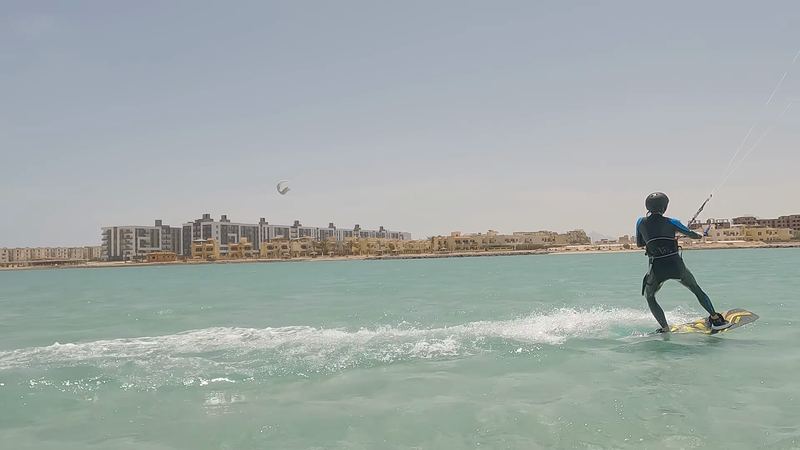
Kitesurfing in Soma Bay and Safaga is popular thanks to the prevailing northwesterly wind. Both spots sit on Egypt's Red Sea coast, roughly 45 to 60 km south of Hurghada airport, and the water in the bay is flat and shallow near the shore. At both spots, though, the wind blows side-offshore for at least part of the day, so I wouldn't go out here without the station's rescue boat.
As a beginner you are looking for lessons in shallow water with a rescue boat. If you ride on your own, you need to be able to go upwind, and if you want to rent gear, you also need an IKO or VDWS card.
Where Soma Bay and Safaga are
Soma Bay is the Ras Abu Soma peninsula, about 45 km south of Hurghada airport. It is private, with a road in through a single gate. The KiteHouse station says that is why the station and its kite beach are for guests only. If you are staying somewhere else, check with the station in advance whether and how you can get in.
One of the Safaga kite stations sits next to the Shams hotels, about 7 km south of Soma Bay and roughly an hour's drive from the airport. Guests from other hotels pay the hotel an entrance fee of 7 EUR a day or 35 EUR a week in cash, and the station doesn't run a hotel shuttle. Just off the coast lies Tobia, a small island less than 4 km from the station and a popular downwind destination.
You can find both on the kite spot map and the month-by-month wind on the Safaga spot page. How they compare with the rest of the coast is in my overview of kite spots in Egypt. If you are staying further north, have a look at kitesurfing in Hurghada and El Gouna.
Wind direction and strength
The prevailing wind is northwest to north-northwest, between 322 and 334° in the NASA POWER model. It is the same wind that blows in Hurghada.
The Shams station describes a typical day like this: in the morning the wind is side-offshore from the left, around midday it turns more side-shore and picks up, and in the afternoon it is usually around 20 to 25 knots, sometimes more. A knot is the unit kiters use for wind speed; 20 knots is roughly 37 km/h or 23 mph. The KiteHouse in Soma Bay lists side-offshore wind of 4 to 8 Beaufort and flat water.
For the year as a whole, here is the NASA POWER model for a point in Soma Bay. It averages the whole day at 10 m over a grid cell roughly 50 km wide, so it misses the afternoon thermal on the beach, and the real wind at the water is usually stronger. It is still useful for comparing months.
| Month | Mean wind in the model (knots) | Mean air temperature (°C) | What to wear, per the Shams station |
|---|---|---|---|
| January | 9 | 15.5 | shorty or 3/2 mm |
| February | 9 | 17.1 | shorty or 3/2 mm |
| March | 10 | 20.0 | shorty or 3/2 mm |
| April | 10 | 23.4 | shorty or 3/2 mm |
| May | 10 | 27.4 | swimsuit and rash vest |
| June | 12 | 29.9 | swimsuit and rash vest |
| July | 11 | 31.2 | swimsuit and rash vest |
| August | 12 | 31.4 | swimsuit and rash vest |
| September | 12 | 29.2 | swimsuit and rash vest |
| October | 9 | 26.1 | swimsuit and rash vest |
| November | 9 | 21.3 | shorty or 3/2 mm |
| December | 9 | 17.3 | shorty or 3/2 mm |
The windiest stretch is June to September, the lightest October to February. The Shams station says conditions are good from March to November and best from May to September. For choosing dates anywhere in Egypt, see the best time to kitesurf in Egypt. If summer is your only option, August is one of the windiest months here in the model.
Side-offshore wind: why I keep talking about rescue
Side-offshore wind blows from the land out to sea at an angle. An experienced rider gets flat water with no waves out of it. But if you crash, can't relaunch your kite or something breaks, the wind will not push you back to the beach. It carries you away from it.
That is why the stations in the bay run rescue boats, and the boat is the first thing I would ask about before my first session. Learn self-rescue, meaning packing down your kite in the water and sailing it to shore, but here it won't get you back to the beach: in side-offshore wind the kite works as a sail and carries you further out. If you go down and can't carry on, stay with your kite and wait for the boat. That is why IKO says that in offshore wind you should only go out when the boat is already on the water and someone on land knows you are out. That applies at every level.
At the Shams station, kitesurfers and windsurfers have separate zones so they don't get in each other's way. Ask about the zone rules as soon as you arrive.
Shallows, seabed and coral
On some beaches the water near the shore is so shallow that you can't even kite there at first. The station at Ras Soma says training therefore happens further out, with boat support. On a beach like that, expect to either wade out to deeper water or get a lift from the boat.
For beginners the shallows are a plus. The Shams station teaches mostly in shallow water where you can stand. When you fall during your waterstart, which means getting up on the board from the water, you walk back to the board instead of swimming for it.
There is coral in the sea around here. At the Shams station the coral areas are marked and the station says you don't need booties. I would still pack water shoes, for the coral and for downwinders, when you come out of the water somewhere other than where you started. Before your first ride, ask exactly where the coral is and where to launch from.
Tobia is a popular downwind run, which means riding with the wind from one place to another while a boat takes you back. From Safaga people go mostly in the morning. The KiteHouse in Soma Bay takes kitesurfers to Tobia for free, but asks for IKO level 3L or VDWS 5.
Soma Bay or Safaga: which one for your level
You are just starting or have only a few hours behind you. Look for a station that teaches in shallow water and has a rescue boat. The Shams station says it runs lessons mostly in shallow water, has a boat, and that a total beginner needs 12 hours of lessons on average to learn to kitesurf. Book the course in advance, and when you do, check whether the boat is on the water for your whole lesson and how many students the instructor will have.
You ride on your own and can go upwind. Going upwind means getting back to where you started against the wind, and here you shouldn't go out without it. The KiteHouse in Soma Bay rents gear from IKO level 3 or VDWS 4. For a foil board it wants VDWS 5, and for IKO the page says 3N in one place and 3M in another, so check before you go. With your own gear you pay a beach fee; in October 2026 one day cost 22 EUR including storage and 1 rescue, with each extra rescue at 6 EUR. Bring your IKO or VDWS card, the rental desk will ask for it.
You mainly want flat water for tricks. The morning offshore wind means water without waves; in the afternoon Safaga gets a little chop, short small waves. Mornings are better for flat water.
What to ask a station before you pay
- How many rescues the daily fee covers and what an extra one costs.
- Which level they want to see and under which system (IKO, VDWS).
- Which hours you are allowed on the water. At the KiteHouse in Soma Bay it is 8:30 to 17:00.
- Where the shallows and coral are and where you launch from.
- How you get to the station and what entry costs if you are not staying at the hotel next to it.
If they can't answer these straight away, I would go elsewhere.
If you want a week that really moves your riding on
Soma Bay and Safaga work well for a hotel week where you walk down to the beach in the morning and the station is right there. If you want to get as much done as possible in a week, there is another option.
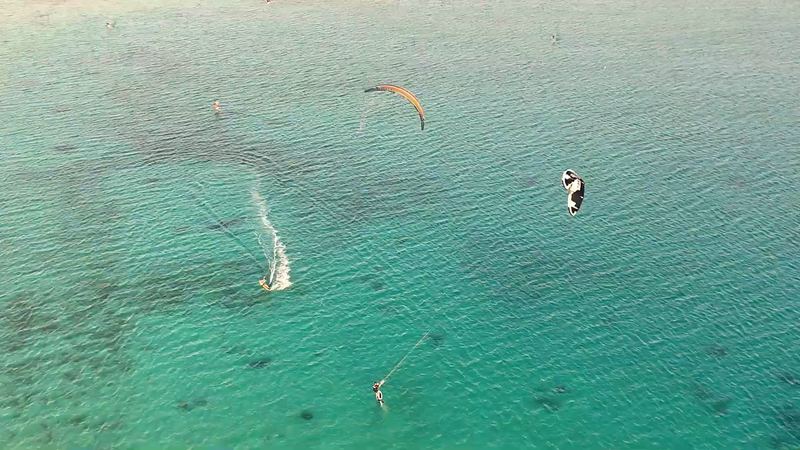
On a kite safari from Hurghada you spend a week sailing between islands, and the boat picks the lagoon according to the wind. How much you get done in that week comes down mainly to the wind, your instructor and the level you arrive with. The programme has a morning and an afternoon session, and in the evening there is video coaching, where your rides get analysed. The island lagoons are shallow, with clear water and few riders. The rescue boat and a crew that helps you launch and land are included.

Questions
How far are Soma Bay and Safaga from Hurghada airport?
Soma Bay is about 45 km south of Hurghada International Airport. The kite station next to the Shams hotels in Safaga says it is roughly an hour's drive.
Which direction does the wind blow in Soma Bay and Safaga?
Mostly from the northwest to north-northwest. In Safaga it blows side-offshore in the morning and turns more side-shore and stronger around midday. The KiteHouse station in Soma Bay describes side-offshore wind and flat water.
Is Soma Bay good for beginners?
You can learn here, but only with a station that teaches in shallow water and has a rescue boat, because the wind blows partly offshore. The KiteHouse station in Soma Bay only rents gear to riders at IKO level 3 or VDWS 4 and above.
When is the windiest time in Soma Bay?
According to the NASA POWER model, June to September are the windiest months and October to February the lightest. The station next to the Shams hotels in Safaga says conditions are good from March to November and best from May to September.
Do I need a wetsuit in Soma Bay?
The Shams station in Safaga recommends a shorty or a 3/2 mm wetsuit from November to April. From May to October a swimsuit and a rash vest against the sun are enough.
Sources
- Ras Abu Soma: the Soma Bay peninsula (Landzunge), about 5 km long and 2 km wide de.wikivoyage.org (checked 17 October 2026)
- Soma Bay is on a peninsula about 45 km south of Hurghada International Airport, reached by a 7 km private road through a single controlled gate; the prevailing winds make windsurfing and kitesurfing popular en.wikipedia.org (checked 17 October 2026)
- Safaga station next to the Shams hotels: about an hour's drive south of Hurghada airport (about 50 km); Soma Bay about 7 km north; Tobia island less than 4 km from the station, morning downwinders to Tobia; water around 30 °C in summer; best season March to October www.ion-club.net (checked 17 October 2026)
- Safaga: about 60 km and 45 minutes from Hurghada airport; side-offshore wind from the left in the morning, turning side-shore around midday and building to about 20-25 knots; lessons mostly in shallow water; coral areas clearly marked, separate zones for kitesurfers and windsurfers; shorty or 3/2 mm wetsuit November to April, swimsuit and lycra May to October; good conditions March to November, best May to September; a total beginner needs 12 hours of lessons on average; the station has a rescue boat; booties are not needed; guests not staying at the Shams hotels pay the hotel an entrance fee of 7 EUR a day or 35 EUR a week in cash; no hotel shuttle ion-club.net (checked 17 October 2026)
- 7 Bft KiteHouse, Soma Bay: side-offshore wind of 4-8 Beaufort, flat water, rescue boat, trips to Tobia island www.kitehouse-somabay.com (checked 17 October 2026)
- 7 Bft KiteHouse, Soma Bay: Somabay is a private peninsula, the KiteHouse and kite beach are exclusively for guests; beach use for 1 day 22 EUR including storage and 1 rescue ticket, extra rescue 6 EUR; equipment rental from VDWS 4 or IKO 3; foil board rental from VDWS 5, for IKO the page says 3N in one place and 3M in another; Tobia from VDWS 5 or IKO 3L and free for kitesurfers; water hours 8:30-17:00 kitehouse-somabay.com (checked 17 October 2026)
- Ras Soma: the water at the shore and entry area is so shallow that you cannot kite or wing there at first, training happens further out with boat support; constant north wind in the bay www.kiteboarding-club.com (checked 17 October 2026)
- NASA POWER, Soma Bay point (26.85 N, 33.99 E), 2001-2025 climatology: mean 10 m wind in knots Jan-Dec 9 9 10 10 10 12 11 12 12 9 9 9, prevailing direction 322-334°, mean 2 m air temperature Jan-Dec 15.5 17.1 20.0 23.4 27.4 29.9 31.2 31.4 29.2 26.1 21.3 17.3 °C power.larc.nasa.gov (checked 17 October 2026)
- Paradise kite safari: on days 2 to 6 a morning and an afternoon kite session, video coaching in the evening, rescue boats, clear water and shallow lagoons with few riders; the crew helps with launching and landing paradisekitesurf.cz (checked 17 October 2026)
- IKO: in offshore and side-offshore wind only go kiting if a boat is already in the water with a pilot trained for deep water rescues and somebody on land knows you are out; if self-rescue is not an option because the wind is offshore, wait with the inflated kite until a rescue boat arrives d8.ikointl.com (checked 17 October 2026)
- Safaga has more than one kite school, including Hawa Safaga Kite and Surf at the Menaville resort, listed by IKO www.ikointl.com (checked 17 October 2026)