Learning to kitesurf in Egypt: a Hurghada course, step by step
Hurghada is a good place for your first course: a shallow warm lagoon, a sandy bottom and wind that pushes you back to the beach when things go wrong. If you want to leave as an independent rider, plan on 15 hours with an instructor rather than 8.
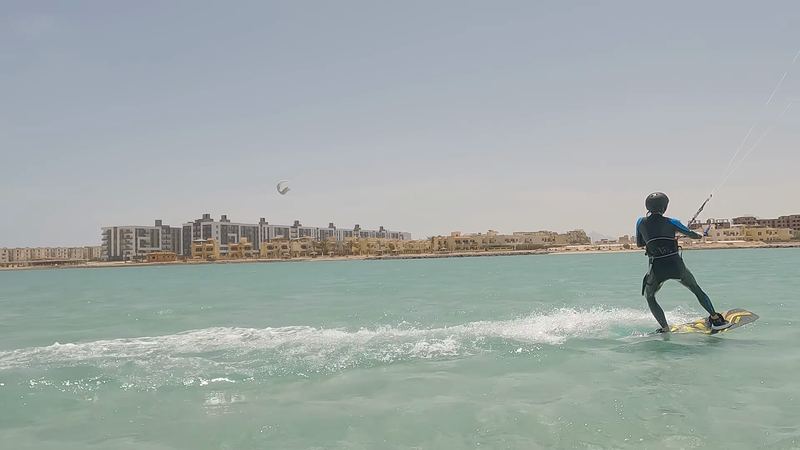
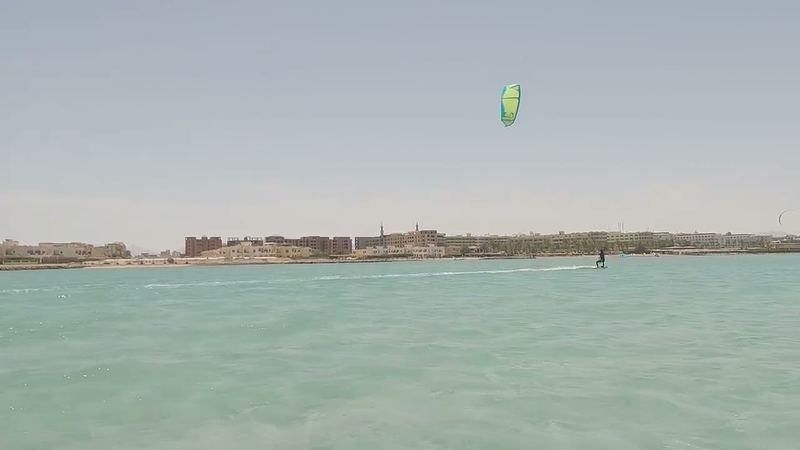
Yes, you can learn to kitesurf in Egypt, and Hurghada is one of the places I'd send a friend for their first kitesurfing lessons, even one who's a bit nervous in the water. The Hurghada kite school I know best teaches in a shallow lagoon: you can stand on sand, the water is warm and the wind is steady. What you shouldn't assume is that you'll be riding on your own after a week. That depends on how many hours you actually spend with an instructor and how many days the wind blows.
That's the Paradise kite centre between Hurghada and El Gouna, and the prices and syllabus below come from them: I've known Mohamed from Paradise for years and once built their Czech website. The general path from zero to riding, wherever you learn, is in my guide on how to learn kitesurfing.
Why Hurghada works for beginners
When you start, 3 things matter most: water depth, wind direction and water temperature.
Shallow water. The lagoon at Paradise is wide and shallow with a sandy bottom. When your kite drops or your board gets away from you, you stand up and walk over to it. In deep water you'd be swimming after it with a kite over your head, which is tiring and stressful for no reason.
Wind towards the beach. Paradise describes its spot as having stable wind that blows towards the shore at a slight angle. Wind blowing from the sea onto the beach (onshore) or at an angle to it pushes you back to land if something goes wrong. Offshore wind blows from the land out to sea and carries you away, and a beginner shouldn't ride in it without a boat and an instructor nearby.
Warm water, most of the year. In summer a lycra top is enough. From November to April Paradise recommends a full wetsuit, 3 to 5 mm, ideally your own, though you can rent one. Beyond that, bring water shoes, a lycra or t-shirt, and sunglasses with a strap so they don't end up at the bottom of the lagoon after your first fall.
The Paradise station is in the El Khayam residential complex, about half an hour's drive from Hurghada airport, and the base is 50 metres from the water. You'll find it on the Hurghada (Paradise Kitesurf) spot page and on the kite spot map. If you already ride and want to compare Hurghada and El Gouna, see kitesurfing in Hurghada and El Gouna. For other places to kite in the country, see kite spots in Egypt.
The course, step by step
Paradise courses follow the standards of IKO, the International Kiteboarding Organization, and you get an IKO certificate at the end that shows what level you've reached. The order goes roughly like this:
- Theory and safety on the beach. Your instructor explains the wind window, the area in front of you where the kite can fly. It pulls hardest in the middle and barely at all at the edges.
- Setting up the gear. Pumping the kite, laying out the lines, putting on the harness. The harness is a belt around your waist that takes the kite's pull, so your hands only steer. You'll also learn the quick release, which takes the power out of the kite straight away in an emergency. The kite then hangs on your safety leash, a short line to your harness, and the leash has its own release if you need to let go of the kite completely.
- Body dragging. The kite pulls you through the water without a board. It comes in handy later too: this is exactly how you get back to a board you've lost.
- First water starts. A water start means sitting in the water with the board on your feet and letting the kite pull you up. Beginners ride a twintip, a symmetrical board you can ride in either direction without turning it around.
- Riding both ways and self-rescue. Self-rescue is how you pack the kite down in the water and get yourself back to shore if something fails.
- Upwind, transitions, launching and landing. Riding upwind means riding at an angle into the wind. Without it, every run takes you further downwind from where you started, and you walk back.
The instructor talks to you over a radio on the water, so you hear the correction the moment you get something wrong. Paradise puts no more than 2 students with an instructor, you can take the course in English, German, Czech or Arabic, and a rescue boat watches over the lagoon.
How many hours to book
Paradise offers 3 beginner course levels. The difference is where you finish:
| Course | Length | Where you finish | 1 student per instructor | 2 students per instructor |
|---|---|---|---|---|
| I | 8 h, 2 to 3 days | first water starts | €440 | €360 |
| II | 12 h, 4 days | + riding both ways, self-rescue | €600 | €480 |
| III | 15 h, 5 days | + upwind, transitions, beach launches and landings | €690 | €540 |
Prices are per person from the Paradise price list. They include the kite, board, harness, helmet, life jacket, radio, gear insurance and the IKO certificate. Accommodation, meals, flights and transport from your hotel to the course are extra.
For a beginner, I'd go for 15 hours. After 8 you've done your first water starts, but you can't yet go upwind or rescue yourself. A course that doesn't teach you upwind and self-rescue won't make you an independent rider, and on an unfamiliar spot you can end up a danger to yourself and to everyone else on the water.
The schedule works out at roughly 3 hours with an instructor per day. You won't want more: your arms, back and head tire sooner than you'd expect. If you can, leave 1 or 2 spare days in your trip for days without wind. According to NASA's climate model, the Hurghada area is windiest from June to September and calmest from November to February. The model estimates wind 10 metres above the surface on a grid of roughly 50 km, and on the beach the local thermal wind is often stronger, so treat it as a guide only. I go through it month by month in the best time to kitesurf in Egypt.
Learning on a boat: a kite safari course
The other route is to learn on a kite safari, a week on a yacht that heads out to the islands each day depending on the wind. In April 2024 we took 8 beginners along. We spent the first 2 days on Geisum: the first day was tough, and by the middle of the second everyone was riding. Don't take that as a promise that it'll go the same way for you. It depends on the wind, the instructor and how much you've done before.
On the kite safari in Egypt I go on, a 6-day intensive beginner course costs €600 including equipment. Lessons happen in shallow lagoons by the islands, and the crew picks the spot according to the wind. Abu Minqar, for example, has shallow calm water and sand, and Paradise recommends it for beginners and for practising tricks. If you already have a few hours of lessons, maybe spread over a few years, there is a refresh course of 3 hours for €180 or 6 hours for €330. How much you need depends on whether you can already ride upwind and rescue yourself in the water.
On safari, the rescue boat is included, and so are the beach boys, crew members who help you launch and land your kite. Jan Procházka, a guest, wrote in a review: "I always thought that kitesafari is only for pros, but since kiting is done on spots with shallows, everyone can find their own."
Which route suits whom: a course on land is calmer, you have a fixed base and you can add hours. A safari gives the most to people who already have a few hours behind them, or who want to combine a course with a week on a boat with a group. If you've never held a kite, you can still go, as long as you know what you're signing up for. I cover this in more detail in kite safari for beginners.
What to ask a school before you pay
Whether you go with Paradise, another school or a safari, these are the questions I'd ask before paying:
- How many students per instructor? If there are more on the water than an instructor can watch, you'll spend a lot of time waiting and less time learning.
- Are lessons taught by radio? Without one, you only hear feedback back on the beach.
- Is there a rescue boat? On land and on safari.
- Does the course include self-rescue and riding upwind? Without them you're not independent yet.
- What happens to your hours if there's no wind? Are they moved, or lost?
I go through what makes a good school in how to choose a kite school.
Questions
How long does it take to learn kitesurfing in Egypt?
Expect about 8 hours with an instructor to get through your first water starts on the board, which Paradise spreads over 2 to 3 days. To ride independently, meaning you can go upwind, self-rescue and launch and land safely, plan on a 15-hour course over 5 days.
How much do kitesurfing lessons in Hurghada cost?
At the Paradise kite centre between Hurghada and El Gouna, the beginner course costs €440 for 8 hours, €600 for 12 hours and €690 for 15 hours with a private instructor. With 2 students per instructor, it is €360, €480 and €540 per person. Gear and the IKO certificate are included; accommodation and meals are not.
Can you learn to kitesurf on a kite safari?
Yes. On the safari I go on, a 6-day intensive beginner course costs €600 including equipment, and lessons happen in shallow lagoons by the islands. If you already have a few hours of lessons, there is a refresh course of 3 hours for €180 or 6 hours for €330.
When is the best time for a kite course in Egypt?
According to NASA's climate model, the Hurghada area is windiest from June to September and calmest from November to February. You can learn all year, but from November to April you will want a full wetsuit, 3 to 5 mm.
Is it safe for a complete beginner to learn kitesurfing in Hurghada?
It is one of the easier places to start. The lagoon at Paradise is shallow with a sandy bottom, the wind blows towards the beach at a slight angle, lessons are taught over radio, there are at most 2 students per instructor and a rescue boat is on standby. You can take the course in English, German, Czech or Arabic.
Sources
- Paradise courses meet IKO standards, IKO certificate after the course; certified instructor, lessons via walkie-talkies; languages English, German, Czech, Arabic; 10% rental discount after the course paradisekitesurf.cz (checked 17 October 2026)
- Beginner Course I 8 hours in 2 to 3 days, II 12 hours in 4 days, III 15 hours in 5 days, with the syllabus for each level (theory and safety, equipment setup, wind window, body dragging, first water starts, consistent water starts, riding both sides, self-rescue, riding upwind and downwind, speed and direction control, transitions, safe starts and landings on the beach) paradisekitesurf.cz (checked 17 October 2026)
- Beginner course prices: 8 h €440 / €360, 12 h €600 / €480, 15 h €690 / €540 (1 student / 2 students per instructor); max. 2 students per instructor; kite, board, harness, helmet, life jacket, walkie-talkie, gear insurance and IKO certificate included; accommodation, flights, meals, visa and transport to the course not included paradisekitesurf.cz (checked 17 October 2026)
- Recommended to bring: water shoes, shorts, lycra or t-shirt, sunglasses and goggle tape; November to April a long wetsuit 3-5 mm, better your own, rental possible paradisekitesurf.cz (checked 17 October 2026)
- Paradise station in the El Khayam residential complex between Hurghada and El Gouna, half an hour from Hurghada airport; wide shallow warm lagoon with sandy bottom, rescue boat on standby paradisekitesurf.cz (checked 17 October 2026)
- Stable wind blowing towards the shore at a slight angle, deep water at the edge of the lagoon, kite base 50 m from the sea, zones for beginners and advanced riders paradisekitesurf.cz (checked 17 October 2026)
- The quick release on the bar takes almost all the pull out of the kite, but the kite stays attached to you on the safety leash; complete separation only via a second, separate release on the leash www.duotonesports.com (checked 17 October 2026)
- Kite safari 2026: beginner kiteboarding course €600 (6-day intensive course including kite equipment), refresh course 3 hours €180, 6 hours €330; crew assists with launching and landing, ensures rescue on the water and picks spots according to the wind; shallow lagoons; Abu Mungar ideal for beginners and practising tricks, shallow calm water, sandy bottom; guest review about shallow spots paradisekitesurf.cz (checked 17 October 2026)
- Monthly wind climatology at 10 m near Hurghada (MERRA-2): highest June to September (6.8-7.4 m/s), lowest November to February (5.3-5.6 m/s) power.larc.nasa.gov (checked 17 October 2026)