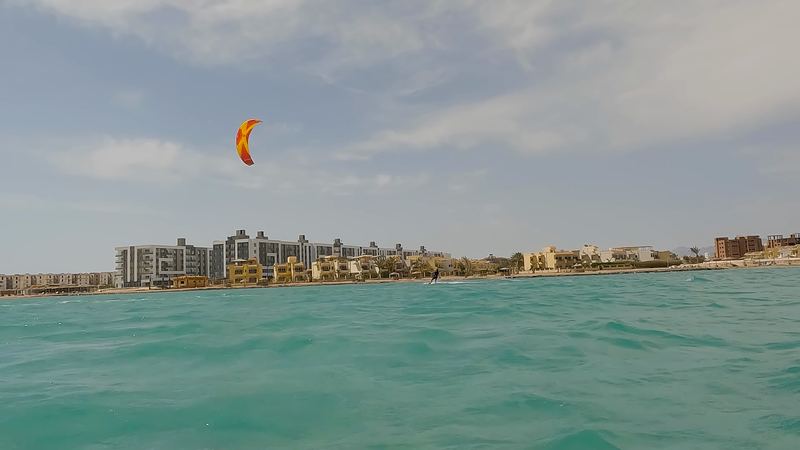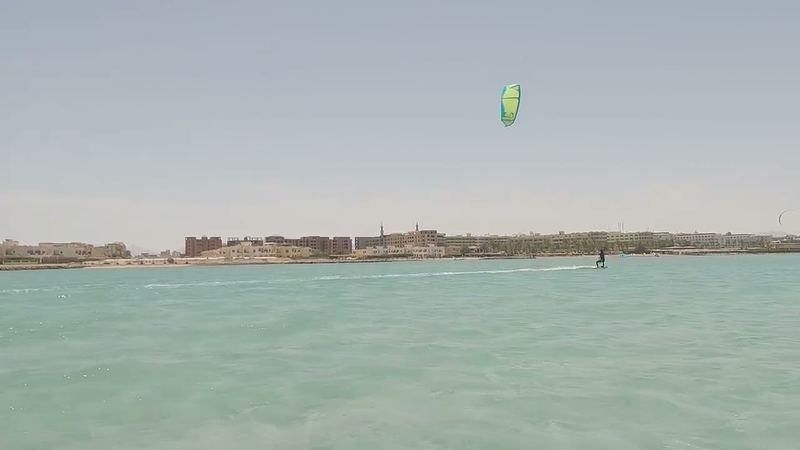
Kiteboard self rescue step by step
Self rescue helps you secure your kite when you can't ride or body drag in. Depending on the wind, you can use it to sail towards shore or stay afloat while waiting for rescue.
A kiteboard self rescue helps you secure your kite and lines when you can't ride or body drag in. The wind drops, a line snaps or the kite won't relaunch. Depending on conditions, you can sail it towards shore or use it for support while waiting for rescue. It's normal to feel nervous about this before your first session without an instructor. You can practise before you need it.
A good course teaches you to handle things going wrong as well as to ride. If you only practised self rescue once on the sand, go over it again before heading out alone. I'm following the IKO (International Kiteboarding Organization) course on self rescue and packing down in the water.
When to self rescue, and when not to
If you can't ride or body drag back, first consider relaunching the kite from the water, if your equipment and conditions allow it. If it won't fly again, it's time to self rescue.
Practise this procedure with a leading-edge inflatable (LEI) kite whose front inflatable tube, the leading edge, and struts hold air. For foil kites or loss of inflation, learn your manufacturer's emergency procedure with an instructor. A deflated structure won't provide the same support.
To sail towards shore, you need:
- Enough wind to sail, in a suitable direction. Light wind that won't let you ride may still fill the folded kite. Onshore blows straight towards shore, side-onshore diagonally towards it and sideshore along it. Offshore wind blows away from shore and would carry you further out.
- The right safety system. On a 4-line bar, safety must run on a single front line (front re-ride); a 5th-line system is another option. The bar must be compatible, working and connected as its manufacturer specifies. Mini 5th-line and rear-line safety systems aren't suitable. If you don't know yours, check with your school before riding alone.
In no wind, you cannot sail. Keep the inflated kite for support and signal for help. Assess the distance, current and your strength; a visible beach isn't necessarily within safe swimming reach. If a safe return isn't possible, stay with the kite, save energy and signal to rescuers.
Before you start
- Stay calm. Rushing makes line handling harder; keep watching where the wind and water are carrying you.
- Look downwind. Once you let go, the kite drops into the water downwind of you, so make sure nobody is there.
- Never wrap a line around your hand or any other part of your body. If the kite catches the wind again, that line pulls tight.
Self rescue step by step
The chicken loop connects the bar to your harness hook. Its quick release opens that connection; the safety leash still connects you to the kite and has its own release.
- Let go of the bar. The kite loses power and drops.
- Activate the chicken-loop quick release using the movement specified for your bar. With a push-away system, push the release away from your body. The kite should flag out and lose most of its power. You're still attached by the safety line, the line connected to your harness leash. Practise operating your quick release and safety leash on your own equipment beforehand.
- Check that the kite has flagged out, then work along the safety line to the bar. It must rest without significant pull, with the other lines slack. If it hasn't flagged out or wind or waves heavily load the safety line, don't continue handling or winding lines; use your system's practised emergency procedure. Keep hands facing down, thumbs up. Lie on your stomach with feet up to reduce tension.
- Lock the safety line at the bar end with 2 half hitches, knots tied around the bar end. Wrap the loose section in a figure of 8 back to the leash and secure it again with 2 half hitches. Keeping this line shorter prevents flight when secured correctly, but some pull can remain. Learn the knots with an instructor; IKO demonstrates them at 1:01.
- Wrap all the lines together in a figure of 8 while moving towards the kite on your stomach. Keep checking that none is left out and that the others retain plenty of slack relative to the shorter safety line.
- At about 3 m from the kite, swim to it and hold the leading edge under your armpit or with a leg. With tension removed, secure the lines with 2 half hitches. Let go of the bar, keeping the leash connected.
- Flip the kite into the "smile", the U position with the underside facing up. If it's lying the other way, fold one wingtip underneath and push the leading edge up with your shoulder. The wind and the air in the leading edge flip it over.
- If the wind allows a return, fold the kite and sail. Pull one tip over the other using a line or the bridle, the branching lines attached to the kite. Hold the bridle or self-rescue handles if fitted. Steer with a free arm or leg, as when body dragging upwind.
Practise one securing method with your instructor. Steps 4-6 follow IKO's PDF; its video uses the back of the bar for the safety line from 0:52, the front for other lines from 1:30, and 3 final wraps from 1:51. Don't mix these details.
If the kite powers up again and starts pulling you at any point, let go of the bar. If that's not enough, release your leash, and you're completely free of the kite.
Sailing back to shore
A folded kite still responds to hand and body position: you can change speed and direction. With suitable wind, this can bring you in from deep water.
With a large kite, fold the tip halfway and lie on the leading edge. To rest, put the secured bar on the kite and lie on top. The inflated kite supports you and makes you easier to spot.
Kitesurf College demonstrates in shallow water with a large kite in around 15 knots (8 m/s). From 2:52, it checks line count and slack; from 3:52, it uses the kite for support. Its securing method also differs, so practise your chosen method with an instructor.
Packing down before the shore break
Practise packing down in the water separately with an instructor. Start only with the lines secured, when approaching the shore break or certain the rescue boat has seen you and is coming. Keep the kite inflated while waiting for distant help.
On a one-pump system, first close the hoses connecting the leading edge to the struts, the inflatable crosswise supports. Leave the struts inflated. Turn the kite underside up, open the leading-edge deflation valve, fold the tips together and roll towards the centre strut. Squeeze out remaining leading-edge air and close the valve to keep water out. Place the bar on the centre strut and secure the bundle firmly with your harness.
With the equipment packed, disconnect the leash before the shore break and stay with the bundle. At the breaking waves, push it ahead into the waves and swim in. Practise this crossing as part of the pack-down.
When the wind is offshore
In wind blowing directly away from shore (offshore) or diagonally away (side-offshore), ride only with a boat on the water, a driver trained for deep-water rescue and someone ashore who knows you're out. Otherwise, don't go.
If you get into trouble offshore, secure the lines as in steps 1 to 6, provided the kite has flagged out properly and the safety line isn't heavily loaded. Wait with the kite, monitor your drift and signal for help. Securing lines doesn't stop drift. Don't deflate until rescue is certain. The inflated kite provides support and visibility; watch your harness hook if you lie inside it. Hand it to the boat leading edge first so water drains and wind doesn't open it again.
The international distress signal at sea is slowly and repeatedly raising and lowering your arms outstretched to each side. On your own spot, agree with someone on the beach beforehand how you'll signal each other.
How to practise your self rescue
Start on land or in shallow water, in light, steady wind with an instructor. Move to deep water once you can manage every step, again under supervision. Repeat until the movements become familiar.
At home, practise the 2 half hitches and figure-of-8 winding. On the water you'll have wet hands and be lying on your stomach, so get comfortable with them on land first.
Revisit self rescue before your first solo sessions after a course. Kitesurfing safety also means knowing your releases and when to stay ashore.
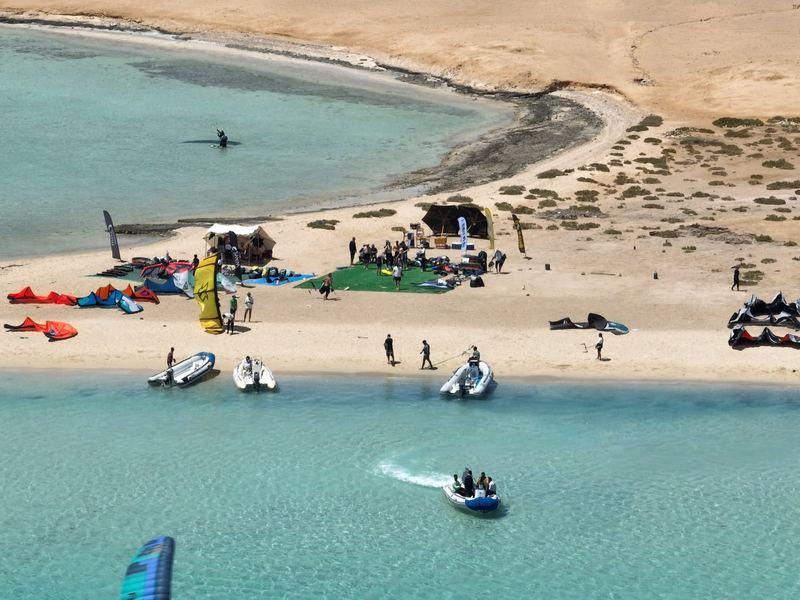
On the kite safari in the Red Sea, you can book a refresher course, 3 hours for 180 EUR, and ask to practise self rescue. A rescue boat is included in the safari and the crew handles rescues. Complete beginners can take a 6-day course for 600 EUR, including equipment.
Questions
What is a self rescue in kitesurfing?
It's a way to secure your kite and lines when you can't ride or body drag in, perhaps because of light wind or equipment failure. You can sail a folded inflatable kite towards shore if enough wind remains and its direction allows it. In no wind, keep the inflated kite for support, signal for help and assess whether shore is safely reachable.
Can you self rescue in offshore wind?
You cannot sail the kite back to shore in offshore wind. If it has flagged out properly and the safety line isn't heavily loaded, secure the lines, stay with the inflated kite, signal for help and monitor your drift. Only ride offshore with a boat on the water, a driver trained in deep-water rescue and someone ashore who knows you're out.
Do I disconnect my leash during a self rescue?
Normally it stays connected; if the kite flies again or pulls dangerously and letting go of the bar isn't enough, activate the leash release to disconnect completely. Before the shore break, disconnect only after a practised pack-down: lines secured, struts inflated, leading edge deflated, valve closed again and bundle secured. Stay with the packed gear until the breaking waves, then push it ahead and swim in.
Does self rescue work with every bar?
This procedure is for an inflatable kite with an intact, inflated structure and a compatible bar with single-front-line safety (front re-ride on a 4-line bar) or a 5th-line system, connected as the manufacturer specifies. Mini 5th-line and rear-line safety systems aren't suitable here. Foil kites and loss of inflation need an equipment-specific procedure and prior practical training.
Where do I learn to self rescue?
With an instructor: first on land or in shallow water in light, steady wind, then in deep water under supervision. Repeat it several times so it becomes muscle memory.
Sources
- IKO self rescue: when to use it (wind died, line ripped, kite won't relaunch, can't body drag or ride back), the 8 steps (let go of the bar, quick release, climb the safety line hands down and thumbs up, lie on your stomach with feet up, 2 half hitches at the end of the bar and figure-of-8 back to the leash, wrap other lines in a figure of 8, at about 3 m grab the leading edge under your armpit, flip the kite into a U, fold it and sail with the bridle or self-rescue handles, steer with an arm or leg); don't rush, clear the drop zone, never wrap a line around your body d8.ikointl.com (checked 18 October 2026)
- IKO: the technique only works with 4-line re-ride and 5th-line safety systems, mini 5th line is not safe; sailing to shore is for onshore, side-onshore and sideshore wind; practise on land or in shallow water in light steady wind with an instructor, then in deep water under supervision; with a large kite fold the tip halfway and lie on the leading edge d8.ikointl.com (checked 18 October 2026)
- IKO, offshore and side-offshore: boat on the water with a trained driver and someone ashore; secure lines and wait with the inflated kite until rescue is certain; pack-down steps 9-12: close one-pump strut hoses before deflating the leading edge, fold tips together, roll to centre strut, close valve against water, place bar on centre strut and secure with harness; step 14 crosses shore break with packed equipment; hand kite to boat leading edge first d8.ikointl.com (checked 18 October 2026)
- IKO video differs from PDF: safety line around back of bar from 0:52, 2 half hitches from 1:01, other lines around front from 1:30, 3 final wraps from 1:51; sailing in onshore, side-onshore and sideshore; repetition builds muscle memory www.youtube.com (checked 18 October 2026)
- Kitesurf College description and captions: sand bank, large kite, about 15 knots (8 m/s); procedure excluded if wind or waves heavily load safety line; before handling lines, kite must flag out downwind with other lines slack; from 2:52 check all lines and slack, from 3:52 inflated kite with secured bar provides support; if kite pulls, let go of bar and release leash; kite improves visibility and may be used as a sail www.youtube.com (checked 18 October 2026)
- NOAA defines a knot as a nautical mile per hour and a nautical mile as 1.852 km; own calculation dividing by 3.6 gives about 0.514 m/s per knot, so 15 knots rounds to 8 m/s oceanservice.noaa.gov (checked 18 October 2026)
- International distress signal at sea: slowly and repeatedly raising and lowering arms outstretched to each side (COLREGs Annex IV, item k; Irish Signals of Distress (Ships) Rules 2012) www.irishstatutebook.ie (checked 18 October 2026)
- Safari: rescue boat and beach boys included, the crew handles rescue paradisekitesurf.cz (checked 18 October 2026)
- Safari price list 2026: beginner course 600 EUR (6-day intensive course including equipment), refresher course 3 hours 180 EUR paradisekitesurf.cz (checked 18 October 2026)
- IKO: front re-ride uses a single front line; rear-line OSR and mini 5th line aren't approved; no safety system removes all power; LEI has an inflatable leading edge, safety must work and equipment must be compatible www.ikointl.com (checked 18 October 2026)
- PLKB Compass section 3.2: activate push-away quick release by pushing red release away from the body; learn the movement specified for the bar www.plkb.world (checked 18 October 2026)
- FLYSURFER SOUL sections 7 and 8.01: foil kite with single-front-line safety but separate self-rescue procedure, deep-water pack-down only for experienced riders after practice; inflatable-leading-edge method therefore cannot be transferred to foil kites flysurfer.com (checked 18 October 2026)
- Progression: loss of wind, strong tide or equipment damage can require securing kite and lines for swimming ashore or rescue; sailing back isn't guaranteed and without wind there is no wind propulsion player.progression.me (checked 18 October 2026)
- RNLI: current carried a kitesurfer out to sea even on a day without much wind; securing lines therefore doesn't guarantee stopping drift, so monitor movement and signal for help while waiting rnli.org (checked 18 October 2026)