Kitesurfing offshore wind: why beginners should avoid it
For beginners, the safest wind blows along the beach or at an angle from the sea onto it. Offshore wind blows from the land out to sea and carries you away from the beach when something goes wrong, so don't ride it on your own.
Kitesurfing offshore wind is a risky choice for beginners. It blows from the land out to sea, so if you crash, can't relaunch your kite or simply run out of energy, it carries you away from the beach. The safest wind for kitesurfing blows along the shore or at an angle from the sea onto it. Those directions are known as sideshore and side-onshore.
Wind direction decides whether a session is safe just as much as wind speed does. The same wind can suit a beginner on one beach and be unsafe further along the coast, because the shoreline bends.
Being wary of the wind when you're starting out is normal. It gets easier once you know what each direction will do to you when something goes wrong.
How to find the wind direction on the beach
Face the wind and turn your head until you hear it equally in both ears. You're now looking straight into it. Beach flags help, and so does a handful of sand dropped from your hand.
Then turn to face the sea. Wind in your face is onshore, wind on your back is offshore, and wind from the side running along the beach is sideshore. The angled directions in between are side-onshore and side-offshore, which makes 5 in total.
When reading a wind forecast, compare the direction with the shape of the coast where you plan to ride. Check it again on the beach and ask local kiters about the effects of nearby obstacles.
The 5 wind directions relative to the shore
| Direction | Where it blows from | If something goes wrong | Who it suits |
|---|---|---|---|
| Side-onshore | at an angle from the sea onto the beach | drifts you slowly along and back towards the shore | the safest, for learning |
| Sideshore | along the beach | drifts you along the beach; the wind alone won't bring you ashore | beginners too, with a confirmed way back |
| Onshore | straight from the sea onto the beach | pushes you onto the beach and whatever is on it | riders who can go upwind |
| Side-offshore | at an angle from the land out to sea | carries you away from the shore | experienced riders, with the rescue arrangements described below |
| Offshore | straight from the land out to sea | carries you out to open water | experienced riders, with the rescue arrangements described below |
Side-onshore and sideshore: where you learn
During your course and for a while after it, you'll lose a bit of ground downwind on most runs. Riding upwind, getting back to where you started, is something you learn after your first rides. In side-onshore wind every mistake drifts you back towards the beach, just a bit further along it. That's why instructors and experienced riders treat it as the safest direction.
Sideshore runs along the beach. It tends to be steadier when it arrives over open water without obstacles. An upwind headland can make this direction gusty too. Along a straight coastline, the wind alone carries you parallel to the beach, without bringing you ashore. Before you launch, check how you will get back and where you can safely leave the water if you end up further downwind.
For your first independent sessions after a course, go with another kiter. Stay within swimming distance of shore while leaving room between you and the beach, people and obstacles. Riding independently after lessons still means having someone who can help if you get into trouble.
Kiteboarding in onshore wind: looks easy, needs upwind
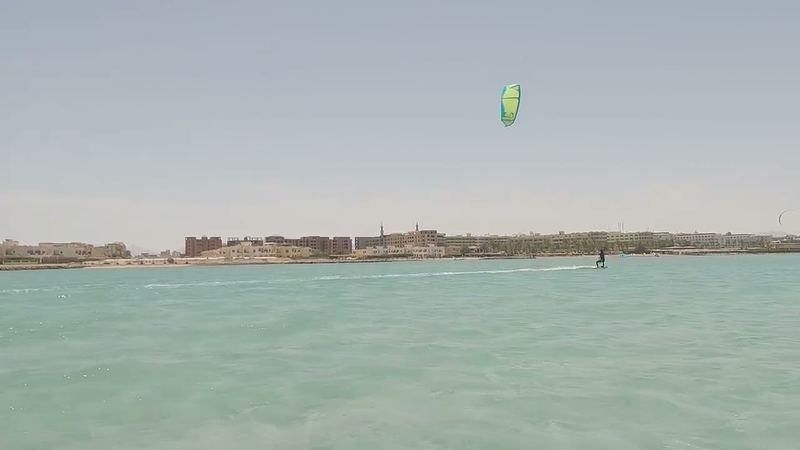
Onshore wind blows straight from the sea onto the beach. It comes in over open water, so it tends to be steadier than wind off the land. Buildings or dunes behind the beach can still make it messy right at the water's edge.
The catch is that onshore pushes you straight back at the shore. From the moment you start you have to ride upwind, or you're back on the sand. Waves and current make getting away from the beach harder. And a small mistake close in, like your kite surging in a gust, can drag you out of the water onto sand, rocks or people.
I'd leave onshore days until you can ride upwind reliably and use your quick release. This main emergency release opens the main connection to your harness, which transfers the kite's pull to your body while you steer with the control bar. The pull drops substantially, but the safety leash keeps the kite attached to you. Complete separation uses a separate release.
Offshore kitesurfing: why it's the riskiest direction
Offshore wind blows away from the shore. It has 3 traits that stack up against a beginner.
It carries you away from the beach. If you fall, your kite stays down in the water or your lines tangle, the wind takes you out to sea. During self rescue, getting yourself back without outside help, you can use the kite as a sail and actively steer towards shore. That won't bring you ashore in offshore wind, because the wind blows away from it. Practise the procedure with an instructor before you need it.
It can be gusty behind obstacles. If the wind crosses trees, houses, rocks or dunes on its way to the water, they create turbulence downwind. Your kite can be powered one moment and dropping the next. A rough guide for gusty wind and turbulence is 7 times the height of the obstacle, but that isn't a boundary beyond which the wind is guaranteed to be steady. Trees and buildings break the wind up more than low sand dunes. I know this from snowkiting on Moldava in the Czech mountains: when the wind comes off the forest and I'm close to it, the kite gets restless and I have to move further away.
It can be misleading at the beach. Wind behind obstacles can be lighter or changeable, while conditions further out are different. That depends on both the obstacles and the wind speed. A light breeze while you rig on a sheltered beach doesn't tell you what to expect further from shore.
For your first independent sessions after a course, skip offshore and side-offshore days, even when they look gentle. Experienced riders still need a rescue boat already on the water, a trained rescue operator and someone ashore who knows they are out. Shallow water doesn't replace those arrangements.
Same wind, different shoreline
Wind direction is always judged against the stretch of beach you're on. Riding sideshore near a point where the coast bends away, the wind turns side-offshore past that point. In a bay, sideshore can turn onshore where the beach curves round.
Islands make this obvious: the same northwesterly blows onshore on one side and offshore on the other. Before riding a new spot, walk along the beach a bit and ask local kiters where the wind changes and where not to go.
When you're still unsure about the conditions
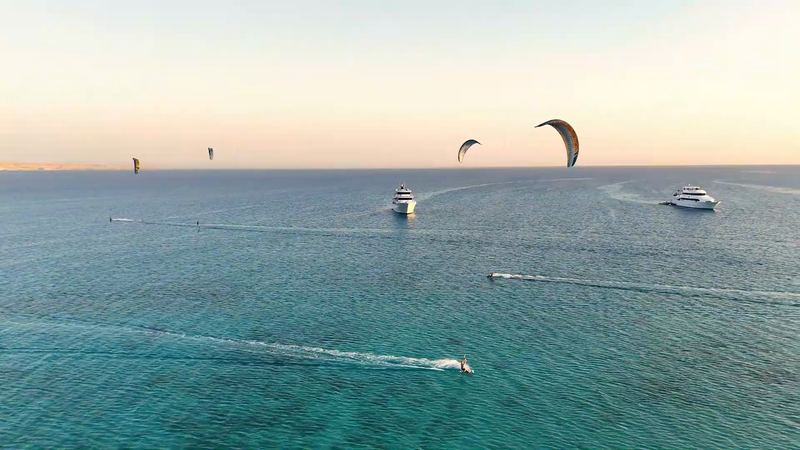
If you're unsure which conditions you can handle, I'd take another lesson. A kite safari in Egypt offers shallow lagoons, lessons with instructors and an included rescue boat. The beginner course costs €600 for 6 days including equipment, and a refresher after previous lessons costs €180 for 3 hours. Before riding, agree with your instructor where you'll kite and how help is arranged; a boat listed in the package isn't a reason to head out independently in offshore wind.
Before you pump up: 5 checks
- Find the direction. Face the wind, listen with both ears, and compare it with the line of the beach.
- Look downwind. What's where the wind will take you: beach, open sea, a pier, rocks, people.
- Look upwind. Buildings, trees or dunes can cause gusts. Treat roughly 7 times their height as a guide, not the edge of a safe zone.
- Make sure you can get back. If you can't ride upwind yet, skip onshore days.
- Know who will help you. Offshore and side-offshore require a boat already on the water with a trained rescue operator and someone ashore who knows you're out. Stay ashore if any of that is missing; skip these directions for your first independent sessions even with a boat.
When assessing wind for kitesurfing, consider its direction and strength alongside the shape of the coast and your own ability. If you're unsure you can handle the conditions, stay ashore.
Questions
What is offshore wind in kitesurfing?
Wind blowing from the land out to sea. If you crash or can't relaunch your kite, it carries you away from the beach towards open water, and after crossing land it is usually gusty.
What is the best wind direction for beginner kitesurfers?
Side-onshore, blowing at an angle from the sea onto the beach, and sideshore, blowing along it. Side-onshore is the safest because it slowly drifts you back towards the shore when something goes wrong.
Why is onshore wind hard for beginners?
It blows straight at the beach, so you have to ride upwind from the moment you start. If you can't yet, you end up back on the sand fast, and a small mistake close to the beach can drag you out of the water.
Can you kitesurf in offshore wind?
Experienced riders need a rescue boat already on the water, a trained rescue operator and someone ashore who knows they are out. For your first independent sessions after a course, skip offshore and side-offshore days.
How do I tell the wind direction on the beach?
Face the wind and turn your head until you hear it equally in both ears. You are now looking straight into the wind. Beach flags or a handful of sand dropped from your hand help too.
Sources
- Find wind direction using ears, flags or sand; side-onshore blows diagonally towards shore; sideshore is parallel to shore, implying that the wind alone cannot return a rider to a straight shoreline; onshore requires upwind riding and mistakes close to shore are dangerous; offshore carries riders away kitesurfexperience.com (checked 17 October 2026)
- Wind behind obstacles can be lighter, gusty or absent depending on the obstacle and wind speed; trees and houses create stronger turbulence than sand dunes; roughly 7 times obstacle height is an estimate, with gusts extending far in strong wind; keep clear of obstacles and ask locals about a new spot kitesurfexperience.com (checked 17 October 2026)
- 5 directions relative to shore; sideshore and side-onshore suit beginners, most riders should avoid offshore; onshore requires upwind riding; sideshore tends to be steadier over open water but an upwind headland can cause gusts; coastline shape changes the local direction relative to shore; obstacles can also cause turbulence on their upwind side in onshore wind www.mackiteboarding.com (checked 17 October 2026)
- Self rescue involves actively steering the kite and body towards shore and should be practised with an instructor; offshore and side-offshore require a boat already on the water with a trained rescue operator and someone ashore aware of the rider; sailing back with the kite is not possible in offshore wind d8.ikointl.com (checked 17 October 2026)
- The main quick release greatly reduces kite pull while the safety leash keeps the kite attached; complete separation uses a separate release www.duotonesports.com (checked 17 October 2026)
- Kite with another person and stay within swimming distance of shore; check conditions and stay within your abilities; the harness transfers kite load to the body and the bar is used for steering rnli.org (checked 17 October 2026)
- The safari offers shallow lagoons and lessons with instructors; a rescue boat is included paradisekitesurf.cz (checked 17 October 2026)
- Price list 2026: beginner course €600 (6-day intensive course including kite equipment), refresh course 3 hours €180 paradisekitesurf.cz (checked 17 October 2026)