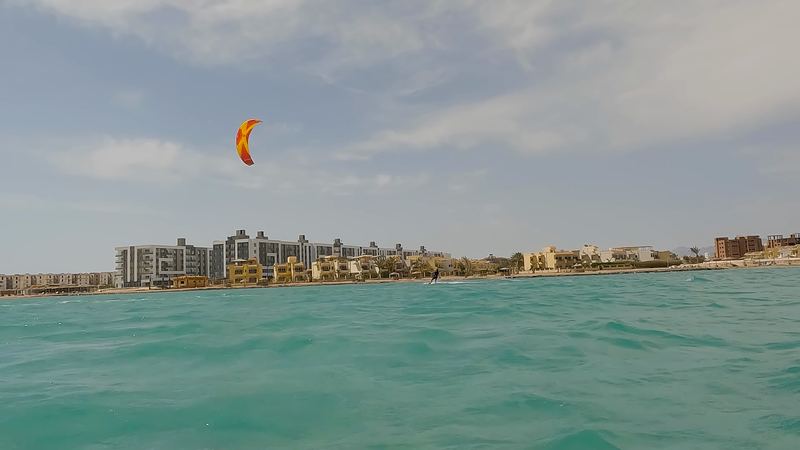
How to choose a kite: kiteboarding kite types explained
Choosing between kiteboarding kite types after lessons? I'd start with an inflatable for everyday riding that's easy to control and relaunch. Strut count alone won't tell you whether it suits you.
Choosing between kiteboarding kite types after your lessons, I'd start with a beginner-friendly inflatable freeride or all-round model. Freeride means ordinary cruising for fun; all-round means a kite designed for a mix of riding styles. I'd look for easy handling, straightforward water relaunch and room to try your first jumps.
The trouble is that brands sort their kites by construction, shape and riding style, each in its own way, and it's easy to get lost in a shop or in the used market. First work out what you want to ride, then choose the size for your weight and wind conditions.
Inflatable vs foil kites
An inflatable kite (also known as a tube kite or LEI, leading edge inflatable) has an inflatable bladder along the front edge and inflatable struts running back across the canopy. The bladders give the kite its shape and keep it floating when it drops in the water, which is why you can relaunch it.
A foil kite has no bladders and needs no pump. Its shape comes from cells that fill with wind. Foil kites work well in light wind, and setting one up can be quick once you've practised. For water, choose a closed-cell model with valves that retain air and a design that allows water relaunch. Open-cell foils belong on snow and land; don't count on relaunching one after it lands in water.
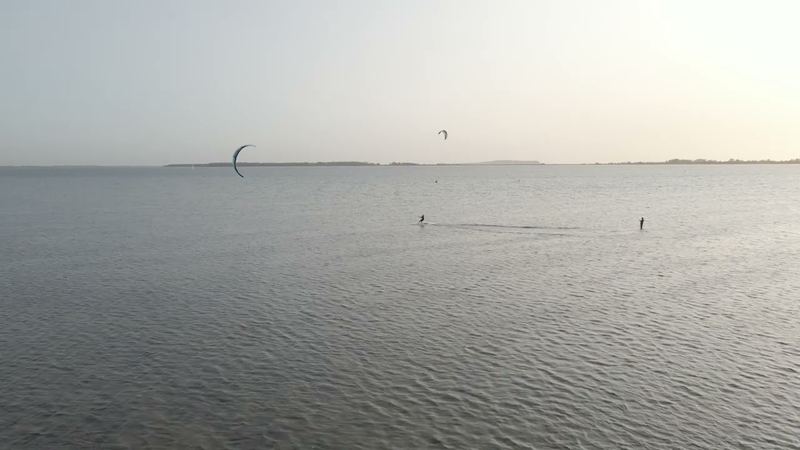
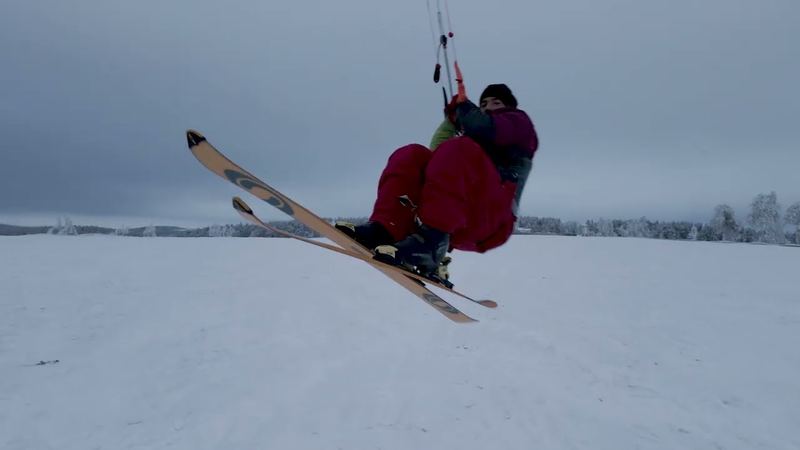
I fly both: inflatable Harlems and Kitech foil kites. On New Year's Eve 2022 I rode a 15 m² Kitech FreeRS foil on Lake Milada in very light wind, and on snow I use a 12 m² Kitech FreeRS. For a first kite on water I would still go inflatable. When it crashes, it sits on the surface and waits for you to flip it and send it back up, and right after your lessons that will happen a lot.
I go deeper into the two constructions in the guide to inflatable vs foil kites.
Kite shapes: C, bow, delta and hybrid
With inflatable kites, the shape shows in how deep the arc is, what the wingtips look like and whether the kite has a bridle. The bridle is the set of thin lines on the leading edge that lets the kite change its angle to the wind. That decides how much depower you get, meaning how much pull disappears when you push the bar away.
- Classic C kite: shaped like the letter C, no bridle, long tips and a strongly curved leading edge. Built for freestyle and wakestyle, including unhooked tricks: the chicken loop, which connects the bar to your harness, is taken off the harness hook. It also has a smaller wind range, less depower and is harder to relaunch from water. I wouldn't choose one for a beginner.
- Bow: flatter, with a bridle along the whole leading edge. Big wind range, can be almost fully depowered, easy to relaunch.
- Delta: a flatter shape with swept-back tips. Offers easy water relaunch and a wide wind range.
- Hybrid: combines elements of different shapes. The label alone won't tell you how easy it is to handle; check the specific model's intended use, depower and water relaunch.
In shops you rarely see these labels any more, because brands now sort kites by riding style. The shapes are still worth knowing when you look at older kites on the used market, or when someone offers you a cheap C kite.
Kite categories by riding style
In a shop, look for the category that fits what you want to do on the water:
| Category | What it does | Who it's for |
|---|---|---|
| Freeride, all-round | stable, big wind range, good depower, easy relaunch | first kite, most riders |
| Big air | high jumps and long hangtime | riders who already jump and want more height |
| Freestyle, including C kites | direct feel, pop, unhooked tricks | advanced freestyle riders |
| Wave | light, reactive, drifts downwind with you while you ride the wave | wave riding |
| Light wind | kites designed for lighter winds | depending on the model, twintip riding or hydrofoiling |
| Hydrofoiling | suitable inflatable or closed-cell foil models | riding a board with an underwater wing |
Pop is the take-off you get by loading and then releasing the board's edge. And watch the word foil: a foil kite describes the kite's construction, while a kite for hydrofoiling is chosen for riding a board with an underwater wing. Light wind kites can also suit a twintip, the usual board you ride in either direction. The lines between the groups are blurry, and brands often list one kite in several categories at once.
Struts and aspect ratio
For a first purchase I'd look at a 3-strut freeride kite, but I wouldn't make strut count a requirement. There are also beginner-friendly 1-strut models with easy relaunch and progressive depower. Counting struts won't tell you how a kite handles gusts or whether it suits your first sessions. Check the specific model and try it during lessons.
The Harlems I fly have different constructions too. The Thrive has 3 struts and sits in Harlem's freeride, big air and wave categories. The Peak has 5 struts and Harlem lists it as a big air and freeride kite.
Aspect ratio describes how elongated the kite's shape is. The IKO puts it simply: the squarer the kite, the lower the aspect ratio, the more rectangular, the higher. High aspect kites fly faster, point closer to the wind and glide well in jumps. Lower aspect kites are easier to fly, relaunch quickly and are more stable in gusts. After your course, you want the second kind.
What to buy as your first kite
When choosing a first kite after lessons, I'd check for:
- a beginner-friendly inflatable model, ideally one you've tried during lessons,
- freeride or all-round use, with a fairly low aspect ratio; consider a dedicated freestyle or hydrofoil model when that's what you actually want to ride,
- good depower and easy water relaunch,
- the right size for your weight and the wind you ride most often. The kite size calculator helps you work out what size kite you need.
You also need a compatible bar with lines and a quick release, the mechanism that opens the chicken loop. On a correctly connected front-line safety system, activating it lets the bar slide towards the kite along the safety line. The kite flags out and loses most of its pull. The bar needs a clear path along that line; even a working system doesn't guarantee zero pull. The kite remains attached by the safety leash, and disconnecting it completely is a separate step.
Always check the specific bar model, generation and settings against the kite manufacturer's requirements, even within the same brand. Choose a combination approved by the manufacturer. Check the listing too: a kite-only purchase may not include a bar. What to check on the bar and lines is in the guide to the control bar and lines.
A used kite is a sensible way to start, just don't buy blind. Bladders, canopy, seams, bridle and bar all have weak spots worth checking before you pay. There's a separate guide to buying used kite gear, and the kitesurfing equipment guide covers the whole kit in the order to buy it.
Ride first, then buy
My advice: don't buy your first kite before you've ridden one on your own. During lessons you learn how a kite behaves when it drops in the water, how much the bar really depowers it and what bothers you. A good course should also teach you how to choose gear, so ask your instructor what you're riding and why.
If you haven't done a course yet, you don't need to buy anything for it. On the kite safari in the Red Sea that I keep going back to, the 6-day beginner course costs EUR 600 with equipment included. Lessons happen in shallow lagoons with an instructor. A week can take you a long way, but it depends on the wind and on how it clicks for you. If you've done a course and feel rusty after a break, there's also a 3-hour refresher for EUR 180.
When you want a second kite
Pick your second kite by what the first one doesn't give you.
- You keep missing light wind days: a bigger kite of the same type, or a light kite built for foiling if you're moving to a hydrofoil.
- You want to jump higher: a big air kite.
- You want to ride waves: a wave kite that drifts with you while you ride the wave.
- You want unhooked tricks: a freestyle kite, or a C kite.
Questions
What kind of kite should I buy first?
I'd choose a beginner-friendly inflatable freeride or all-round model with good depower and easy water relaunch. 3 struts are a common starting point, not a requirement; the model's intended use and a compatible bar matter more. Pick the size for your weight and the wind you ride most often.
Can a beginner use a foil kite on water?
Only a closed-cell foil kite works on water; an open-cell foil fills with water and won't relaunch. Learning is easier on an inflatable kite, because it floats and relaunches more easily.
Is a C kite good for beginners?
I wouldn't choose one for a beginner. A classic C kite has no bridle and is built for freestyle and wakestyle, including tricks with the chicken loop unhooked from the harness hook. It has a smaller wind range, less depower and is harder to relaunch from water.
How many struts should my kite have?
Strut count alone isn't enough: some beginner-friendly models have 1 strut. The Harlem Thrive has 3 and is listed for freeride, big air and wave riding; the Peak has 5 and is listed for big air and freeride. Choose by the specific model's intended use and handling.
Sources
- IKO Equipment: LEI and foil construction; water use requires closed cells and water relaunch; classic C kites have less depower and harder relaunch, bow/SLE offer wide depower and easy relaunch; foil kites also suit hydrofoiling; the wrong bar compromises control and safety d8.ikointl.com (checked 18 October 2026)
- Foil kites need no pump; closed cells have valves retaining air; fast setup once practised and light wind use ozonekites.com (checked 18 October 2026)
- Hybrid combines elements of different shapes; CrazyFly Sculp is a documented delta/bow combination, not a universal promise of higher performance www.crazyflykites.com (checked 18 October 2026)
- Chicken loop quick release and front-line safety: with unobstructed bar travel the kite loses most, not all, of its pull; the chicken loop connects bar to harness, the leash has a separate quick release www.ikointl.com (checked 18 October 2026)
- All-round, freeride, big air, freestyle and wave categories; freeride for cruising and first jumps, all-round for versatility; delta has a flatter profile, swept-back tips, easy relaunch and a wide wind range www.duotonesports.com (checked 18 October 2026)
- Ozone Catalyst V4 is an example of a beginner-friendly 1-strut model with easy relaunch and progressive depower; a design example, not Jana's equipment ozonekites.com (checked 18 October 2026)
- Aspect ratio describes an elongated shape; high aspect kites fly faster, point closer to the wind and glide well in jumps; lower aspect kites are easier to fly, relaunch quickly and are more stable in gusts d8.ikointl.com (checked 18 October 2026)
- Harlem Thrive: Freeride, Big Air, Wave, 3 struts harlemkitesurfing.com (checked 18 October 2026)
- Harlem Peak: Big Air, Freeride, 5 struts harlemkitesurfing.com (checked 18 October 2026)
- Paradise Kitesurf kite safari, 2026 prices: beginner course EUR 600 (6-day intensive course including equipment), refresher course 3 h EUR 180 paradisekitesurf.cz (checked 18 October 2026)
- Matching brands do not guarantee compatibility: CORE Pace Pro 2 may only be flown with Sensor 4 and Sensor 4S bars because of SFS+ safety ridecore.com (checked 18 October 2026)
- A light wind kite can serve twintips and hydrofoils; documented example Duotone Juice D/LAB 2026 www.duotonesports.com (checked 18 October 2026)
- Pop involves loading and releasing the board's edge, as described by the manufacturer for the Dice SLS freestyle model www.duotonesports.com (checked 18 October 2026)
- Unhooked means taking the chicken loop off the harness hook www.duotonesports.com (checked 18 October 2026)
- A twintip is a board that can be ridden in either direction www.duotonesports.com (checked 18 October 2026)
- A hydrofoil has wings below the board that generate lift as they move through water www.neilpryde.com (checked 18 October 2026)
- Kitech FRS v2: the kite-only package does not include a bar wp.kitechkites.com (checked 18 October 2026)
- Original record: Lake Milada, 31 December 2022, Kitech FRS 15 m² in light wind; ride date and size in the video title www.youtube.com (checked 18 October 2026)
- Original Naklerov snowkiting record: Kitech Free RS 12 m²; size in the video title and description www.youtube.com (checked 18 October 2026)