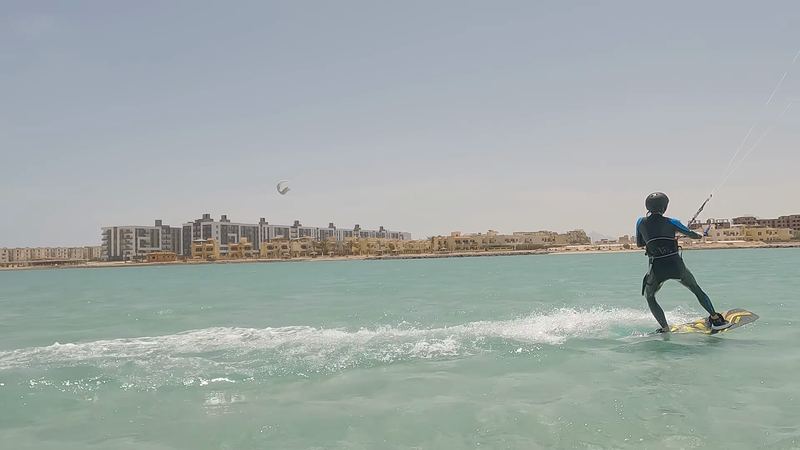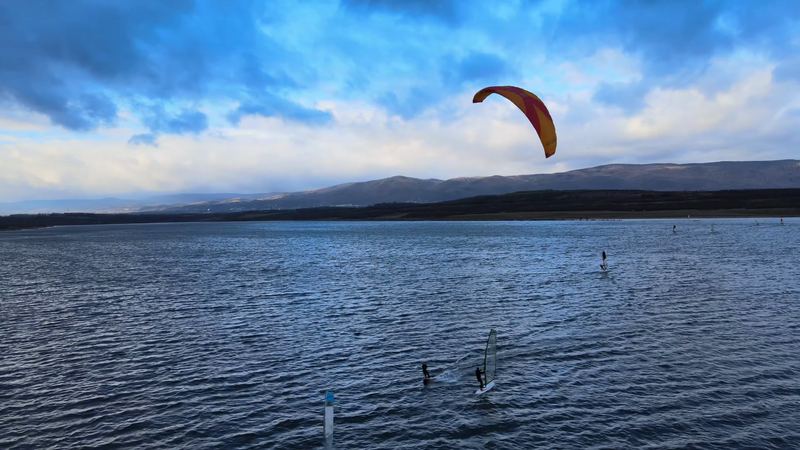
Wind for kitesurfing: knots, direction and forecasts
You need wind that is strong enough, blowing from a safe direction and steady. The forecast helps you make an initial assessment, but you still need to check conditions on the beach.
When you judge wind for kitesurfing, look at 3 things: how strong it is, where it comes from and how steady it is. After your course, stick to roughly 10-20 knots, wind blowing from the sea at an angle to the beach, and days when the forecast gusts sit close to the average.
You can make an initial assessment at home from the forecast. Check the conditions for yourself on the beach, because a forecast comes from a model that often misses local obstacles and the sea breeze.
How many knots do you need to kitesurf
Kiters measure wind in knots. 1 knot is 1 nautical mile per hour: 1.852 km/h, about 1.15 mph or 0.51 m/s. Some forecasts show m/s, so a quick rule helps: double the m/s and you are close. 10 m/s is about 19 knots.
How much wind you need to kitesurf depends on your weight, kite size and board. After a course, this is how I'd approach it:
- After your course: get as many hours as you can in roughly 10-20 knots on the right kite size.
- Stronger wind: work up gradually as your kite control and ability to get back to shore improve. I wouldn't go out above 25 knots fresh from a course; around 30 knots requires extensive experience.
- Above 40 knots: don't go out. There is almost no margin for error.
Hours alone don't tell you whether you're ready. Gusts, current and space at the spot matter too. Stay within the manufacturer's wind range for your particular kite, and if you're unsure, talk through the conditions with an instructor before launching.
Kite pull increases quickly as the wind picks up. As a simplified comparison, with the same kite, trim, position and air density, lift grows with the square of the airspeed relative to the kite. A change from 15 to 30 knots gives 4 times the lift; from 15 to 20, almost 1.8 times. While riding, though, the kite moves and its position and trim change, so forecast numbers won't tell you the exact pull you'll feel.
| Knots | m/s | mph | Beaufort | For a rider fresh out of lessons |
|---|---|---|---|---|
| 7-10 | 4-5 | 8-12 | 3 | light wind, mostly below the learning range |
| 11-16 | 6-8 | 13-18 | 4 | the range you learn in after your course |
| 17-21 | 9-11 | 20-24 | 5 | top of the post-course range |
| 22-27 | 11-14 | 25-31 | 6 | beyond the range for first sessions; I'd stay below 25 knots after a course |
| 28-33 | 14-17 | 32-38 | 7 | extensive experience and a suitable kite required; skip after a course |
| 34-40 | 17-21 | 39-46 | 8 | skip after a course; don't ride above 40 knots |
Use the table as a guide to wind strength. Even within 10-20 knots, your kite may not be suitable for the whole range.
Where it blows from: wind direction and the shore
The direction in a forecast always tells you where the wind is coming from. A northwesterly comes from the northwest. Whether it gives you onshore, offshore or side-shore wind depends on the line of the beach. The same northwesterly can be perfect on one beach and blow you out to sea on another.
- Side-onshore, from the sea at an angle to the beach: for me the best direction for a beginner at a suitable spot. You can ride both ways and the wind pushes you towards shore, but still check the current and where you could come ashore.
- Side-shore, parallel to the beach: the wind won't bring you back to shore by itself. You need to be able to get back, understand the current and know where the coastline leads downwind and where you could get out if something goes wrong.
- Onshore, straight at the beach: it pushes you onto the sand. To get away from shore you have to ride upwind (against the wind) straight away, which is hard with waves and current. A small mistake close to the beach ends on the beach.
- Offshore, from the land out to sea: if your kite drops or you can't ride upwind, it carries you away from the beach. Don't ride independently in it after your course, even if you see a boat nearby. Follow your kite manual; a boat doesn't make unsuitable conditions or missing skills safe.
Being scared of ending up downwind with no way back is completely normal after a course. That's why I'd plan my first independent sessions at a suitable side-onshore spot where I could walk back along shallow water or the beach. A way back is as much a part of kitesurfing safety as kite control; check it before launching.
Steady wind or gusty wind
Clean wind keeps the same speed and direction. Gusty wind keeps changing. Clean wind is the easiest and safest to learn in. Light gusts are manageable with some practice, while strong gusts and turbulence make kiting unsafe and not much fun either.
Wind gets smoother the longer it travels over a flat, even surface, typically open sea. Trees, buildings, hills or cliffs break it up. A rough estimate puts turbulence at 7 times the obstacle's height downwind and 3 times its height upwind. For a 20 m high line of trees, that gives 140 m downwind, but turbulence can extend further. Its reach depends on the shape and number of obstacles and the wind speed, so don't use that calculation to decide where it's safe to launch or ride.
I know this from snowkiting at Moldava in the Czech Republic: when the wind comes from the forest and you're close to it, the kite flies in turbulence and it's unpleasant. More distance can help, but reassess the wind at the new location. On water it works the same way, except the forest is a hotel, a pier or a sea wall.
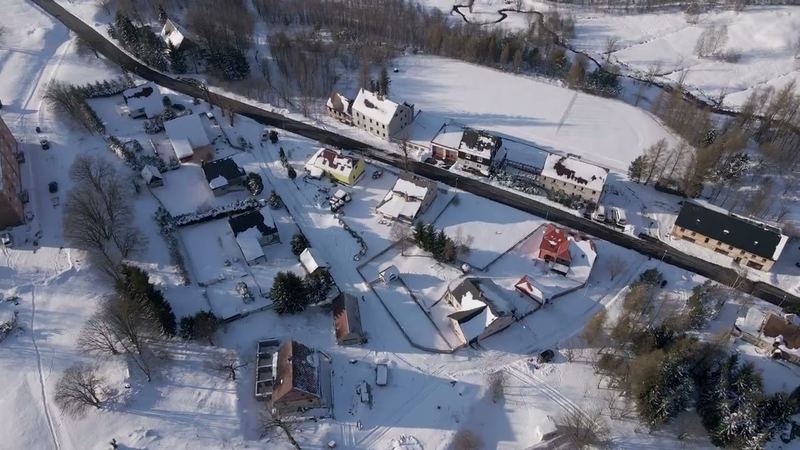
Watch the gusts when you pick a kite size too. A forecast of 15 knots average with gusts of 25 is a big gap, and you could feel much more pull than the average suggests. Choose a size you can manage in the gusts while staying within the manufacturer's range. If your equipment or skills aren't up to it, skip the session.
How to read a wind forecast
In Windguru every time slot has 3 rows that matter: average wind, gusts and direction. Look for the same 3 numbers in any other app, Windy included.
When reading a wind forecast, look across the whole time you plan to be out. Promising signs are:
- an average that doesn't change much over several hours,
- gusts close to the average,
- side-onshore wind at a suitable spot; side-shore only if you can get back and have planned how,
- no heavy rain.
Big jumps in the average, gusts way above it or heavy rain mean changeable conditions. The less experience you have, the harder it is to deal with a change. After a course, I'd skip a day like that.
A forecast is good for deciding whether to go at all, and I really do decide by it. When the forecast for Rügen in Germany looked great, I went, even though it was a long drive there and back. On the beach it's still worth looking at the water and the sky, because some things the model doesn't see:
- Sea breeze builds when the land heats up more than the sea. It often isn't in the forecast and usually peaks in the late afternoon.
- Tall, growing clouds with bands of rain beneath them: wind from them can reach 50 knots, and the gust front runs ahead of the cloud. Get off the water before they reach you.
- A horizontal line of cloud, or a band of rippled water on the horizon, often means a front, and a front always changes the wind.
Final check on the beach
Before you pump up, run through a few things on the sand:
- Turn your face into the wind. When you hear it equally in both ears, you're looking straight where it comes from. Flags and sand help too.
- Compare that with the shore: side-onshore, side-shore or offshore?
- Look at what's upwind of you. Trees, buildings and bushes mean turbulence at launch.
- Work out where the wind will take you if the kite drops, and whether you can walk back in the shallows.
- On a new spot, ask the locals what the wind does there.
I'd choose a spot for the wind and what I want to practise. On a kite safari in Egypt, the crew selects spots according to the wind and forecast and provides rescue. The programme includes morning and afternoon sessions and evening video coaching. Before launching there too, check the direction, gusts and way back to shore against your own ability.
Questions
How much wind do you need to kitesurf?
After your course, stick to roughly 10-20 knots on the right kite size and within the manufacturer's wind range. Progress into stronger wind according to your kite control, ability to get back to shore, local conditions and gusts; hours alone aren't enough. I wouldn't go out above 25 knots fresh from a course, around 30 knots requires extensive experience, and don't go out above 40 knots at all.
What is the safest wind direction for kitesurfing?
For your first independent sessions, I'd choose a suitable spot with side-onshore wind, blowing from the sea at an angle towards the beach. Side-shore blows parallel to the beach and won't bring you back by itself. You need to be able to get back and understand the current, the coastline and where you could end up if something goes wrong.
Why is offshore wind dangerous for kiting?
Offshore wind blows from the land out to sea and carries you away from the beach if something goes wrong. Don't ride independently in it after your course, even if you see a boat nearby. Follow your kite manual too; the presence of a boat doesn't make unsuitable conditions or missing skills safe.
How many knots is 10 m/s?
About 19 knots. 1 knot is 1.852 km/h, or about 0.51 m/s, so multiply metres per second by roughly 1.94.
How can I tell from the forecast that the wind will be gusty?
If the average wind and gusts are close and don't change much over a few hours, the forecast suggests steady wind. A big gap, sudden jumps and heavy rain point to changeable conditions. Always check the wind on the beach and watch how the weather develops, because the model may miss local effects.
Sources
- 1 knot = 1 nautical mile per hour = 1852/3600 m/s (1.852 km/h) codes.wmo.int (checked 17 October 2026)
- Beaufort scale: 3 = 7-10 knots (4-5 m/s), 4 = 11-16 (6-8), 5 = 17-21 (9-11), 6 = 22-27 (11-14), 7 = 28-33 (14-17), 8 = 34-40 (17-21); knots to m/s multiply by 0.514, to mph by 1.15 weather.metoffice.gov.uk (checked 17 October 2026)
- Peter's Kiteboarding advises against wind above 40 knots and gives at least 30 sessions (30 hours) before exceeding 25 knots; it also requires following the manufacturer's wind range because kite models differ; hours do not guarantee readiness kitesurfing-handbook.peterskiteboarding.com (checked 17 October 2026)
- After lessons practise in roughly 10-20 knots, then the low 20s; around 30 knots requires extensive experience and the right kite size; clean wind is easiest to learn in; 7 times obstacle height downwind and 3 times upwind is only a rough estimate, depending on obstacle shape, number and wind speed, and turbulence can extend further; cross-shore is parallel to shore, so geometrically it cannot ensure a return; forecast gusts should be close to the average with no big changes or heavy rain; sea breezes are often absent from forecasts and peak in late afternoon; downdrafts can reach 50 knots and the gust front runs ahead of the cloud; fronts change the wind www.youtube.com (checked 17 October 2026)
- Side-onshore blows at an angle towards the beach; side-shore is parallel to it; onshore makes it hard to get away from shore, especially with waves or current; offshore carries you out to sea; find the direction by facing the wind, flags or sand; ask local kiters about wind effects at a new spot www.youtube.com (checked 17 October 2026)
- Wind direction is the direction from which the wind is blowing (a north wind blows from north to south), in degrees clockwise, north = 360° forecast.weather.gov (checked 17 October 2026)
- Windguru's forecast table shows wind speed, wind gusts and wind direction as separate rows www.windguru.cz (checked 17 October 2026)
- ALADIN has a 2.3 km grid; unresolved local terrain affects actual wind, gust estimates are indicative and the model cannot simulate local convective gusts; a forecast therefore cannot guarantee steady wind at a spot produkty.chmi.cz (checked 17 October 2026)
- NASA: lift depends on relative airspeed squared, kite area, air density and lift coefficient; with other conditions unchanged, 30/15 gives 4 times the lift and 20/15 about 1.8 times; this does not predict actual pull while riding from forecast values www.grc.nasa.gov (checked 17 October 2026)
- Duotone EVO 2026 section 2.6: avoid offshore, check currents and local weather, do not ride without precise kite control or when dramatic changes are likely; section 2 recommends a school when unsure; this article makes no exception for riding with a boat a.storyblok.com (checked 17 October 2026)
- Paradise Kitesurf kite safari: the crew selects spots by wind and forecast and provides rescue; the programme includes morning and afternoon sessions and evening video coaching paradisekitesurf.cz (checked 17 October 2026)