How long does it take to learn kiteboarding?
According to IKO, learning to kiteboard takes most people 6 to 12 hours of lessons, and you get up on the board after about 6 hours with an instructor. Riding on your own, upwind and safely, takes longer, and it is best counted in hours on the water in good wind.
How long does it take to learn kiteboarding? According to IKO, the International Kiteboarding Organization, most people need 6 to 12 hours of lessons. It often takes more than 12 hours, and rarely fewer than 6. Going by its averages, you get up on the board after about 6 hours with an instructor. Schools teach in 2 to 3-hour blocks, so if the wind plays along, you are riding within roughly 2 to 3 days.
Getting up and riding is not the same as riding on your own, though. To ride without an instructor you need to hold your ground upwind, launch and land on your own and get yourself out of trouble in deep water. That is what the third course teaches, 8 hours on average, and after that it comes down to your own hours on the water.
So plan in hours on the water in good wind, not in days. If the wind drops for 2 days, your course stretches out.
How many hours each stage takes
IKO splits the beginner path into 3 courses. The hours in the table are the averages from its website, and they depend on what you already know, on the weather and on the spot: flat water, shallow water or waves.
| IKO level | What you learn | Average with an instructor |
|---|---|---|
| 1 Discovery | wind and safety on land, setting up, launching and landing, steering the kite, quick release | 2 h |
| 2 Intermediate | body dragging, relaunching from the water, self-rescue, getting your board back, first waterstart | 4 h |
| 3 Independent | speed control with your edge, riding upwind, transitions, self-launch and self-landing, self-rescue in deep water | 8 h |
The averages add up to around 14 hours. I would treat it as the minimum to plan for. An average means plenty of people need more.
What the words in the table mean
The quick release is a safety release on the bar, the handle you steer with: one movement disconnects you from the kite's pull when something goes wrong. Body dragging means letting the kite pull you through the water without a board, which is also how you get back to your board when it floats away. A waterstart is getting up out of the water with the kite pulling you onto the board. Riding upwind means riding at an angle into the wind so you can get back to where you started. A self-rescue is how you get yourself back to shore in deep water when the kite won't relaunch: you disconnect from the kite's pull, pack the kite down in the water and get back to shore with it. Your instructor teaches you how in levels 2 and 3.
What the first 3 days usually look like
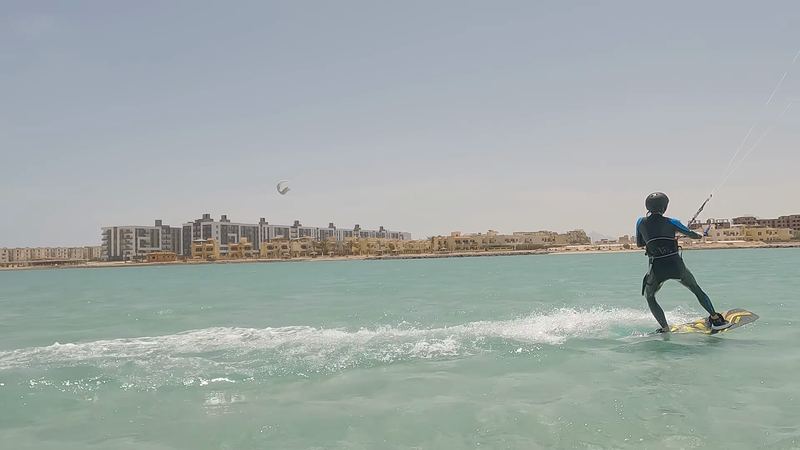
At Flukes Kitesurfing, the beginner course is 9 hours over 3 days of 3 hours. Day 1 is about the gear and flying the kite on land. On day 2 you go in the water and the kite drags you around without a board, maybe with the board at your feet by the end of the day. Day 3 is about waterstarts and your first stretch of riding.
The instructor in the video says himself that after 9 hours most people only have the basics, and I agree. If you ride a short way after 3 days and then fall, you are right on track.
When you can ride on your own
This is where courses differ the most. A lot of standard courses are rushed: people get up and ride, but they leave without the safety skills and without being independent. Then they turn up at a real spot and become a danger to themselves and to other kiters, and sadly that really does happen. A good course teaches you to read the wind, choose a kite size and deal with a bad situation. So choose a school by how it teaches safety and the wind.
For a feel of the numbers, Evan Bartlett's video is a good one: he felt OK riding alone at a beginner spot after 23 to 30 hours on the water (he gives both figures in the video), spread over 16 months. He thinks most people can get there closer to 15 hours if they avoid his mistakes.
One thing your instructor usually does for you during lessons is pick the kite size. Already during your lessons, notice which kite you were given in which wind, and then ask the locals what they are rigging. The kite size calculator gives you a first estimate too. Plan your first solo sessions at a spot with shallow water and a wide beach, and go with someone who can help you launch and land.
The biggest milestone is riding upwind. Until you can do it, you walk back up the beach with your board under your arm, and every kiter knows that walk of shame.
What speeds learning up and what slows it down
Steady wind. You learn best in steady wind of around 15 to 20 knots. Knots are the unit kiters use for wind speed; 15 to 20 knots is about 17 to 23 mph, or 28 to 37 km/h. Gusty, shifting wind sets you back, sometimes by a whole day of progress.
Lessons close together. Book your lessons as close together as you can. Evan had a full year's break between his first and second lesson, and that is the most expensive way to do it: part of the next lesson goes on relearning what you forgot.
How many people share a kite. In a group you take turns, so in a 3-hour lesson you spend less time on the bar. Group lessons are cheaper per hour, but you may need more hours.
Safe water. Flat water with a sandy bottom forgives mistakes. Look for shallow water over sand, with no coral or reefs and no crowds.
What you already know. Snowboarding, wakeboarding, surfing, windsurfing or sailing help, because you already understand a board or the wind. It is not a guarantee: one instructor describes a former wakeboarder who still could not waterstart after 24 hours at the school.
Fitness. Stretching or yoga and decent cardio help. The kite pulls you through your harness, a belt around your waist or hips that you hook into, so your arms mostly steer. The first days in the water will still tire you out, especially the body dragging and the repeated waterstarts.
A week by the sea: what you can realistically do
In April 2024 we took 8 beginners on a kite safari. The first 2 days were a kind of training camp at Geisum island. Day 1 looked tough, and by the middle of day 2 everyone was riding. Then we moved on to Ashrafi.
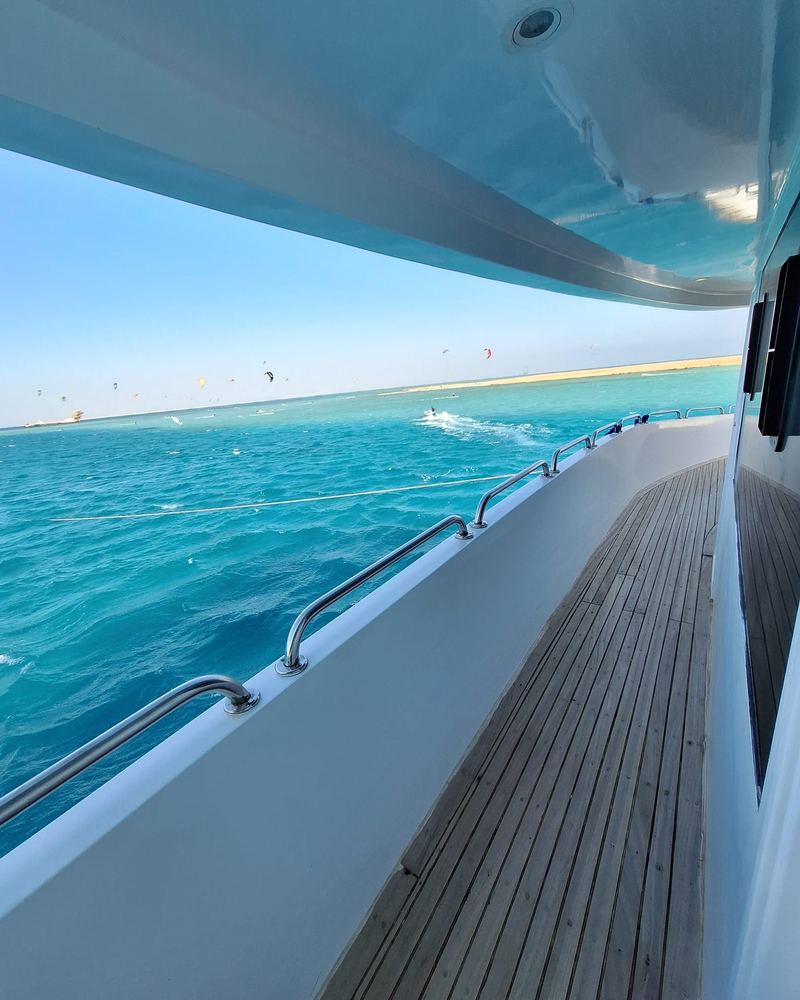
Please don't read that as a promise that it will go the same way for you. It depends on the wind, the instructor and how much you have done before. A week with the water right there all day does help a lot, though: your course isn't stretched over months, and the crew picks you up with the rescue boat if you drift off.
On the kite safari in Egypt that I go on, the beginner course costs €600. It is a 6-day intensive course with gear included, and Abu Mungar island has a lagoon with shallow, calm water and a sandy bottom where beginners learn. The beach boys, crew members who help on the beach, launch and land your kite with you. If you have done a course but haven't ridden for a while, there is a 3-hour refresh course for €180. The safari gives the most to people who already ride on their own after a course. Beginners can come too, as long as they know a week usually isn't enough to become independent. What a beginner can expect on the boat is in my guide to kite safari for beginners.
With decent wind and few days lost, most people leave after a week able to get up and ride a little. Nobody can promise that, though, and riding fully on your own takes more hours, at home or on your next trip. The whole path from your first kite to riding solo is in my guide on how to learn kitesurfing.
Questions
How long does it take to learn kiteboarding?
According to IKO, most people need 6 to 12 hours of lessons, often more than 12 and rarely fewer than 6. Going by IKO's averages, you get up on the board after about 6 hours. Riding independently, including going upwind and rescuing yourself in deep water, is taught in the 3rd course, and the averages for IKO's 3 beginner courses add up to around 14 hours with an instructor.
Can you learn to kitesurf in a week?
With good wind, most people get up and ride within a week, since schools teach in 2 to 3-hour blocks a day. Nobody can promise it, though. Becoming an independent rider who can get back upwind to where you started and handle a self-rescue usually takes more hours on the water after that.
How many kitesurfing lessons do I need to ride on my own?
IKO lists an average of 2 hours for Discovery, 4 hours for Intermediate and 8 hours for Independent, so roughly 14 hours in total. It depends on what you already know, the weather and the spot, so plenty of people need more.
Will I learn faster if I can snowboard or wakeboard?
Usually yes, because board feel and balance carry over. It is not a guarantee: an IKO instructor describes a former wakeboarder who still could not waterstart after 24 hours at the school.
Can you learn to kitesurf on a kite safari?
Yes. The safari I go on offers a 6-day intensive beginner course for €600 including gear, and some of the spots are shallow lagoons. With good wind most people get up and ride there, but nobody can promise it, and independence comes with more hours after you get home.
Sources
- Learning to kitesurf takes 6 to 12 hours of lessons, often more than 12, rarely fewer than 6 (the whole course, including the 3rd part where you become an independent kiteboarder); schools teach in 2 to 3-hour blocks d8.ikointl.com (checked 17 October 2026)
- IKO instructor: a 12-year-old rode after 2 lessons, a former wakeboarder could not waterstart after 24 hours at the school; avoid long breaks between lessons; ideal is steady wind of 15-20 knots, no crowds, no shallow reefs; stretching, yoga and fitness help d8.ikointl.com (checked 17 October 2026)
- IKO Discovery (level 1): safety and wind on land, kite setup, launching and landing, piloting, quick release; 2 hours on average depending on knowledge, weather and spot d8.ikointl.com (checked 17 October 2026)
- IKO Intermediate (level 2): body drag, water relaunch, self-rescue and pack down introduction, board recovery, waterstart; 4 hours on average (Discovery 2 h + Intermediate 4 h = about 6 hours to the waterstart) d8.ikointl.com (checked 17 October 2026)
- IKO Independent (level 3): speed control by edging, riding upwind, sliding transition, self-launch and self-landing, self-rescue and pack down in deep water; 8 hours on average; an independent rider can rent gear anywhere d8.ikointl.com (checked 17 October 2026)
- 1 knot = 0.514444 m/s and 1 mph = 0.44704 m/s, so 15-20 knots is about 17-23 mph or 28-37 km/h www.nist.gov (checked 17 October 2026)
- Flukes Kitesurfing: their course is 9 hours over 3 days of 3 hours (day 1 gear and kite flying, day 2 water and body dragging, day 3 riding the board); even after 9 hours most people have only the basics www.youtube.com (checked 17 October 2026)
- Evan Bartlett: 15 hours of lessons and 23 hours in total (about 30 hours in the summary at the end of the video) before riding alone at a beginner spot, spread over 16 months; a year's break between his 1st and 2nd lesson; thinks most people can do it closer to 15 hours; less kite time in group lessons; notice which kite size goes with which wind, ask locals; beginner spots with shallow water, a big beach and friends to help launch and land; another 40 hours for more demanding spots www.youtube.com (checked 17 October 2026)
- Kitesurfing Academy: gusty, changing wind and waves can set you back by about a day; previous board and wind sports help www.youtube.com (checked 17 October 2026)
- Safari price list 2026: beginner kiteboarding course €600 (6-day intensive course including kite gear), refresh course 3 hours €180; rescue boat and beach boys who help with launching and landing included; Abu Mungar has a lagoon with shallow calm water and a sandy bottom, ideal for beginners; Geisum, Ashrafi paradisekitesurf.cz (checked 17 October 2026)
- Jája on Instagram, 30 April 2024: took 8 beginners on the safari, first 2 days of training camp on Geisum, day 1 looked tough, by the middle of day 2 everyone was riding, then moved on to Ashrafi www.instagram.com (checked 17 October 2026)