Kite safari for beginners: can you learn to kite on a boat trip?
Yes. You learn in shallow lagoons by the islands, with an instructor and a rescue boat on the water. Just expect the first day to be hard work, and don't expect to leave as an independent rider.
Yes, you can learn to kitesurf on a kite safari, even as a complete beginner. On the Red Sea safari I go on, beginners learn in shallow lagoons by the islands, standing on the sand, with an instructor and a rescue boat on the water. A kite safari for beginners does come with a few conditions, though, and they're worth knowing before you book a flight.
By beginner I mean someone with no lessons at all, or a handful of hours who can't yet stay on the board on their own. Your week on the boat will look different from that of a rider who came to jump: the first two days are more effort and less freedom, and then a lot of fun once it clicks.
How it went for 8 beginners at Geisum
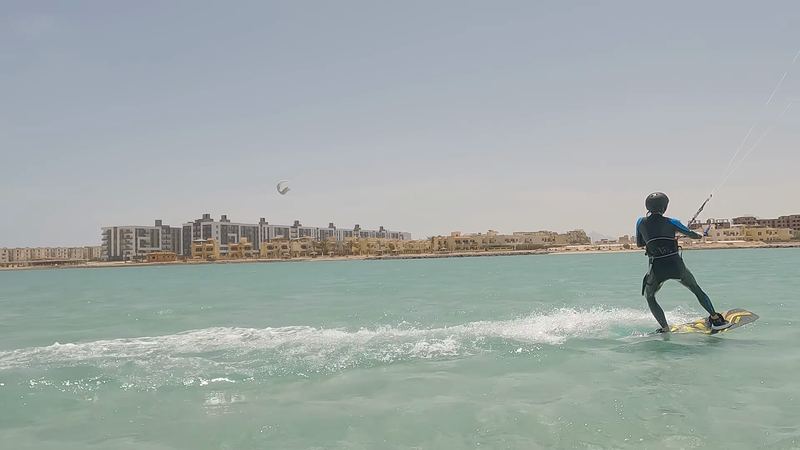
I've been on Mohamed's safari several times. In April 2024 we brought 8 beginners along and spent the first two days at Geisum, a little training camp. Day 1 looked tough. By the middle of day 2 every one of them was riding, and the progress was unreal. Then we moved on to the Ashrafi islands.
Don't take that as a promise that it'll go the same way for you. For a beginner, the first "I'm riding" usually means a stretch downwind, a crash and another go. Riding upwind, meaning getting back to where you started, comes later. How fast it goes for you depends on the wind that week, on your instructor and on how many hours you already have.
One guest put it like this in a review on the Paradise website: "Generally I always thought that kitesafari is only for pros, but since kiting is done on spots with shallows, everyone can find their own."
Why a safari is a good place to learn
Shallow water and sand
What helps a beginner most is water you can stand in. You fall, stand up, grab the board and go again. In deep water you'd have to swim for the board or let the kite drag you back to it, and that burns energy you need for something else on day 1.
The islands the boat visits have exactly that kind of lagoon. This is how Paradise describes them:
- Abu Mungar (on the map as Abu Minqar): a smaller island with a lagoon, shallow calm water and a sandy bottom. Paradise lists it for beginners and trick training.
- Tawila: a huge turquoise lagoon, shallow water, sandy bottom and steady wind of 15-25 knots. A knot is one nautical mile per hour, so that's roughly 17-29 mph. The boat only goes there by prior arrangement, because there's an entrance fee.
- Geisum: a mix of shallow and deeper water, long beaches and very few people.
Which island you go to on a given day depends on the wind forecast. The boat moves to where it's blowing, so you're not sitting on a hotel beach waiting for the wind to show up.
Help on the beach and a boat on the water
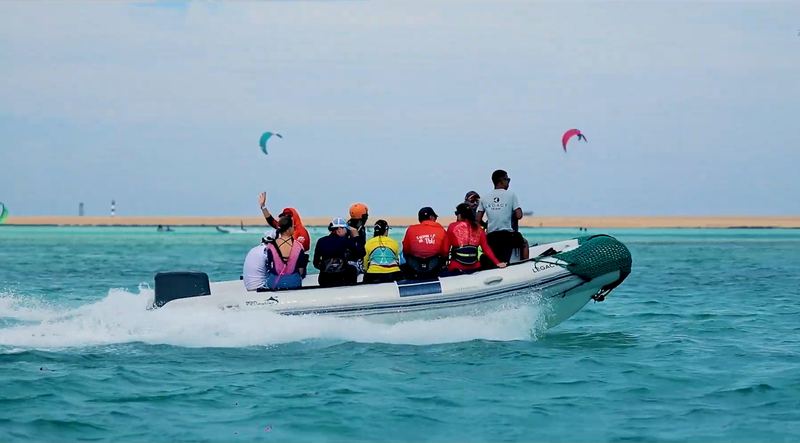
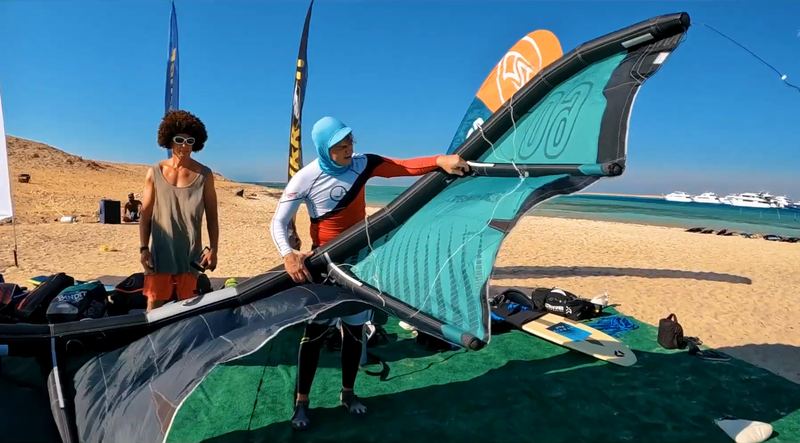
Launching and landing are the trickiest moments for a beginner. On the safari, the beach boys help with both. They're the beach team who carry and pump up your gear, hold your kite for the launch and catch it when you land. There's a rescue boat on the water, and the crew takes care of safety and rescue. The beginner course starts on the morning of day 2, right after the first move to a spot.
Offshore wind, and why you should take it seriously
Offshore means the wind blows from the beach out to sea. For a beginner it's the most treacherous direction: if your kite drops or the wind dies, it carries you away from the beach and out to open water. You won't get back to shore on your own in that wind, which is why IKO says you only kite offshore when there's a rescue boat on the water.
On the safari there is a rescue boat on the water, and the crew takes care of safety and rescue. I'd still take the wind seriously. There's a safety briefing on day 1 about the rules, the kite zones and the wind, so pay attention and ask where the wind will come from and where you shouldn't go. At home, on a beach without a boat, I wouldn't start learning in offshore wind.
What to be ready for
Day 1 is hard work
Lots of crashes, water up your nose, arms and back that aren't used to it. That's normal and says nothing about whether you're cut out for kiting. Between the morning and afternoon sessions there's lunch on the boat and a break, and I wouldn't skip the rest, because a tired beginner makes mistakes and struggles to take in what the instructor is saying.
How many hours a day you'll spend on the water in the course depends on the wind and your instructor. If you'd like to know before you go, ask in the enquiry form.
You may not be an independent rider after one week
The safari course is 6 days and intensive, and I still wouldn't expect to be riding anywhere on your own afterwards. A good course teaches you safety, how to read the wind and how to handle a bad situation, not just how to get going.
That includes the quick release, the safety release that switches the kite off in an emergency so it stops pulling, and self rescue, which is how to get yourself and your kite back to shore when the wind drops or something goes wrong. Self rescue only works when the wind blows onto the beach or along it. If it's blowing offshore, stay with your kite and wait for the boat. Ask for both, even if it feels like time taken away from riding.
After the safari comes the stage where you ride on your own and mostly work on riding upwind. For your first solo sessions after a course, it pays to have a plan for what to practise.
Ask about the group
A common fear is being the only beginner among experienced riders. In April 2024 there were 8 of them together, but every trip is different. Before asking about cabins, I'd ask how many beginners are booked on that date and how many instructors there are for them.
From zero, or with a few hours behind you
I'd choose based on what you can actually do on the water. There are three options:
- You've never kited: the beginner course for €600, 6 intensive days with the equipment included in the course. IKO certification, an international record of your kiting level, isn't included and needs at least 8 hours with an instructor.
- You've had a few hours of lessons, but can't stay on the board on your own yet: you're still a beginner, and I'd take the beginner course. That includes anyone whose lessons were spread over a few years and whose waterstart (getting up out of the water onto the board) only works now and then. Private lessons at €65 an hour are useful when you need to sort out one specific thing.
- You've ridden on your own before, just not for a while: a refresher course, 3 hours for €180 or 6 hours for €330. Whether you can then ride on your own with your own gear or a rented set (a full set is €300 for 6 days), and on what terms, is worth asking in the enquiry form.
How many hours with an instructor someone needs before riding on their own depends mostly on the wind and how often they get on the water.
What a beginner pays
Prices from the Paradise Kitesurf 2026 price list:
| Item | Price |
|---|---|
| Safari, 8 days / 7 nights in a twin cabin | €1,250 per person |
| Beginner course, 6 days, equipment included | €600 |
| Or refresher course 3 h / 6 h | €180 / €330 |
| Marine park and marina fee plus crew tips | €100-150, Mohamed confirms the exact amount with the dates |
| Tourist visa for Egypt | $25-30; UK government travel advice lists $30 for a visa on arrival, cash only |
| Flights to Hurghada, insurance | up to you |
Starting from zero with the course, that comes to €1,950-2,000 before flights, visa and insurance. As a beginner, I wouldn't skip travel insurance that covers kitesurfing. The kite safari price includes your cabin, full board with drinks, the beach boys, the rescue boat and transfers from the airport to the boat and back.
When a safari makes sense for a beginner
I'd recommend the safari to a beginner who:
- wants a week of nothing but kiting and doesn't mind sleeping on a boat,
- expects the first day to be tough,
- wants to learn in a shallow lagoon with an instructor and a rescue boat nearby,
- knows there'll still be catching up to do after the week.
It makes less sense if you need to be sure you'll leave as a finished rider, or if you want a town, shops and an evening programme other than the boat after kiting. For the full picture of a week on board, read Kite safari Egypt: what to expect.
Dates and the enquiry form are on the kite safari in Egypt page. The next date is 7-14 November 2026. The 2027 dates aren't out yet, but you can sign up through the form to be notified. In your enquiry, say that you're a beginner, how many hours of lessons you've had and what you can already do on the water, so it's clear straight away whether the course or a refresher suits you.
Questions
Can a complete beginner learn to kitesurf on a kite safari?
Yes. On the Red Sea safari I go on, there's an optional 6-day intensive beginner course for €600 including equipment. You learn in shallow island lagoons with an instructor and a rescue boat on the water.
How much is a kite course on a kite safari?
Paradise Kitesurf's 2026 price list has the beginner course at €600 (6 days, equipment included), a 3-hour refresher at €180, a 6-hour refresher at €330 and private lessons at €65 per hour. The safari itself is €1,250 per person in a twin cabin.
Will I be riding on my own after a week?
Nobody can promise that. In April 2024 we took 8 beginners on the safari and by the middle of day 2 they were all riding, but riding upwind and looking after yourself on the water come later. It depends on the wind, the instructor and how many hours you already have.
Is a kite safari safe for a beginner?
You learn in shallow water where you can stand, with an instructor. Beach boys help you launch and land, and there's a rescue boat on the water. On day 1 there's a safety briefing on board about the rules, the kite zones and the wind, so listen carefully and stay inside the kite zones.
Sources
- Kite safari 8 days / 7 nights, €1,250 per person in a double cabin paradisekitesurf.cz (checked 17 October 2026)
- Optional services: kiteboarding course for beginners €600 (6-day intensive course including kite equipment), refresh course 3 hours €180 and 6 hours €330, individual lessons €65/hour, complete kitesurf equipment rental €300 / 6 days paradisekitesurf.cz (checked 17 October 2026)
- Included: cabin, full board 3 times a day, soft and alcoholic drinks, airport - yacht - airport transfers; beach boys assist with transferring, inflating, packing, launching and landing kites; rescue boat; crew ensures safety and rescue on the water paradisekitesurf.cz (checked 17 October 2026)
- Not included: flights, tourist visa for Egypt ($25), entrance fee to national marine parks / islands and tips for the boat crew €100, travel insurance covering kiting recommended paradisekitesurf.cz (checked 17 October 2026)
- Organiser's 2026 offer (Mohamed's post in the safari WhatsApp group, 15 Dec 2025, not on the website): +€150 for marina and staff tip; IKO certification needs at least 8 hours with an instructor, not included paradisekitesurf.cz (checked 17 October 2026)
- Visa on arrival at approved Egyptian airports costs 30 US dollars, cash only www.gov.uk (checked 17 October 2026)
- An IKO certificate certifies your level of kitesurfing paradisekitesurf.cz (checked 17 October 2026)
- 2026 dates: 11-18 April, 22-29 May, 10-17 October and 7-14 November 2026 kitewithjaja.pages.dev (checked 17 October 2026)
- Itinerary: day 1 safety briefing (rules, kite zones, wind), day 2 morning beginning of courses for beginners, days 3-6 courses for beginners and more advanced riders, spot chosen by forecast paradisekitesurf.cz (checked 17 October 2026)
- Islands: Tawila huge lagoon, steady winds 15-25 knots, shallow water, sandy bottom, only by prior arrangement because of the entrance fee; Abu Mungar shallow and calm water, sandy bottom, for beginners; Geisum combination of shallow and deeper water paradisekitesurf.cz (checked 17 October 2026)
- Guest review: “Generally I always thought that kitesafari is only for pros, but since kiting is done on spots with shallows, everyone can find their own.” paradisekitesurf.cz (checked 17 October 2026)
- April 2024: 8 beginners on the safari, first two days a 'training camp' at Geisum, day 1 looked tough, by the middle of day 2 everyone was riding, then moved on to Ashrafi www.instagram.com (checked 17 October 2026)
- IKO: self-rescue back to shore is the procedure for on-shore, side-on-shore and side-shore wind; in offshore wind you wait inside the inflated kite for a rescue boat, and you only kite offshore with a rescue boat already on the water; the chicken loop quick release fully depowers the kite d8.ikointl.com (checked 17 October 2026)
- 1 knot = 0.514444 m/s, i.e. 1.852 km/h or about 1.15 mph (15-25 knots is roughly 17-29 mph) www.nist.gov (checked 17 October 2026)